

Why Does Water Leakage Increase During Monsoon?
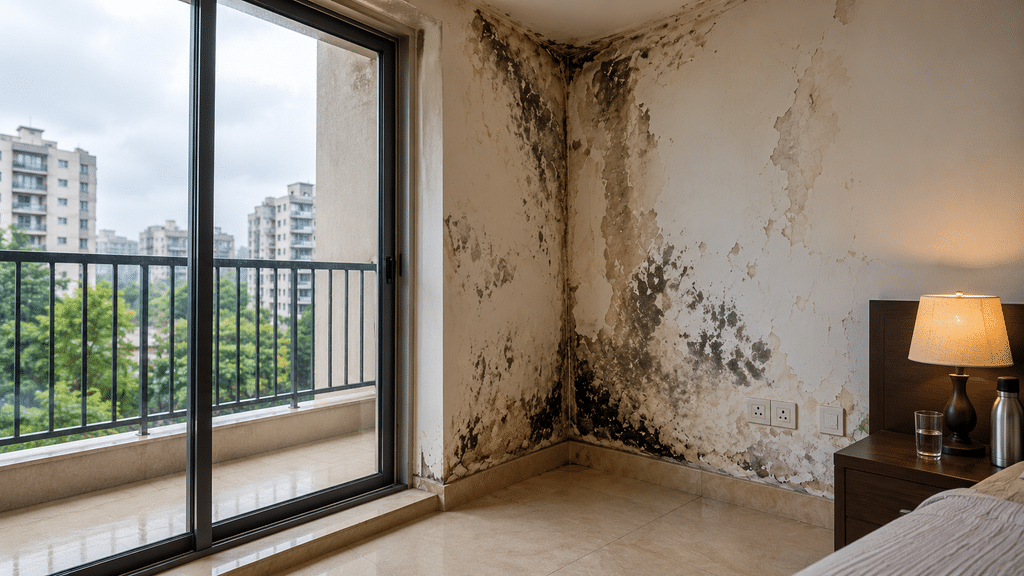
Monsoon brings relief from the summer heat, but heavy rainfall can also expose hidden problems in homes. Water entering through the roof, damp patches on walls, peeling paint, wet ceilings and recurring seepage are common signs that moisture may be entering your property. If these issues are ignored, they can damage paint, plaster, flooring and other interior finishes.
For homeowners in Gurgaon and Delhi NCR, identifying the actual source of leakage is important before choosing a repair method. Water stains do not always appear at the exact point where water enters. For example, rainwater may enter through a terrace crack and travel along a slab before becoming visible on a ceiling.
A professional Water Leakage Detection Service in Gurgaon can help investigate the source of suspected leakage and identify the areas that need further attention. Whether you are dealing with roof leakage, bathroom seepage or damp walls, understanding the cause is the first step towards an appropriate solution.
Common Causes of Water Leakage in Houses During Monsoon
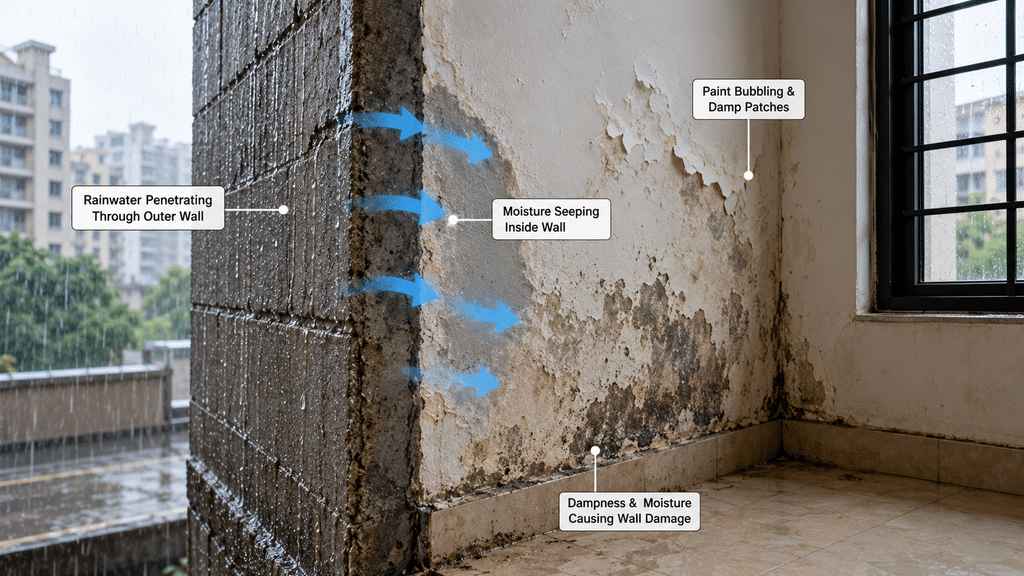
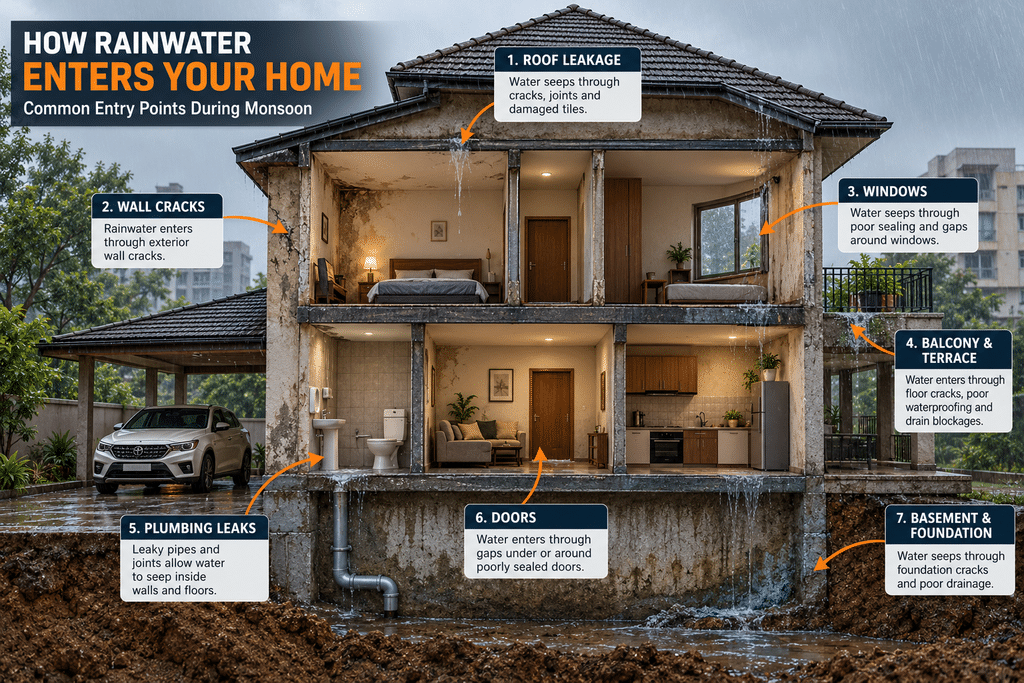
Water leakage can occur for several reasons. Identifying the likely cause helps homeowners avoid temporary repairs that fail when the next spell of rain arrives.
1. Roof and Terrace Leakage
Cracks in terrace surfaces, damaged waterproofing, blocked rainwater outlets and poorly sealed joints can allow rainwater to enter a building. Water may travel beneath the surface before appearing as a ceiling stain inside the house.
Roof Leakage Detection in Gurgaon is particularly relevant when ceiling dampness appears after rainfall or when the same patch becomes wet repeatedly. An inspection should consider the roof condition, drainage arrangements and the location of visible moisture.
2. Water Seepage Through External Walls
External walls face direct exposure to rain, wind and changing weather conditions. Cracked plaster, deteriorated exterior coatings, gaps around windows and poorly sealed joints may allow moisture to enter.
Water Seepage Solution in Gurgaon should begin with identifying the source of moisture rather than simply repainting the affected wall. Paint may hide a stain temporarily, but it will not solve an ongoing water ingress problem.
3. Bathroom and Plumbing Leakage
Water leakage can also originate from bathroom fittings, concealed pipes, drainage connections or poorly sealed wet areas. Sometimes, a damp patch appears in a room below a bathroom, even when the bathroom floor looks dry.
A suitable inspection should consider plumbing connections, visible pipework, sanitary fittings and other accessible areas before recommending the next step.
4. Balcony, Window and Door Leakage
Rainwater can enter through gaps around window frames, balcony doors, poorly sealed joints or drainage outlets. Wind-driven rain may expose gaps that remain unnoticed during dry weather.
Check whether water appears near the same window, balcony threshold or door after heavy rain. The location and timing of the dampness can help narrow down possible causes.
Signs That Your Home May Have a Water Leakage Problem
Look for these warning signs during and after rainfall:
- Damp or discoloured patches on walls and ceilings.
- Peeling paint, bubbling plaster or damaged wallpaper.
- Water stains near windows, balconies or terrace-facing walls.
- Musty smells in rooms, cupboards or corners.
- Repeated dampness after every spell of rain.
- Wet patches beneath bathrooms or plumbing lines.
- Visible dripping from ceilings or around pipe connections.
These signs can indicate moisture, but they do not independently confirm its source. Condensation and other moisture problems can produce similar symptoms. A proper assessment helps distinguish between possible causes.
How to Find Water Leakage Inside Walls
If you are wondering how to find water leakage inside walls, begin by observing where the damp patch appears, when it becomes visible and whether it changes after rainfall or plumbing use.
First, photograph the affected area and note whether the patch is spreading. Check accessible plumbing connections and nearby windows without opening walls or removing electrical fittings. If the dampness appears after rain, inspect the surrounding external wall and roof areas where accessible.
Moisture meters can help assess moisture levels in suitable materials. Thermal imaging may also help identify temperature patterns associated with moisture, depending on the conditions. However, neither tool automatically confirms the exact source of a leak. Findings need to be interpreted alongside the property’s condition and other evidence.
A professional Water Leakage Detection and Solution assessment can help determine which areas require further investigation and what type of repair may be appropriate.
Water Leakage Detection Without Breaking Walls
Many homeowners worry that finding a concealed leak will require breaking tiles, plaster or walls immediately. In some cases, non-invasive inspection methods can help narrow down the affected area before any opening work is considered.
Water Leakage Detection Without Breaking Walls may involve:
- Visual examination of damp patches, cracks and pipe connections.
- Moisture-meter readings on suitable wall or ceiling surfaces.
- Thermal imaging to investigate unusual temperature patterns.
- Checking accessible plumbing fixtures and water connections.
- Comparing moisture patterns across nearby areas.
These methods can help guide the investigation, but they cannot guarantee that every concealed leak will be detected without opening the surface. The appropriate method depends on the suspected source, building materials and accessibility.
Water Leakage from Ceiling Detection: What Should You Check?
Water stains on ceilings may be caused by terrace leakage, a bathroom above, plumbing lines or water entering through adjoining walls. The position of the stain alone is not enough to identify the cause.
For Water Leakage from Ceiling Detection, note whether the stain appears only during rainfall, continues in dry weather or becomes worse when plumbing fixtures are used. If the ceiling is bulging, actively dripping or showing signs of instability, keep people away from the affected area and seek qualified assistance.
Avoid drilling into a wet ceiling or touching nearby electrical fittings. A professional inspection can help assess the likely source and determine whether further testing is required.
How to Detect Water Leakage in a Bathroom
Bathroom leakage can develop around shower areas, floor joints, sanitary fittings, concealed pipes and drainage connections. Water may pass through joints or adjoining surfaces and appear in another room.
If you want to know how to detect water leakage in bathroom areas, look for recurring dampness outside the shower zone, loose sealant, damaged grout, persistent wet patches or moisture on the ceiling below.
Do not assume that replacing tiles or applying sealant will solve every problem. The correct repair depends on whether the issue comes from plumbing, drainage, joints or waterproofing. If the source is unclear, arrange a suitable inspection before starting major repair work.
Underground Water Pipe Leakage Detection
Not all leaks are visible on walls or ceilings. Underground supply pipes and concealed plumbing lines may develop leaks that require a different investigation.
Underground Water Pipe Leakage Detection may be necessary when there is unexplained dampness near a pipe route, unexpected water consumption or suspected leakage in an underground line. However, these symptoms can have other causes and should be investigated carefully.
The detection method depends on the pipe material, location, accessibility and type of suspected leak. A qualified specialist may recommend suitable testing before excavation or other disruptive work begins.
Water Leakage Detection Using Thermal Imaging
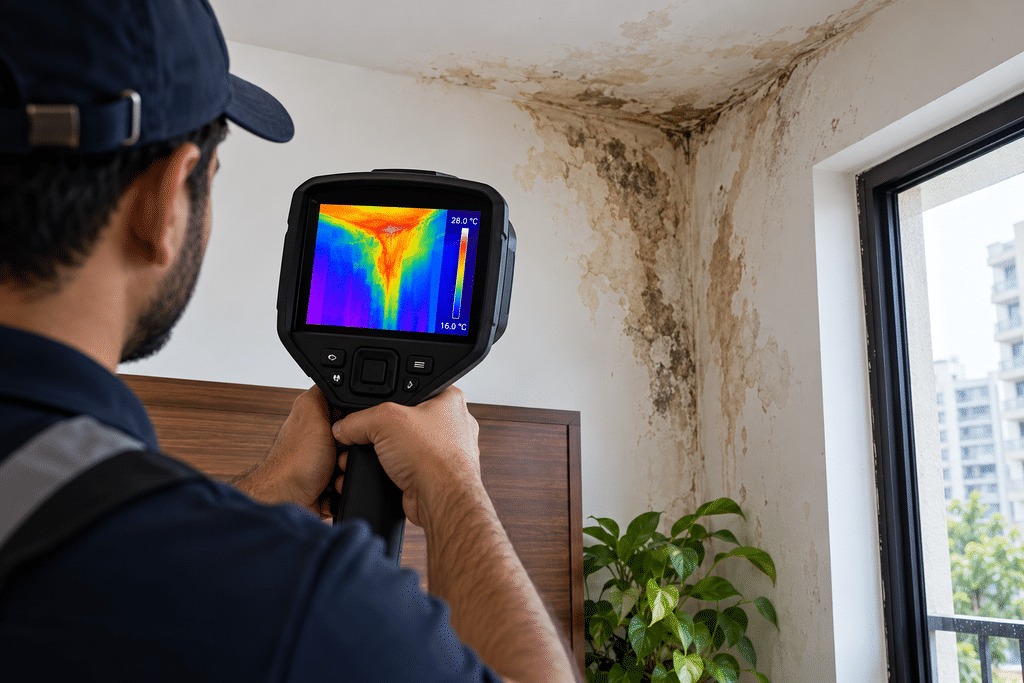
Water Leakage Detection Using Thermal Imaging involves examining temperature patterns on surfaces to identify areas that may need further investigation. A thermal imaging camera can help an inspector locate unusual patterns around walls, ceilings and other accessible building surfaces.
However, thermal imaging does not directly see water inside every wall. Temperature differences can also be caused by sunlight, air movement, insulation and other factors. Findings should therefore be checked against visual observations, moisture readings and the surrounding conditions.
The aim is to narrow down potential problem areas and decide whether additional investigation is needed—not to promise that every hidden leak can be found using one tool.
Water Leakage Solution: What Should Homeowners Do?
The right Water Leakage Solution in Gurgaon depends on the cause and location of the problem. A repair that works for a leaking pipe may not resolve water entering through a terrace or external wall.
Consider these steps:
- Record the symptoms: Photograph the affected area and note when the dampness appears.
- Address immediate safety risks: Keep away from wet electrical fittings and unstable ceilings. Seek qualified help where needed.
- Identify the likely source: Consider rainfall, plumbing use and the location of visible moisture.
- Arrange an inspection: Ask for an assessment appropriate to the suspected leakage source.
- Choose the correct repair: Depending on the findings, this may involve plumbing repair, joint sealing, drainage correction or suitable waterproofing work.
- Check the result: Observe the affected area after the repair and during subsequent rainfall, where relevant.
A reliable Water Leakage Problem Solution should address the cause rather than simply cover the visible stain. Similarly, a Home Water Leakage Solution should be based on the specific conditions of the property instead of using the same repair method for every case.
Water Leakage Detection Services in Gurgaon and Delhi NCR
Homeowners may need help with recurring dampness, roof leakage, concealed plumbing problems or water entering through external walls. The service required depends on the type of property and the symptoms observed.
HousePedia provides property inspection services for homeowners in Gurgaon and the wider Delhi NCR region. An inspection can help assess visible defects and investigate suspected problem areas within the agreed scope. Where specialised leak testing or repair is required, confirm the available service and testing scope before booking.
If you are comparing a Water Leakage Detection Company in Gurgaon, ask what areas are inspected, which tools may be used, what the report covers and whether repairs are included or provided separately.
Relevant location-based searches include Water Leakage Detection in Gurgaon, Water Leakage Detection in Delhi NCR, Water Leakage Detection Service in Delhi, Water Leakage Detection in Noida, Water Leakage Detection in Greater Noida, Water Leakage Detection in Faridabad and Water Leakage Detection in Ghaziabad.
The availability and scope of service should always be confirmed for your specific location.
Water Leakage Detection Near Me: How to Choose the Right Help
When searching for Water Leakage Detection Near Me, homeowners should look beyond the first result. Compare the provider’s service scope, experience with similar problems, inspection methods and the clarity of the final findings.
You may also encounter searches such as Water Leakage Detection Service Near Me, Water Leak Detection Near Me, Water Seepage Solution Near Me, Wall Leakage Repair Near Me, Roof Leakage Detection Near Me and Water Leakage Expert Near Me.
These phrases describe related but different needs. Some providers only inspect or detect leakage, while others also undertake repairs. Before booking, confirm whether the provider can investigate your suspected source, whether a written report is available and what work is included in the quoted service.
For Gurgaon and Delhi NCR homeowners, choosing a provider familiar with local property types can be useful, but the actual inspection scope and evidence should guide the decision.
Delhi NCR. Our experts help homeowners identify hidden defects before they become costly repairs.
Frequently Asked Questions about Water Leakage Detection Service in Gurgaon
1. How do I find the source of water leakage in my house?
To understand how to find the source of water leakage in house, observe when the problem occurs, where moisture first appears and whether it relates to rainfall or plumbing use. Visual checks, moisture readings and other suitable inspection methods may help narrow down the source. Persistent or concealed leakage may require professional assessment.
2. Can hidden water leakage be detected without breaking walls?
Non-invasive methods can narrow down the suspected area. Moisture meters and thermal imaging may help, depending on the conditions. However, no method guarantees detection of every concealed leak without opening the surface.
3. What causes water seepage in walls during monsoon?
Common possibilities include cracks, deteriorated exterior coatings, gaps around windows, terrace leakage and plumbing problems. The correct solution depends on identifying which source is responsible.
4. Is water leakage detection the same as water leakage repair?
No. Detection focuses on locating or investigating the suspected source. Repair involves fixing the underlying problem. Some providers offer both services, while others specialise in only one.
5. How can I prevent recurring water leakage during monsoon?
Inspect accessible drainage outlets, roof surfaces, window seals and visible plumbing connections before the rainy season. Address identified defects promptly and investigate recurring dampness rather than repeatedly repainting the affected area.
Conclusion
Water Leakage Detection Service in Gurgaon during monsoon should not be ignored, especially when damp patches return after every spell of rain. Roof cracks, external wall seepage, window gaps and plumbing problems can produce similar symptoms, so identifying the likely source is essential before selecting a repair.
Whether you need to investigate wall seepage, ceiling stains or concealed plumbing concerns, begin with the evidence and choose an inspection method suitable for the problem. For homeowners in Gurgaon and Delhi NCR, a professional property assessment can help clarify visible defects and determine where further investigation may be needed.
Need help assessing suspected Water Leakage Detection Service in Gurgaon in your property? Contact HousePedia to discuss your inspection requirements, service coverage and the checks appropriate for your home.
Make Smarter Property Decisions with Expert Home Inspection Services
From civil checks to electrical & plumbing audits — get a detailed inspection report within 24–48 hours. Protect your investment with India’s most trusted inspection service.
✅ Trusted by 20,000+ homeowners • Backed by 10+ years of expertise