

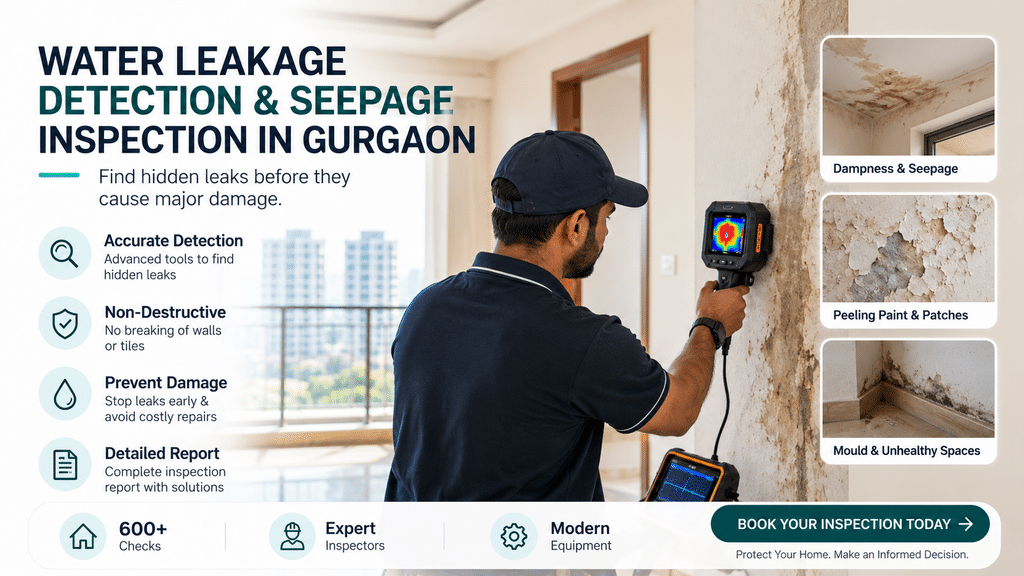
Damp walls, bubbling paint, wet ceiling patches or a musty smell can indicate a moisture problem in your home. These signs may be related to hidden water leakage, wall seepage, concealed plumbing leaks, bathroom seepage or water entering through external walls.
Finding the likely source of moisture is important before deciding on repairs. At HousePedia, our Seepage Inspection In Gurgaon focuses on assessing visible dampness and investigating areas that may be affected by hidden leakage.
Our inspection may include visual assessment, moisture measurement and thermal imaging, where appropriate. These methods help assess suspected wall dampness, plumbing leakage, bathroom seepage and ceiling moisture before unnecessary breaking or repair work is considered.
HousePedia provides property inspection services across Gurgaon, Gurugram and Delhi NCR, helping homeowners and property buyers understand moisture-related concerns through clear inspection findings.
What Is Water Leakage Detection and Seepage Inspection?
Water leakage detection and Seepage Inspection In Gurgaon involve assessing signs of water leakage, moisture and dampness inside a property. The purpose is to investigate possible sources and identify areas that may need further testing.
Common causes of water leakage and wall seepage include:
- Bathroom seepage: Moisture passing through bathroom floors, walls or tile joints.
- Concealed plumbing leaks: Water escaping from pipes or connections hidden inside walls and floors.
- Ceiling leakage: Moisture coming from an upper floor, slab or plumbing line.
- External wall seepage: Rainwater entering through cracks, joints or poorly sealed areas.
- Balcony and terrace seepage: Water entering through vulnerable joints or surface areas.
- AC drain leakage or condensation: Moisture accumulating around drain lines or due to condensation.
- Adjacent property leakage: Water travelling from a neighbouring flat or adjoining area.
Simply repainting a damp wall may hide the stain temporarily without addressing the underlying moisture source. A professional seepage inspection in Gurgaon helps assess the affected area and investigate possible causes before repair work is planned.
7 Warning Signs of Hidden Water Leakage and seepage inspection in Gurgaon
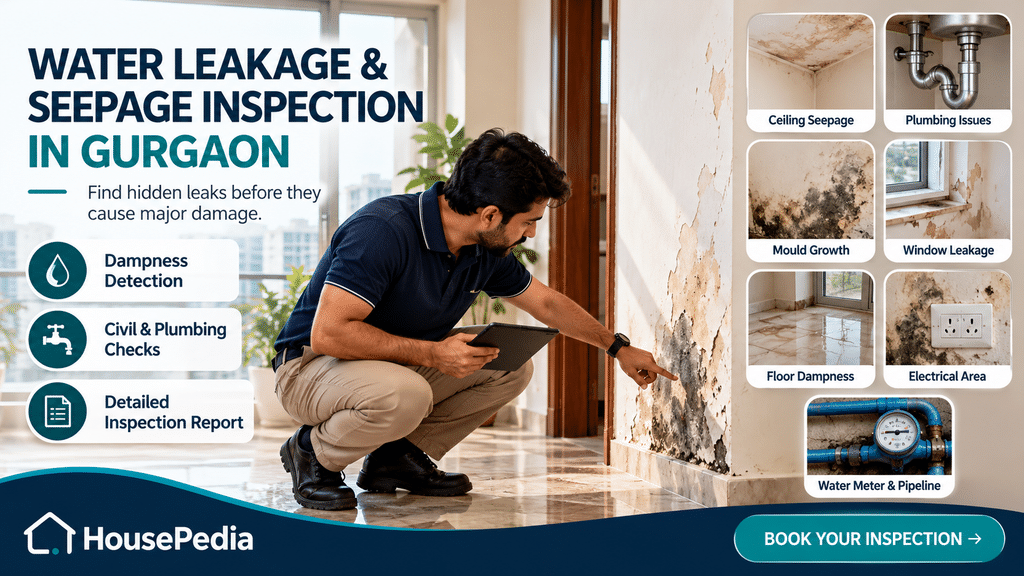
Water leakage is not always immediately visible. Moisture can remain hidden behind walls, ceilings, floors or bathroom tiles. Watch for these common warning signs.
1. Damp or Discoloured Walls
Brown, yellow, grey or dark patches may indicate moisture accumulation. If the same patch returns after painting, the underlying cause may still be present. A wall dampness inspection can help assess the affected area.
2. Bubbling or Peeling Paint
Paint that bubbles, blisters or peels may indicate moisture beneath the surface. Repeated peeling can be associated with wall seepage, concealed water leakage or other dampness issues.
3. Wet or Stained Ceilings
Water stains or damp patches on a ceiling may indicate moisture from an upper floor, bathroom, plumbing line or terrace. A ceiling leakage inspection can help investigate possible sources.
4. Persistent Musty Smell
A lingering musty smell may be associated with excess moisture, particularly in corners, cupboards and poorly ventilated areas. If the smell persists, check nearby surfaces for dampness and consider further assessment.
5. Dampness Around Bathrooms
Bathroom seepage may be associated with water supply connections, drainage points, floor joints or waterproofing-related issues. Damp patches on adjoining bedroom walls or ceilings below a bathroom may need closer inspection.
6. Damp Patches After Rainfall
If a wall or ceiling becomes damp during or after rainfall, possible causes include water entering through external walls, windows, balconies or terraces. An inspection can help assess suspected rainwater seepage.
7. Unexpected Moisture Near Plumbing
Moisture around sinks, toilets, taps or utility areas may indicate a plumbing leak or another source of water accumulation. Water leakage detection can help assess the affected area and determine whether further testing is needed.
If you notice recurring damp patches, unexplained ceiling stains or peeling paint, consider a professional seepage inspection rather than repeatedly covering the visible marks.
Why a Visible Damp Patch May Not Reveal the Actual Leak Source
A damp patch does not always show the exact location where water is entering the property. Moisture can travel through walls, slabs, joints and other building materials before becoming visible.
For example, a concealed plumbing leak or bathroom seepage may cause a damp patch in an adjoining room. Similarly, external wall seepage may appear some distance away from the point where rainwater enters.
A possible moisture path may look like this:
Bathroom or pipe leakage → Concealed area → Wall or slab → Moisture movement → Visible damp patch
This is why a wall seepage inspection in Gurgaon should consider the affected area and its surroundings. Moisture measurement and thermal imaging, where appropriate, may provide additional clues about areas that require further investigation.
Repainting without investigating the cause may not prevent the dampness from returning.
How HousePedia Inspects Water Leakage and seepage inspection in Gurgaon
Effective water leakage detection involves more than looking at a damp patch. The inspection focuses on the affected area, surrounding surfaces and possible sources of moisture.
Step 1: Visual Inspection of the Affected Area
The inspection begins by checking visible dampness, seepage marks and possible leakage signs. Depending on the concern, this may include:
- Wall and ceiling stains
- Bubbling or peeling paint
- Visible cracks and surface changes
- Bathroom and kitchen areas
- Accessible plumbing connections
- Flooring, skirting and adjoining walls
- External surfaces, where relevant
The aim is to understand the pattern of dampness and identify areas that may need closer assessment.
Step 2: Moisture Measurement for Dampness Detection
A moisture meter can help assess moisture levels in suitable walls and surfaces. During a seepage inspection in Gurgaon, readings may provide useful information about the extent and distribution of dampness.
However, a single moisture reading does not confirm the exact source of a water leak. Readings need to be interpreted alongside visible conditions and other inspection findings.
Step 3: Thermal Imaging for Suspected Hidden Water Leakage
Thermal imaging can show temperature variations across surfaces that may provide clues about suspected moisture problems. Where suitable, it can support hidden water leakage detection by identifying areas that need closer examination.
It may be useful when assessing walls, ceilings, bathroom surroundings, false ceilings and accessible areas near suspected plumbing routes.
Important: Thermal imaging does not directly confirm a water leak or guarantee that its exact source will be identified. Temperature variations can have several causes, so results should be interpreted alongside visual observations and other relevant checks.
Step 4: Checking Humidity and Environmental Conditions
Temperature, humidity and ventilation can influence moisture conditions inside a property. Poorly ventilated spaces may experience condensation, which can sometimes resemble seepage-related dampness.
Considering these environmental conditions helps investigate whether condensation may be contributing to the problem or whether further checks for plumbing leakage or seepage are appropriate.
What Happens After the Inspection?
The findings can help property owners understand visible moisture concerns, possible sources and areas that may require further testing. The next steps depend on the inspection findings and accessibility of the suspected source.
Non-destructive inspection methods may help narrow down the affected area before breaking walls or removing tiles is considered. However, further testing or limited opening may sometimes be necessary.
Common Areas to Check During Water Leakage Inspection
Bathroom Leakage and Seepage
Bathrooms require careful assessment because water supply connections, drainage points, floor joints and waterproofing-related issues can contribute to moisture problems.
Areas that may need checking include accessible plumbing connections, drainage points, shower areas, floor joints and adjoining walls. Dampness on a bedroom wall next to a bathroom may indicate a possible bathroom seepage concern.
Wall Seepage and Hidden Moisture
Wall dampness may be associated with concealed plumbing, bathroom seepage, external water entry or condensation. A wall Seepage Inspection In Gurgaon assesses the location and pattern of dampness alongside surrounding conditions to investigate possible sources.
The visible stain should not automatically be treated as the exact source of the leak.
Slab and Ceiling Water Leakage
A slab or ceiling leak can be difficult to investigate because moisture may travel through building materials before appearing as a stain.
Relevant areas may include bathrooms on the floor above, kitchens, utility spaces, terraces where accessible and nearby plumbing routes. Checking surrounding areas can help investigate possible sources of moisture.
Plumbing Leakage and Concealed Pipes
Plumbing leakage may occur at accessible connections or concealed sections of a property’s water supply and drainage system.
Persistent dampness near plumbing points, moisture around bathroom fixtures, recurring wet patches or ceiling stains below plumbing areas may justify further investigation.
Can Hidden Water Leakage Be Detected Without Breaking Walls?
Homeowners often worry that investigating a concealed pipe leak will immediately require breaking walls or removing tiles. In some cases, non-invasive inspection methods can help narrow down the suspected leakage area before invasive work is considered.
Depending on the issue, the assessment may involve:
- Checking the affected area and surrounding surfaces.
- Examining accessible plumbing connections.
- Assessing the pattern and spread of moisture.
- Taking moisture measurements where appropriate.
- Using thermal imaging where available and suitable.
- Identifying areas that may need further investigation.
These methods can help guide the next steps, but they cannot guarantee that every concealed pipe leak will be located without further testing or opening the affected area.
If you need a water leakage detection service in Gurgaon, ask what inspection checks are included, which tools may be used and whether the findings will be explained clearly.
When Should You Book a Seepage Inspection in Gurgaon?
Consider a professional Seepage Inspection In Gurgaon if you notice:
- Dampness that keeps returning after repainting.
- Unexplained water stains on ceilings.
- Walls that remain damp for an extended period.
- Bathroom seepage affecting an adjoining room.
- Moisture appearing after rainfall.
- Suspected leakage from concealed plumbing.
- Unexplained dampness around flooring or skirting.
- Uncertainty about whether the problem is leakage, seepage or condensation.
- Moisture concerns before starting major repair work.
Investigating these signs can help you understand the possible source and decide whether further inspection or repair work is needed.
Water Leakage Detection Services Near You: What Should You Check?
When comparing water leakage detection services near you, look beyond claims of guaranteed detection. Understand what the inspection includes and how the findings will be explained.
Before booking a seepage detection service, consider asking:
- Which areas of the property will be inspected?
- Will moisture measurement be used where appropriate?
- Is thermal imaging available for suitable cases?
- Will adjoining walls, ceilings and accessible plumbing areas be checked?
- Will the findings and suspected sources be explained?
- Could additional testing be required?
A good inspection should focus on observations, relevant measurements and the evidence available. The objective is to investigate possible sources rather than simply identify a visible stain.
Why Repainting a Damp Wall May Not Solve the Problem
Repainting can improve the appearance of a damp wall, but it may not address the underlying moisture source. If the problem continues, you may notice peeling paint, recurring stains, damp patches or a musty smell again.
A dampness and Seepage Inspection In Gurgaon can help assess the affected area and investigate possible sources before repainting or other surface treatment is considered.
Identifying the likely cause first helps homeowners make a more informed decision about the next steps.
Book Seepage Inspection In Gurgaon with HousePedia
HousePedia provides property inspection or Seepage Inspection In Gurgaon services across Gurgaon, Gurugram and Delhi NCR, including Delhi, Noida, Greater Noida, Faridabad and Ghaziabad.
Our leakage and Seepage Inspection In Gurgaon focuses on assessing visible moisture, investigating possible sources and identifying areas that may need further checks. Depending on the property and the concern, the assessment may include visual inspection, moisture measurement and thermal imaging where appropriate.
If you are experiencing wall dampness, bathroom seepage, ceiling leakage or suspected hidden water leakage, contact HousePedia to discuss a suitable inspection for your property.
Frequently Asked Questions
1. What is the difference between water leakage and seepage?
Water leakage usually refers to water escaping from a pipe, plumbing connection or another source. Seepage occurs when moisture passes through walls, floors, ceilings or other building materials. Both can cause damp patches and peeling paint, so the possible source should be investigated.
2. When should I book a Seepage Inspection In Gurgaon?
Consider an inspection if damp patches keep returning after repainting, ceilings develop unexplained stains, bathroom moisture spreads to adjoining walls or dampness appears after rainfall.
3. Can hidden water leakage be detected without breaking walls?
Visual assessment, moisture measurement and thermal imaging may help narrow down the suspected area. However, these methods cannot guarantee that every concealed leak will be located without further testing or opening the affected area.
4. What does a water leakage and Seepage Inspection In Gurgaon include?
Depending on the property and the issue, an inspection may include checking affected walls, ceilings, accessible plumbing points, bathroom areas and surrounding surfaces. Moisture measurement or thermal imaging may also be used where appropriate.
5. Can a damp wall be caused by a leak in another room?
Yes. Moisture can travel through building materials before appearing as a damp patch. A bathroom leak, for example, may contribute to dampness on an adjoining bedroom wall.
6. Can rainwater cause wall seepage or ceiling dampness?
Yes. Rainwater entering through external walls, windows, terraces or roof-related areas may contribute to dampness. If the same patch becomes worse after rainfall, the surrounding surfaces may need further investigation.
7. Does repainting a damp wall solve the Seepage Inspection In Gurgaon problem?
Repainting can improve the wall’s appearance, but it may not address the underlying moisture source. If leakage, seepage or condensation continues, stains and peeling paint may return.
8. Does HousePedia provide seepage inspection in Gurgaon?
HousePedia provides property inspection services in Gurgaon and Delhi NCR. Contact the team on +91 85128 34123 to discuss your concern and confirm the suitable inspection checks for your property.
Make Smarter Property Decisions with Expert Home Inspection
From civil checks to electrical & plumbing audits — get a detailed inspection report within 24–48 hours. Protect your investment with India’s most trusted inspection service.
✅ Trusted by 20,000+ homeowners • Backed by 10+ years of expertise