

Many homebuyers assume that a newly constructed flat will be free from defects. Unfortunately, that is not always the case.
In reality, even brand-new apartments can have hidden issues such as wall cracks, plumbing leakages, dampness, hollow tiles, electrical faults, improper waterproofing, and poor finishing work. These defects are often overlooked during the excitement of possession and may only become visible after moving in. By then, getting them rectified can be frustrating, costly, and time-consuming.
This is exactly why a pre possession inspection is one of the most important steps before accepting a flat handover. A thorough inspection helps identify construction defects, quality issues, and safety concerns before you sign the final possession documents.
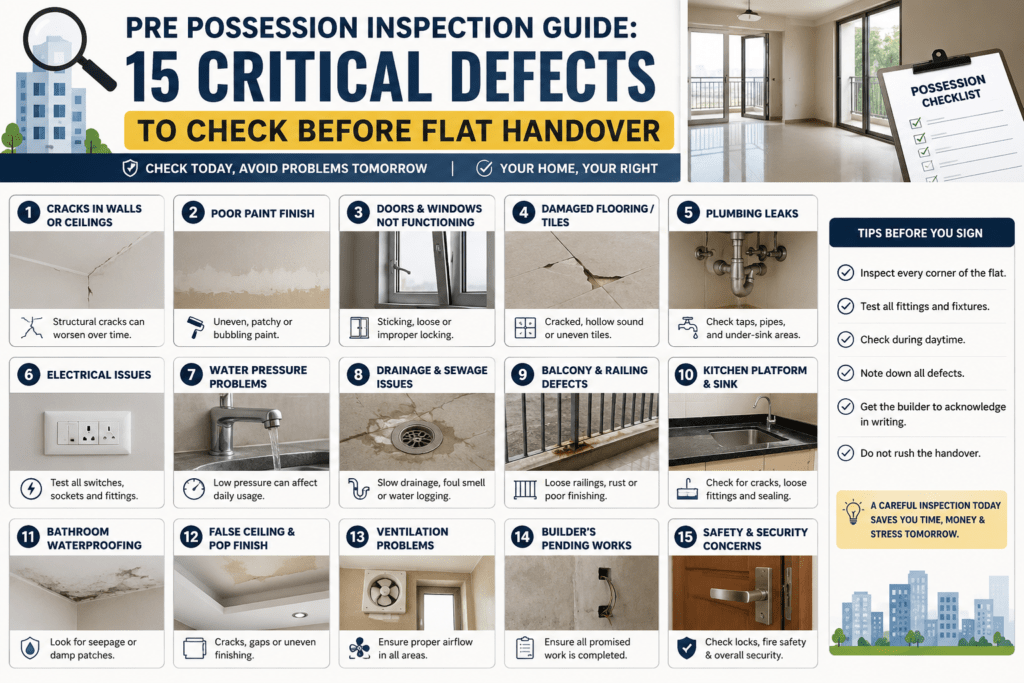
In this article, we will discuss 15 critical defects that every homebuyer should check before taking possession of a new flat. Knowing what to look for can help you avoid expensive repairs, protect your investment, and ensure that your new home is delivered in the condition you were promised.
What Is a Pre Possession Inspection?
A pre possession inspection is a comprehensive assessment of a property conducted before the buyer officially accepts possession from the builder. The objective of this inspection is to identify defects, quality issues, workmanship concerns, and safety-related problems that may not be visible during a routine site visit.
During a pre possession inspection, various components of the property are carefully checked, including walls, flooring, ceilings, doors, windows, plumbing systems, electrical installations, waterproofing, balconies, and ventilation areas. Any issues identified during the inspection can be documented and reported to the builder for rectification before the handover process is completed.
For homebuyers, a pre possession inspection serves as a quality assurance step that helps ensure the property is delivered according to the promised specifications and standards. It also reduces the risk of unexpected repair expenses after possession and provides greater confidence before moving into the new home.
Why Is a Pre Possession Inspection Important Before Flat Handover?
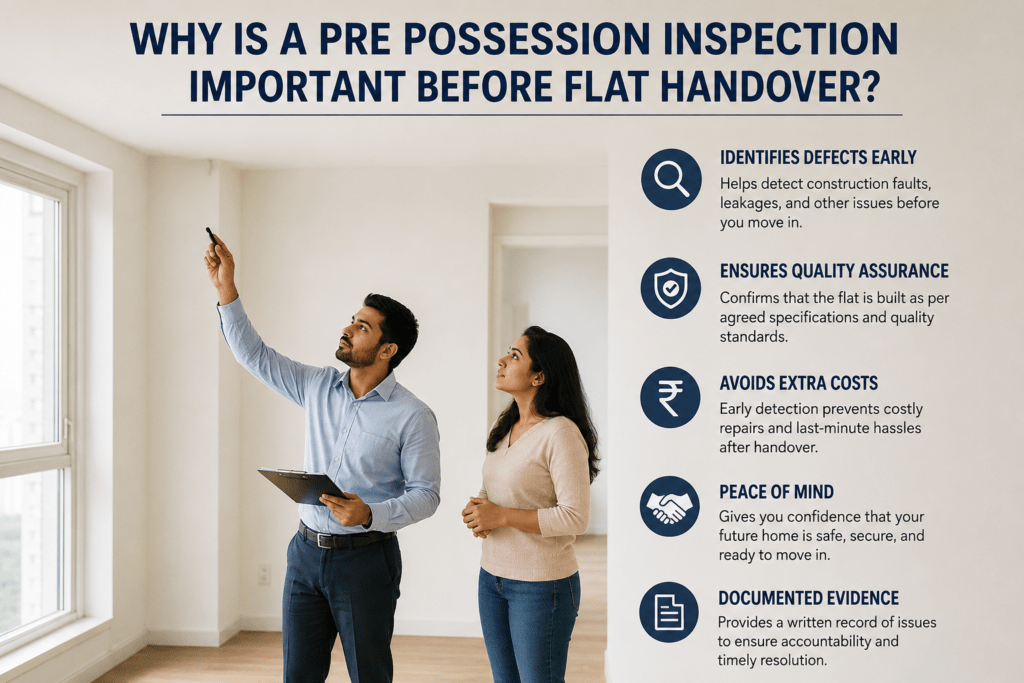
Many homebuyers assume that a newly constructed flat will be free from defects. However, construction and finishing issues can exist even in brand-new properties. A pre possession inspection helps identify these problems before they become the homeowner’s responsibility.
Here are some key reasons why a pre possession inspection is important:
• Identifies hidden defects before possession is accepted.
• Provides an opportunity to request rectifications from the builder.
• Helps avoid costly repairs after moving into the property.
• Ensures that electrical, plumbing, and civil components are functioning properly.
• Verifies the quality of construction and finishing work.
• Protects the buyer’s investment and reduces future risks.
A professional inspection allows homebuyers to make informed decisions and ensures that the property is handed over in the best possible condition.
15 Critical Defects to Check Before Flat Handover
1. Wall Cracks
Wall cracks are among the most common defects found during a pre possession inspection. While minor hairline cracks may occur due to plaster shrinkage, larger or recurring cracks can indicate structural movement, poor workmanship, or improper curing. Carefully inspect walls, corners, beam-column junctions, and ceiling areas for visible cracks. Any significant crack should be documented and reported to the builder before possession.
2. Dampness And Seepage
Damp patches, water stains, peeling paint, or mold growth can indicate hidden leakage issues. Check walls near bathrooms, kitchens, balconies, and external-facing areas. Dampness not only damages interiors but can also affect indoor air quality and lead to costly repairs in the future.
3. Hollow Floor Tiles
Tap floor tiles gently using a coin or hard object. A hollow sound may indicate poor tile bonding or improper installation. Hollow tiles can crack over time and may require replacement. This issue is commonly found in newly constructed flats and should be rectified before handover.
4. Uneven Flooring
Walk across different rooms and observe whether the flooring feels level. Uneven flooring can create tripping hazards and may indicate poor construction quality. Check tile alignment, gaps between tiles, and level differences between adjoining rooms.
5. Plumbing Leakages
Inspect all water supply lines, drainage pipes, wash basins, kitchen sinks, and bathroom fixtures. Even minor leakages can lead to dampness, mold growth, and water damage. Ensure that all plumbing connections are secure and functioning properly.
6. Water Pressure Issues
Turn on all taps and showers to verify water flow and pressure. Low water pressure may indicate blocked pipelines, faulty fittings, or plumbing design issues. Consistent water pressure is essential for daily comfort and convenience.
7. Electrical Wiring Faults
Test electrical points, switches, sockets, and distribution boards. Faulty wiring can pose serious safety risks and increase the likelihood of electrical failures. Ensure that all electrical installations comply with safety standards and operate correctly.
8. Improper Earthing
Proper earthing is essential for electrical safety. Poor earthing can increase the risk of electric shocks and equipment damage. During a pre possession inspection, earthing systems should be checked to ensure they provide adequate protection.
9. Defective Switches And Sockets
Check every switch, socket, and electrical outlet in the property. Loose, damaged, or non-functional electrical points should be rectified before possession. Small electrical defects can become major inconveniences after moving in.
10. Door Alignment Issues
Open and close all doors to ensure smooth operation. Misaligned doors may not close properly, create gaps, or indicate poor installation. Check hinges, locks, handles, and frame alignment carefully.
11. Window Installation Defects
Inspect windows for proper alignment, sealing, locking mechanisms, and smooth operation. Gaps around window frames can allow water seepage, dust infiltration, and energy loss. Ensure all windows are securely installed.
12. Balcony Slope Problems
Balconies should have the correct slope to allow proper drainage. Improper slopes can cause water stagnation and long-term waterproofing issues. Pour water and observe whether it drains efficiently toward the outlet.
13. Waterproofing Defects
Waterproofing failures are often hidden but can result in significant damage over time. Pay close attention to bathrooms, balconies, utility areas, and terraces. Signs of leakage should be addressed before accepting possession.
14. Paint And Finishing Issues
Inspect walls, ceilings, corners, and edges for uneven paint application, patches, stains, dents, and finishing defects. Poor finishing quality can affect the overall appearance and indicate rushed workmanship.
15. Ventilation And Shaft Problems
Proper ventilation is essential for maintaining indoor air quality. Check ventilation shafts, exhaust provisions, windows, and airflow in bathrooms and kitchens. Poor ventilation can contribute to moisture buildup and unpleasant indoor conditions.
What Happens If These Defects Are Missed?
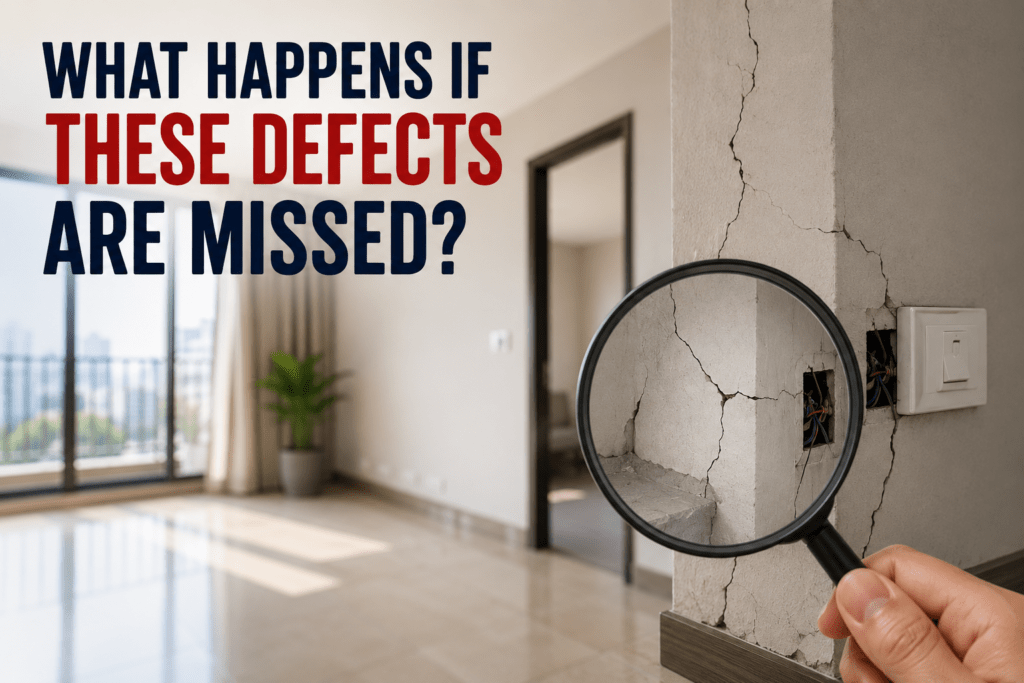
Ignoring defects during flat handover can lead to significant financial, safety, and maintenance-related problems in the future. While some issues may appear minor at first, they can become expensive and difficult to fix once possession has been accepted.
For example, a small plumbing leakage can eventually cause dampness, mold growth, and damage to walls or flooring. Similarly, poor waterproofing can result in persistent seepage issues that require extensive repairs. Electrical faults that go unnoticed during handover may increase safety risks and lead to costly troubleshooting after moving in.
Another important factor is builder rectification. Once possession is accepted, getting defects addressed by the builder may become more challenging and time-consuming. In many cases, homeowners end up bearing repair costs themselves.
A professional pre possession inspection helps identify and document these issues before handover, allowing buyers to request corrections at the right stage. This not only protects the property but also helps avoid unexpected expenses and future disputes.
Why Pre Possession Inspection Matters
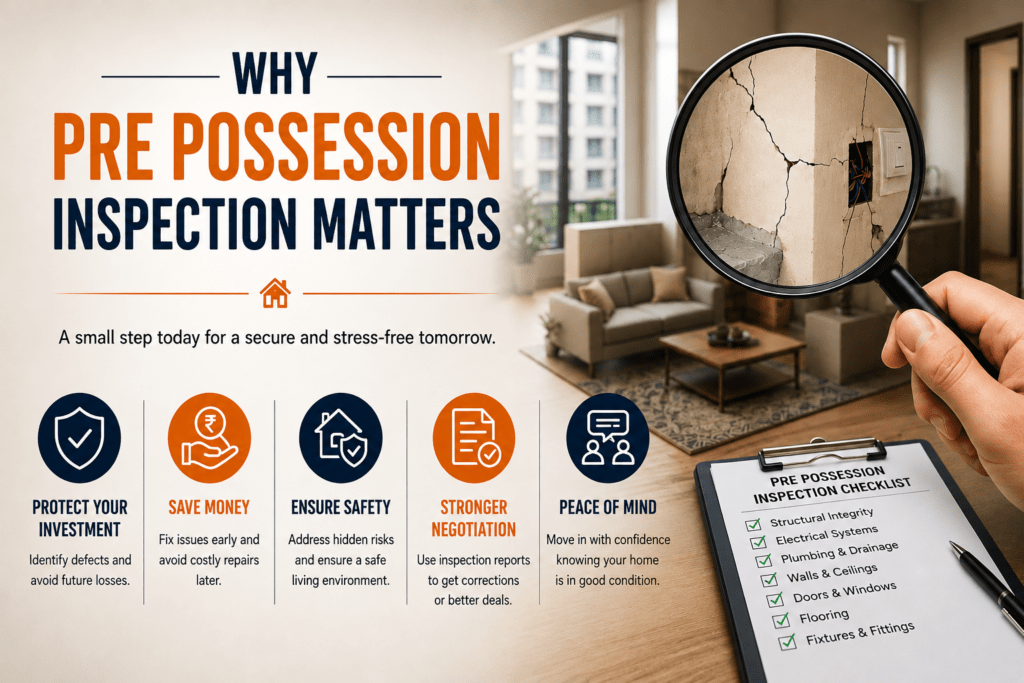
A newly constructed flat may look perfect, but many defects are not visible during a normal walkthrough. Issues such as plumbing leakages, electrical faults, dampness, hollow tiles, and poor finishing work can easily be missed.
A professional pre possession inspection helps identify these problems before you accept possession. It gives homebuyers a clear understanding of the property’s condition and allows them to get defects rectified by the builder at the right time.
At HousePedia, our complete property inspection covers 600+ checkpoints across civil, plumbing, electrical, dampness detection, safety, and finishing quality. The objective is simple: help homebuyers avoid costly repairs and take possession with confidence.
Frequently Asked Questions
What is a pre possession inspection?
A pre possession inspection is a detailed assessment of a property before accepting possession from the builder to identify defects, quality issues, and safety concerns.
When should a pre possession inspection be conducted?
A pre possession inspection should ideally be conducted after the builder offers possession but before signing the final handover documents.
Is a pre possession inspection worth it?
Yes. It helps identify defects before possession, reducing the risk of costly repairs and future disputes.
What are the most common defects found during flat handover?
Common defects include wall cracks, dampness, plumbing leakages, electrical faults, hollow tiles, waterproofing issues, and poor finishing work.
Can builders fix defects after a pre possession inspection?
Yes. Identifying defects before handover allows buyers to request rectifications from the builder before accepting possession.
Planning to take possession of your new flat? HousePedia’s complete property inspection covers 600+ checkpoints across civil, plumbing, electrical, dampness detection, and finishing quality to help you identify hidden defects before handover.
Make Smarter Property Decisions with Expert Home Inspection Services
From civil checks to electrical & plumbing audits — get a detailed inspection report within 24–48 hours. Protect your investment with India’s most trusted inspection service.
✅ Trusted by 20,000+ homeowners • Backed by 15+ years of expertise