

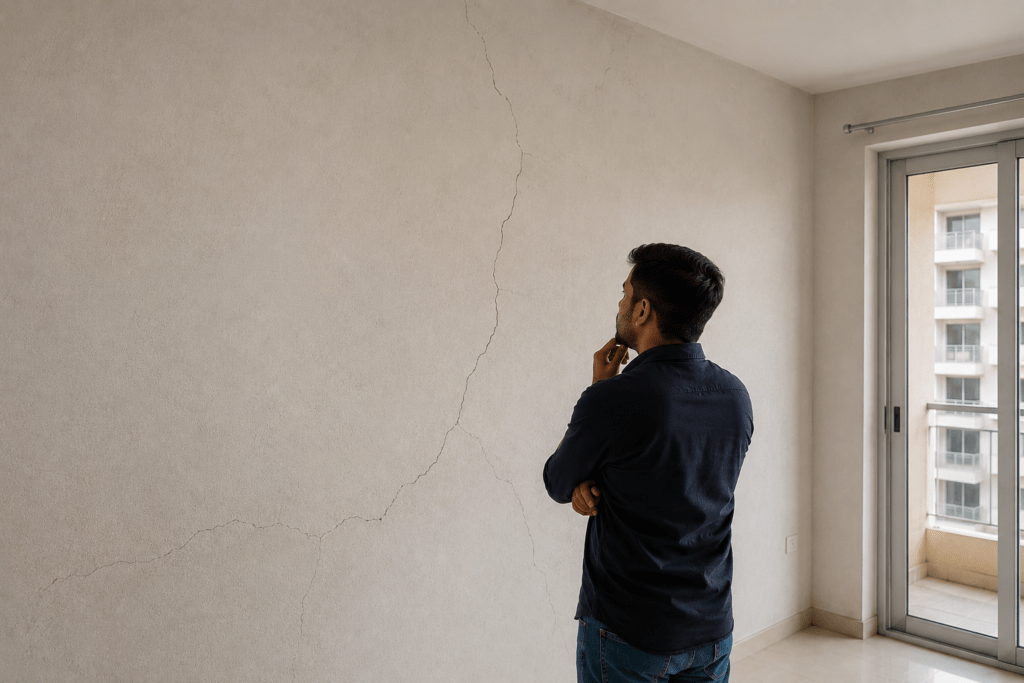
Buying a new flat is an exciting milestone. Fresh paint, modern interiors, and clean walls often create the impression that everything is perfect. However, not every construction defect is visible during possession.
One of the most common issues homeowners notice after moving in is wall cracks in new flats. While some hairline cracks may develop naturally as the building settles, others can indicate poor construction quality, structural movement, waterproofing failures, seepage, or hidden defects that require immediate attention.
Ignoring these warning signs can lead to costly repairs, moisture problems, damaged interiors, and even safety concerns over time.
In this guide, we’ll explain the different types of cracks in new flats, their possible causes, how to identify serious structural issues, and why a professional home inspection before or after possession can help you avoid expensive surprises.
A professional home inspection by experienced civil inspection experts can identify hidden defects that are often missed during possession, helping homeowners make informed decisions before repair costs increase.
Why Do Wall Cracks Appear in New Flats?
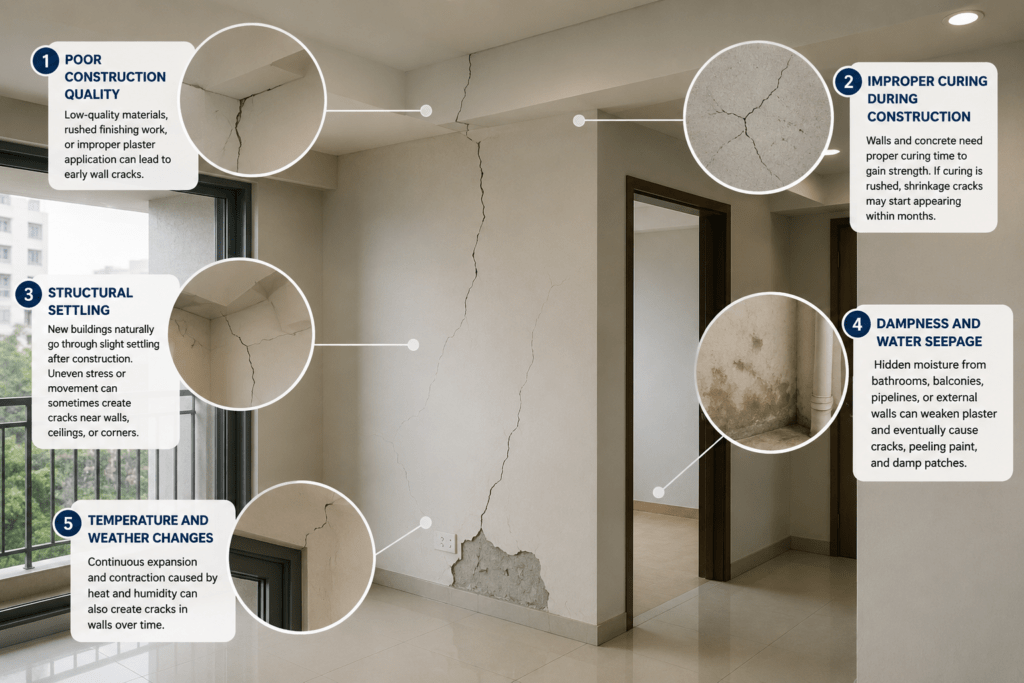
Not all cracks in new flats are caused by the same problem. Some may be minor surface-level cracks, while others can indicate hidden construction defects, dampness, or structural stress inside the property.
1. Poor Construction Quality
Low-quality materials, rushed finishing work, or improper plaster application can lead to early wall cracks after possession.
2. Improper Curing During Construction
One of the leading causes of wall cracks in new flats is poor construction quality. Low-grade materials, improper plaster application, inadequate supervision, or rushed finishing work can weaken walls, leading to visible cracks within months of possession. These defects often become more noticeable after the first monsoon or seasonal weather changes.
3. Structural Settling
New buildings naturally settle during the first few months or years after construction. As the foundation adjusts to the soil, small hairline cracks may develop around walls, ceilings, door frames, or window corners. While minor settlement cracks are usually harmless, wider or expanding cracks should always be evaluated by an inspection expert.
4. Dampness and Water Seepage
Hidden water leakage is one of the most overlooked reasons behind wall cracks. Moisture entering through bathrooms, balconies, terraces, plumbing lines, or external walls weakens plaster over time. This often results in damp patches, peeling paint, bubbling walls, and eventually visible cracks if the source of leakage is not identified and repaired.
5. Temperature and Weather Changes
Walls naturally expand during hot weather and contract when temperatures drop. Repeated expansion and contraction can create stress within construction materials, leading to fine cracks over time. This is especially common in areas exposed to direct sunlight or significant seasonal temperature variations.
6. Structural Movement
Cracks that appear diagonally, continue to widen, or extend through beams and columns may indicate structural movement. These types of cracks should never be ignored, as they could be a sign of foundation settlement, excessive structural load, or construction defects. A professional civil inspection is recommended to determine the actual cause and assess the severity of the issue.
7. Poor Waterproofing
Improper waterproofing around bathrooms, balconies, terraces, roofs, or exterior walls allows water to penetrate the structure over time. Continuous moisture exposure weakens construction materials, causing plaster deterioration, seepage, and eventually wall cracks. Early waterproofing inspections can help prevent expensive repairs in the future.
Warning Signs of Wall Cracks You Should Never Ignore
Some cracks may appear small in the beginning but can become more serious over time if the underlying issue is not identified early.
Homebuyers should pay attention if cracks:
- keep increasing in size
- appear repeatedly in the same area
- are visible near ceilings or windows
- are accompanied by dampness or peeling paint
- create hollow sounds inside walls
These warning signs may indicate hidden construction or waterproofing problems inside the property.
Common Mistakes Buyers Make During Possession

Many homebuyers focus only on paint, interiors, and overall appearance during possession while ignoring hidden defects that may create bigger problems later.
Some of the most common mistakes buyers make include:
- ignoring small wall cracks
- not checking dampness-prone areas
- skipping plumbing and electrical inspection
- trusting only fresh paint and finishing
- not inspecting balconies and bathroom waterproofing
- taking possession without professional property inspection
In many cases, these issues become visible only after families start living inside the flat.
What to Check Before Taking Possession of a New Flat
Before accepting possession of a new flat, buyers should carefully inspect both visible and hidden areas of the property.
Important things to check include:
✔ Wall cracks and plaster quality
✔ Dampness or seepage signs
✔ Ceiling corners and joints
✔ Bathroom waterproofing
✔ Balcony slope and drainage
✔ Door and window alignment
✔ Hollow tiles or flooring gaps
✔ Plumbing leakage risks
✔ Electrical points and switches
✔ Paint bubbling or uneven finishing
A proper inspection before possession can help identify hidden issues early and reduce the risk of expensive future repairs.
Why Property Inspection Before Possession Matters
Many construction and finishing defects are difficult to identify during a normal site visit. Fresh paint and polished interiors can sometimes hide underlying problems temporarily.
A detailed property inspection helps buyers understand the actual condition of the flat before moving in. It can help identify hidden dampness, seepage risks, civil defects, electrical faults, plumbing leakage, waterproofing issues, and finishing problems that may otherwise go unnoticed.
Identifying these issues early can help homeowners avoid stress, unexpected repair costs, and future property damage.
How Housepedia Helps Homebuyers Identify Hidden Property Problems
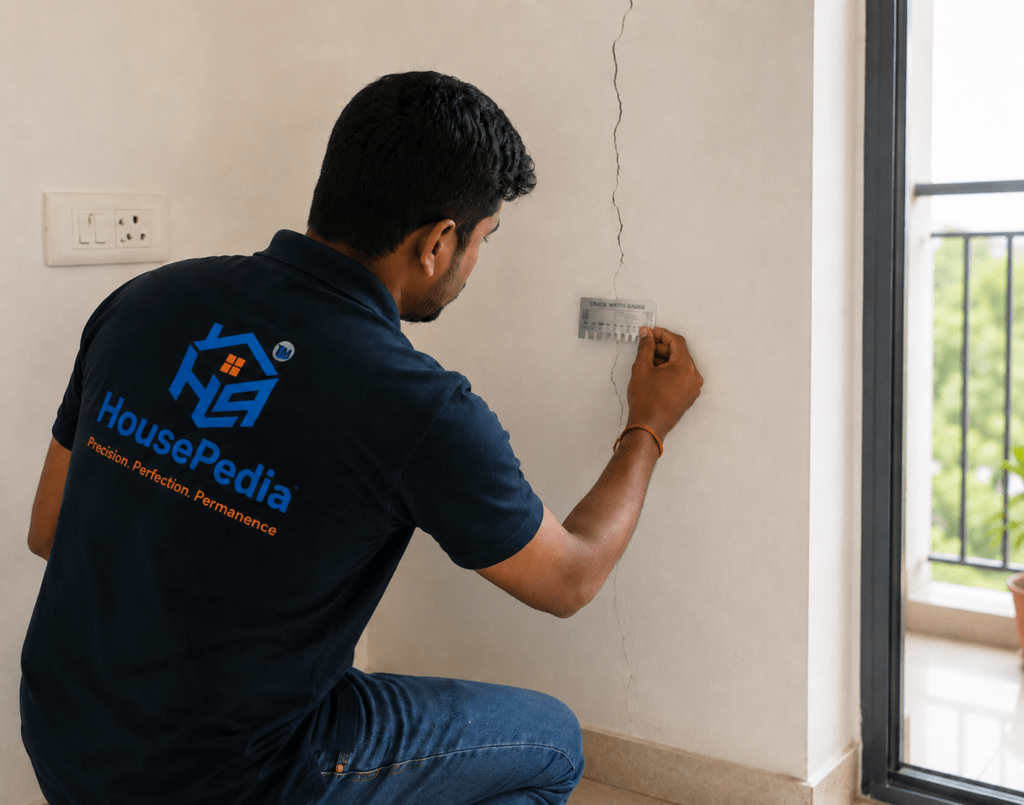
Housepedia provides complete property inspection services designed to help homebuyers identify visible and hidden defects before possession.
The inspection process includes detailed checks related to:
- civil inspection
- dampness and seepage detection
- plumbing inspection
- electrical inspection
- waterproofing checks
- flooring and tile inspection
- wall and ceiling inspection
- interior finishing quality checks
Detailed inspection reports help buyers better understand the condition of the property and make more informed decisions before moving in.
Make Smarter Property Decisions with Expert Home Inspection Services
From civil checks to electrical & plumbing audits — get a detailed inspection report within 24–48 hours. Protect your investment with India’s most trusted inspection service.
✅ Trusted by 20,000+ homeowners • Backed by 10+ years of expertise
Frequently Asked Questions
Why do cracks in new flats appear within a few months?
cracks in new flats can appear because of construction settling, poor workmanship, improper curing, dampness, seepage, waterproofing failure, or temperature-related expansion and contraction inside the property.
Are cracks in new flats normal?
Some small hairline cracks in new flats may occur naturally after construction. However, repeated cracks, widening cracks, or cracks accompanied by dampness, seepage, or peeling paint should not be ignored.
Can seepage cause cracks in new flats?
Yes. Hidden moisture and water leakage can weaken plaster and paint layers over time, eventually leading to visible cracks in new flats and other surface-level damage inside the property.
What should buyers inspect before taking possession of a new flat?
Before possession, buyers should inspect wall quality, dampness signs, plumbing leakage, electrical systems, flooring, waterproofing areas, balcony drainage, and overall finishing quality to identify hidden issues that may later cause cracks in new flats.
Why is professional inspection important for cracks in new flats?
Professional property inspection helps identify hidden defects behind cracks in new flats that are often difficult to notice during a regular site visit. Early inspection can help buyers avoid expensive repair costs and future property-related problems.