

Introduction
Moisture problems are not always visible during a normal property walkthrough. A wall may look dry while elevated moisture is present in an area that requires closer inspection.
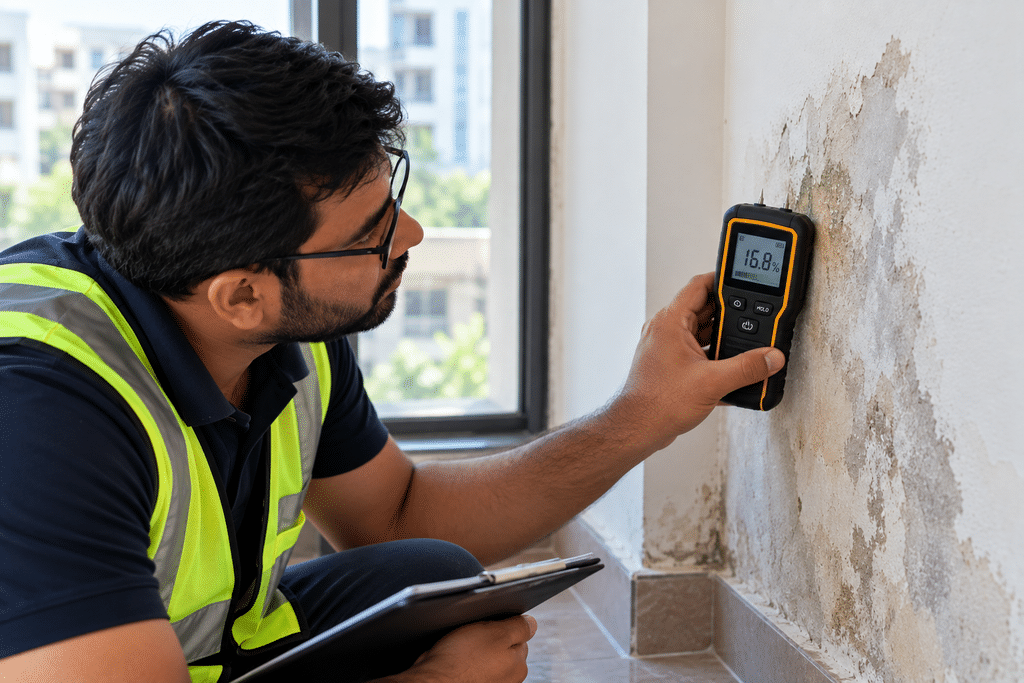
A Moisture Meter in Home Inspection is a handheld tool that helps inspectors identify areas with elevated moisture in suitable building materials. Depending on the meter, it may use pins or non-invasive sensing to assess or compare moisture conditions.
During a professional inspection, moisture meter readings are considered along with visible signs, surrounding conditions and other inspection methods. This helps the inspector identify areas that may need further investigation rather than relying on a single reading.
What Is a Moisture Meter?
A Moisture Meter in Home Inspection is a handheld inspection tool used to assess moisture conditions in building materials.
Depending on the model, moisture meters generally use one of two approaches:
Pin-Type Moisture Meter – Uses metal pins or probes that make contact with the material to measure electrical resistance.
Pinless Moisture Meter – Uses non-invasive sensing to scan an area without inserting pins into the surface.
Some professional meters combine both modes. The appropriate method depends on the material being tested and the purpose of the inspection.
How Does a Moisture Meter Work?
Moisture affects the electrical properties of many building materials. Moisture meters use these changes to provide a reading or relative indication of moisture conditions.
During an inspection, the inspector may first establish a dry reference area and then compare readings from areas that appear suspicious.
This comparison is particularly useful because the meaning of a reading can vary depending on the material, meter type and scale being used. A number shown on the display should not automatically be treated as an exact percentage of water in every material.
Make Smarter Property Decisions with Expert Home Inspection
From civil checks to electrical & plumbing audits — get a detailed inspection report within 24–48 hours. Protect your investment with India’s most trusted inspection service.
✅ Trusted by 20,000+ homeowners • Backed by 10+ years of expertise
Types of Moisture Meters Used in Home Inspection
1. Pin-Type Moisture Meter in Home Inspection
Pin meters use probes that make contact with the material. They can provide point-specific readings and are commonly used where direct contact with the material is appropriate.
2. Pinless Moisture Meter
Pinless meters scan without penetrating the surface. This makes them useful for quickly screening larger areas without creating pinholes.
3. Combination Moisture Meter in Home Inspection
Some professional meters combine pin and pinless functions, allowing the inspector to use different measurement approaches depending on the material and inspection requirement.
ue. At Housepedia, our experts use advanced moisture meters to make sure your home is safe, healthy, and problem-free.
Where Is a Moisture Meter in Home Inspection Used During a Home Inspection?
AMoisture Meter in Home Inspection may be used around areas where visible signs or other inspection findings suggest a possible moisture concern.
Common areas include:
- Walls and ceilings
- Around windows and doors
- Bathrooms and wet areas
- Areas near plumbing fixtures
- Flooring and accessible floor surfaces
- Areas with staining or discoloration
- Locations showing possible seepage
- Areas identified through thermal imaging for further checking
Professional inspectors generally use moisture meters selectively rather than treating every wall or surface as equally suspicious.
What Can a Moisture Meter Help Detect?
A Moisture Meter in Home Inspection can help identify areas with elevated moisture that may be associated with:
🔹 Wall Dampness – Identifies areas that show higher moisture compared with a suitable dry reference.
🔹 Possible Seepage – Helps investigate suspicious damp patches or moisture patterns.
🔹 Possible Plumbing Leakage – Can help identify moisture around areas where concealed plumbing may be a concern.
🔹 Ceiling Moisture – Useful around stains or areas suspected of water intrusion.
🔹 Floor Moisture – Can help screen accessible floor surfaces for unusual moisture conditions.
🔹 Moisture Behind Finishes – Depending on the meter and material, readings may indicate areas that require further investigation.
Important: A Moisture Meter in Home Inspection indicates a moisture condition; it does not automatically identify the source of the water. Further investigation may be necessary.
Can a Moisture Meter Detect a Hidden Water Leak?
A Moisture Meter in Home Inspection can help identify an area with elevated moisture, including areas where a visible leak is not immediately apparent.
However, the meter does not directly identify the source of the leak.
For example, an elevated reading near a bathroom wall could be related to plumbing, seepage from an adjacent area, condensation or another moisture source. The inspector needs to consider the location, pattern, surrounding conditions and other inspection findings.
Housepedia also uses other inspection tools, including thermal imaging and humidity assessment, when investigating moisture-related concerns.
Moisture Meter vs Thermal Imaging Camera
Moisture Meter:
Helps assess moisture conditions at the tested area.
Thermal Imaging Camera:
Shows surface-temperature patterns that may indicate an area requiring further investigation.
A thermal image may help identify where to investigate, while a moisture meter can provide additional information about the suspected area.
Using multiple inspection methods can provide more context than relying on either tool alone.
How Should Moisture Meter Readings Be Interpreted?
The most useful approach is often to compare a suspicious area with a suitable dry reference area made from the same or similar material.
For example, instead of looking at one number in isolation, an inspector can compare readings across several nearby locations to identify areas that are noticeably higher than the surrounding baseline.
The exact meaning of a reading depends on the meter, material and measurement mode, so generic “safe” or “dangerous” numbers should not be applied to every surface.
How Housepedia Uses a Moisture Meter in Home Inspection During Property Inspection
At Housepedia, a Moisture Meter in Home Inspection is used as part of a broader property inspection process.
When a wall, ceiling, floor or other accessible area shows signs that may indicate moisture, the inspector can use appropriate measurement tools to assess the condition further.
Depending on the situation, moisture meter readings may be considered alongside visual inspection, thermal imaging and humidity assessment to better understand the area and determine whether further investigation is required.
Planning to buy or take possession of a property? Get the property inspected before making an important decision.