

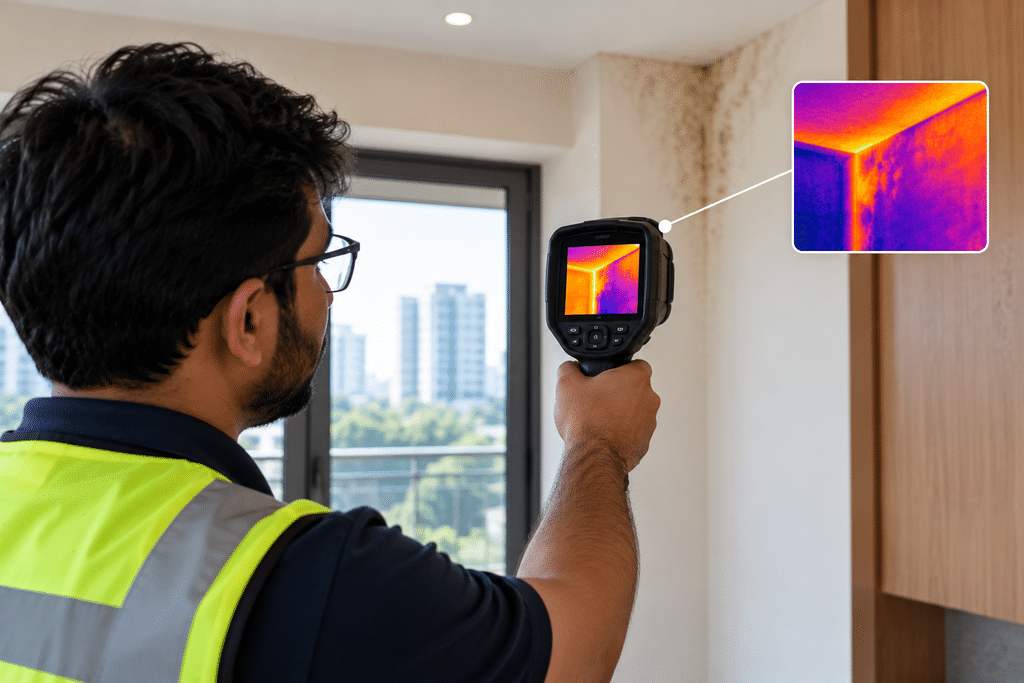
Not every property defect is immediately visible during a normal walkthrough. Differences in surface temperature can sometimes point to areas that need closer inspection, such as possible moisture intrusion, insulation gaps, air leakage or abnormal heating around electrical components.
A Thermal Imaging Camera for home inspection measures infrared radiation from surfaces and converts temperature differences into a visual thermal image. This gives inspectors another way to identify unusual heat patterns that may not be obvious to the naked eye.
In this guide, we explain how infrared thermal imaging works, where it can be useful during a home inspection, what it can and cannot detect, and why thermal findings may need to be confirmed with other inspection methods.
Make Smarter Property Decisions with Expert Home Inspection
From civil checks to electrical & plumbing audits — get a detailed inspection report within 24–48 hours. Protect your investment with India’s most trusted inspection service.
✅ Trusted by 20,000+ homeowners • Backed by 10+ years of expertise
What Is an Infrared Thermal Imaging Camera?
An infrared thermal imaging camera is a device that measures infrared radiation emitted by surfaces and converts differences in surface temperature into a visual image, often called a thermogram.
Instead of showing a normal photograph, the camera displays areas with different temperature patterns. These patterns can help an inspector identify areas that may require closer examination.
Thermal imaging is therefore a supporting inspection tool, not a replacement for visual inspection, moisture testing or electrical assessment. would otherwise remain hidden.
How Does Thermal Imaging Work in Home Inspection?
Every surface emits infrared energy. A thermal imaging camera detects this energy and displays variations in surface temperature as different shades or colours.
During a property inspection, an inspector may scan walls, ceilings, windows, doors, floors or accessible electrical components and look for unusual temperature patterns.
For example, a cooler area on a wall may warrant further checking for possible moisture, while an unusual heat pattern around an electrical component may indicate that additional electrical investigation is required.
What Can a Thermal Imaging Camera Detect During a Home Inspection?
🔹 Possible Moisture Intrusion
Moisture can sometimes create different surface-temperature patterns because wet building materials behave differently from dry materials. Thermal imaging may help identify areas that need moisture testing.
🔹 Insulation Gaps
Missing, damaged or uneven insulation can create temperature differences across walls and ceilings. These patterns can help inspectors identify areas that require closer examination.
🔹 Air Leakage
Temperature differences around windows, doors and other building-envelope areas can sometimes indicate air leakage or thermal irregularities.
🔹 Electrical Hotspots
Abnormally warm areas around electrical components can be a reason for further electrical investigation. Thermal imaging can help locate these temperature anomalies without relying only on visual inspection.
Can Thermal Imaging See Through Walls?
It measures the temperature of the accessible surface and displays temperature differences as a thermal image. Conditions behind a wall can sometimes influence the surface temperature and create a pattern that deserves further investigation, but the camera does not provide a direct view of pipes, wiring, moisture or other objects inside the wall.
This distinction is important because a thermal image should be treated as an indication for further investigation, not as direct proof of a hidden defect.
Thermal Imaging vs Visual Inspection
- A visual inspection and thermal imaging serve different purposes.
- A visual inspection looks for visible conditions such as cracks, stains, damaged surfaces, corrosion, loose fittings and other observable defects.
- Thermal imaging adds another layer by showing surface-temperature patterns that may not be visible during a normal walkthrough.
- Using both methods can help an inspector decide where additional testing or closer examination may be useful.
Why Is Thermal Imaging Useful in Property Inspection?
Thermal imaging can be useful because it allows inspectors to quickly scan larger areas and identify unusual temperature patterns that may otherwise be difficult to notice.
Potential benefits include:
- Identifying areas that need closer moisture investigation
- Locating unusual temperature patterns around electrical components
- Finding possible insulation deficiencies
- Checking temperature differences around windows and doors
- Supporting inspection documentation with thermal images
- Helping inspectors decide where additional testing may be required
Thermal imaging is most useful when the inspector understands the environmental conditions and correctly interprets the thermal pattern rather than treating every colour difference as a defect.
When Should Thermal Imaging Be Used During a Home Inspection?
Thermal imaging can be particularly useful when an inspector wants to investigate areas where temperature differences may provide additional information.
Depending on the property and inspection conditions, this may include:
- Walls and ceilings with suspected moisture concerns
- Areas around windows and doors
- Electrical panels and accessible electrical components
- Roof or ceiling areas where moisture patterns are suspected
- Areas with possible insulation deficiencies
- HVAC supply and return areas
The usefulness of a thermal scan depends on the temperature conditions, surface materials, environment and the inspector’s ability to interpret the results correctly.
Limitations of Thermal Imaging in Home Inspection
Thermal imaging is powerful, but it has limitations.
A thermal camera:
- Does not directly see through walls
- Does not automatically confirm a water leak
- Does not directly measure moisture content
- Does not prove that an electrical component is faulty
- Cannot replace a complete home inspection
- Requires correct interpretation of temperature patterns
For example, a thermal anomaly may indicate an area that needs further investigation, but a moisture meter or other appropriate testing method may be needed to confirm moisture-related concerns.
How Thermal Imaging Camera Supports a Housepedia Property Inspection
At Housepedia, Thermal Imaging Camera can be used as a supporting tool during property inspection to identify temperature patterns that may require closer examination.
Depending on the inspection conditions, thermal scanning can support the assessment of areas such as walls, ceilings, electrical components, windows and other accessible surfaces.
Thermal Imaging Camera is considered alongside visual observations and other appropriate inspection methods to provide a more detailed understanding of the property’s visible and potentially concealed concerns.
Planning to buy or take possession of a property? Get your property inspected before making an important decision.
FAQ
1. What is a Thermal Imaging Camera used for in home inspection?
A thermal imaging camera is used to identify unusual surface-temperature patterns that may point to areas requiring further investigation, including possible moisture intrusion, insulation gaps, air leakage and electrical hotspots.
2. Can a Thermal Imaging Camera detect hidden water leaks?
Thermal imaging can sometimes identify temperature patterns associated with moisture intrusion, but a thermal image alone does not confirm a water leak. Further inspection or moisture testing may be required.
3. Can Thermal Imaging Camera see through walls?
No. Thermal cameras measure surface temperature. They do not provide a direct view through walls. Conditions behind a surface may sometimes create a temperature pattern that indicates an area for further investigation.
4. Can Thermal Imaging Camera detect electrical hotspots?
Thermal imaging can identify unusual heat patterns around electrical components, which may indicate an area requiring further electrical investigation. A thermal image alone should not be treated as confirmation of an electrical fault.
5. Does Thermal Imaging Camera replace a home inspection?
No. Thermal imaging is a supporting inspection technique. It works alongside visual inspection and other appropriate testing methods rather than replacing a complete property inspection.