

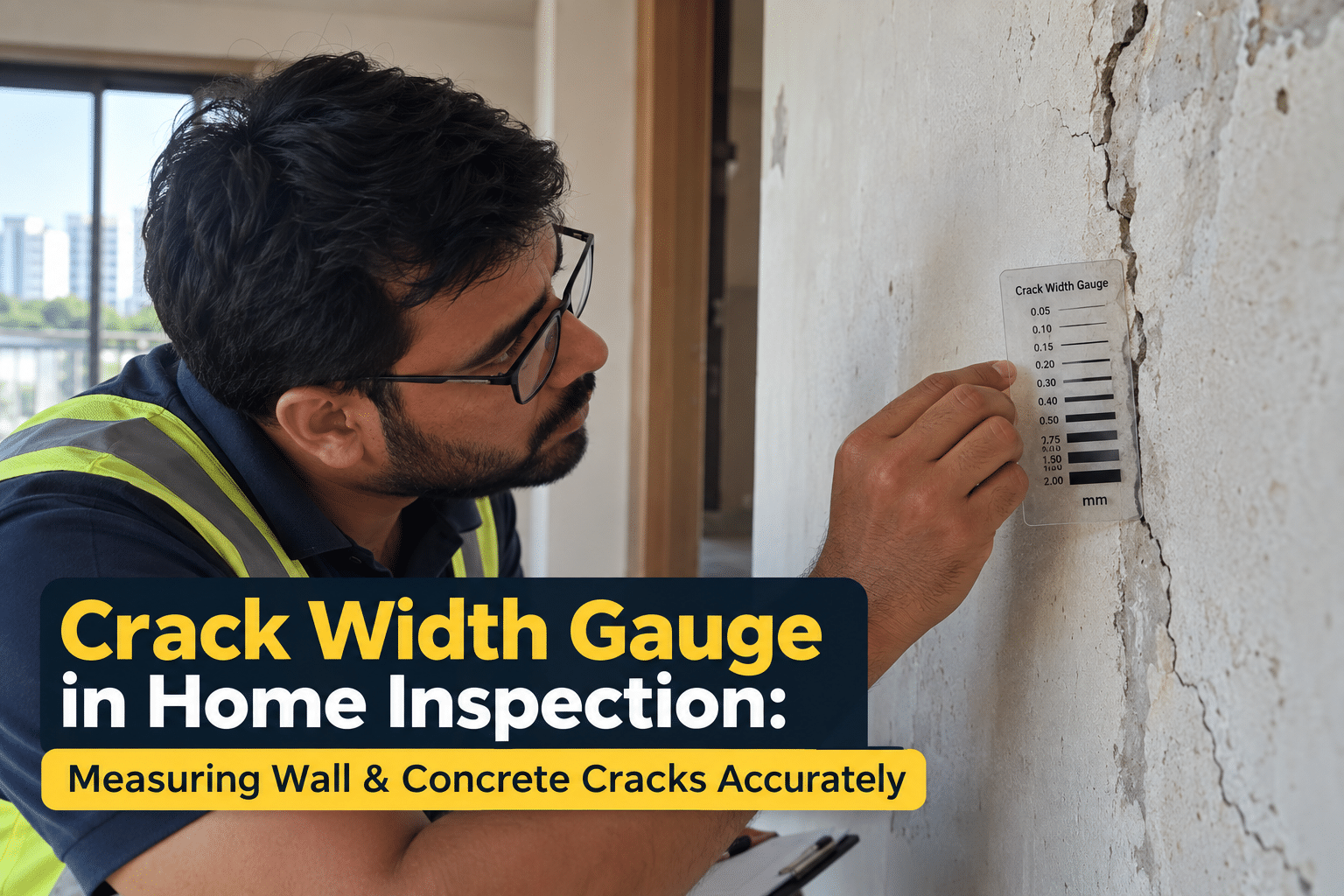
Small cracks can sometimes tell an important story about a property. Measuring them accurately helps you understand their width, track changes over time, and identify areas that may need closer inspection.
A crack width gauge is a simple but useful tool for measuring cracks in walls and concrete surfaces. During a professional home inspection, accurate measurements can help document visible defects and support a more detailed assessment of the property.
Planning to buy or take possession of a property? Get it professionally inspected before making your decision.
Make Smarter Property Decisions with Expert Home Inspection
From civil checks to electrical & plumbing audits — get a detailed inspection report within 24–48 hours. Protect your investment with India’s most trusted inspection service.
✅ Trusted by 20,000+ homeowners • Backed by 10+ years of expertise
Cracks in walls or concrete often worry homeowners and buyers. But not every crack is dangerous — some are just cosmetic, while others indicate serious structural issues. To differentiate between the two, inspectors use a Crack Width Gauge. This simple yet effective tool helps measure the exact width of cracks and assess their severity.
What Is a Crack Width Gauge?
A crack width gauge is a simple measuring tool used to determine the approximate width of cracks visible on walls, plaster, masonry and concrete surfaces. It typically has graduated markings in millimetres, allowing an inspector to record crack width quickly and consistently.
During a home inspection, crack measurements can help document visible defects and provide a reference for monitoring whether a crack changes over time.
Key Uses of a Crack Width Gauge in Home Inspection
🔹 Wall Crack Measurement – Measures the approximate width of visible cracks in plaster, paint and masonry surfaces.
🔹 Concrete Crack Measurement – Helps record cracks found on concrete slabs, beams and other visible concrete surfaces.
🔹 Crack Documentation – Provides a measurable reference that can be included in inspection reports along with photographs.
🔹 Crack Monitoring – Recorded measurements can help compare the same crack during future inspections and identify noticeable changes.
🔹 Civil Inspection Support – Helps inspectors document visible crack conditions as part of a broader civil inspection.
How Is Crack Width Measured?
A crack width gauge is placed directly over a visible crack so that the crack can be compared with the graduated markings on the gauge. The closest matching marking provides an approximate width measurement, usually in millimetres.
For inspection documentation, the measurement can be recorded along with the crack’s location, direction, appearance and photographs. This creates a clearer record of the defect and can help with future comparison.
Important: A crack width measurement alone does not determine the cause of a crack. A broader inspection is required to understand the surrounding conditions and possible reasons for the defect.
Why Crack Measurement Matters for Homeowners
✔️ Early Warning System – Wide or growing cracks may indicate foundation issues.
✔️ Peace of Mind – Small hairline cracks can be confirmed as non-threatening.
✔️ Cost Management – Prevents unnecessary large-scale repairs by identifying severity.
✔️ Property Value Protection – Buyers gain confidence when inspection reports include crack analysis.
FAQs
1. What is a crack width gauge used for?
A crack width gauge is used to measure the approximate width of visible cracks in walls, plaster, masonry and concrete surfaces. It helps inspectors document crack measurements during a home inspection.
2. How do you measure the width of a wall crack?
A crack width gauge is placed over the visible crack and compared with its graduated markings, usually in millimetres. The measurement can then be recorded along with photographs and details of the crack.
3. Can a crack width gauge tell whether a crack is dangerous?
No. Crack width alone cannot determine the cause or seriousness of a crack. The crack’s location, pattern, direction, surrounding surface condition and other visible signs should also be considered during an inspection.
4. Why is crack width measurement important during a home inspection?
Crack width measurement provides a measurable record of a visible defect. This can help document the property’s condition and make it easier to compare the same crack during future inspections.
5. Can a crack width gauge be used on concrete and masonry cracks?
Yes. A crack width gauge can be used to measure visible cracks on various surfaces, including plaster, masonry and concrete. The measurement should be considered as part of the overall inspection rather than on its own.