

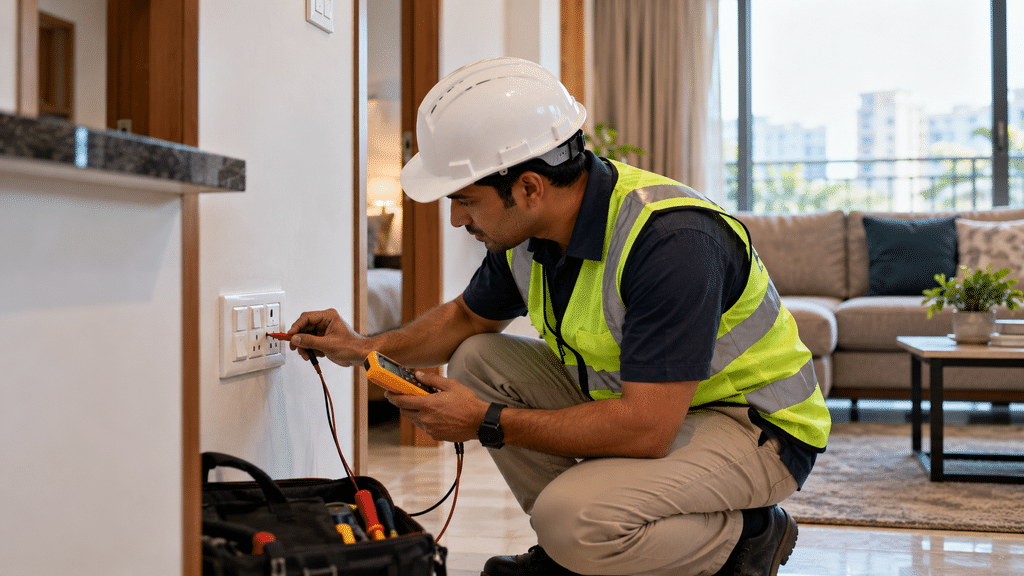
Electrical Safety at Home: Why Electrical Inspection Matters in Gurgaon & Delhi NCR
Electrical Safety at Home is an important concern for homebuyers, tenants, and property owners in Gurgaon and Delhi NCR. While people usually check the location, price, builder reputation, carpet area, sunlight, ventilation, and amenities before buying a flat or house, the electrical system often goes unnoticed. A professional home electrical inspection can help identify visible signs of faulty electrical wiring, loose electrical connections, overloaded circuits, and other potential electrical hazards at home.
In Indian homes, warning signs such as frequent power trips, a burning smell from sockets, shocks from switches, flickering lights, overheated wires, and repeated circuit breaker trips should never be ignored. These issues may indicate electrical wiring problems in a house and can require further investigation by a qualified electrical professional.
This is where electrical wiring inspection and electrical fault detection become important parts of home safety. An inspection may include checking accessible wiring, electrical connections, the electrical panel, MCB and RCCB protection, earthing, and signs of overheating. Appropriate electrical safety testing can help identify potential concerns that may not be obvious during a routine property walkthrough.
For buyers planning to purchase a property, an electrical inspection before buying a house can help them understand the condition of the electrical system before making a decision. Similarly, a new flat electrical inspection before possession can help buyers identify electrical defects that may need attention before moving in.
Whether you are purchasing a new apartment, renting a property, or checking an existing home, understanding Electrical Safety at Home is essential. This guide explains common electrical wiring problems, home electrical inspection checks, electrical hazards, and practical safety measures for homeowners in Gurgaon and across Delhi NCR.
Make Smarter Property Decisions with Expert Home Inspection
From civil checks to electrical & plumbing audits — get a detailed inspection report within 24–48 hours. Protect your investment with India’s most trusted inspection service.
✅ Trusted by 20,000+ homeowners • Backed by 10+ years of expertise
What is Electrical Safety at Home?
Electrical Safety at Home: Why Electrical Inspection Matters in Gurgaon & Delhi NCR
Electrical Safety at Home is an important concern for homebuyers, tenants, and property owners in Gurgaon and Delhi NCR. While people usually check the location, price, builder reputation, carpet area, sunlight, ventilation, and amenities before buying a flat or house, the electrical system often goes unnoticed. A professional home electrical inspection can help identify visible signs of faulty electrical wiring, loose electrical connections, overloaded circuits, and other potential electrical hazards at home.
In Indian homes, warning signs such as frequent power trips, a burning smell from sockets, shocks from switches, flickering lights, overheated wires, and repeated circuit breaker trips should never be ignored. These issues may indicate electrical wiring problems in a house and can require further investigation by a qualified electrical professional.
This is where electrical wiring inspection and electrical fault detection become important parts of home safety. An Electrical Safety at Home may include checking accessible wiring, electrical connections, the electrical panel, MCB and RCCB protection, earthing, and signs of overheating. Appropriate electrical safety testing can help identify potential concerns that may not be obvious during a routine property walkthrough.
For buyers planning to purchase a property, an Electrical Safety at Home before buying a house can help them understand the condition of the electrical system before making a decision. Similarly, a new flat electrical inspection before possession can help buyers identify electrical defects that may need attention before moving in.
Whether you are purchasing a new apartment, renting a property, or checking an existing home, understanding Electrical Safety at Home is essential. This guide explains common electrical wiring problems, home electrical inspection checks, electrical hazards, and practical safety measures for homeowners in Gurgaon and across Delhi NCR.
Why Electrical Safety at Home Is Critical Before Buying a Home
Buying a flat or house is a major investment, and checking Electrical Safety at Home is an important step before making a final decision. In Gurgaon and Delhi NCR, properties may have different electrical installation conditions depending on their age, construction quality, renovation history, and electricity requirements.
Some common concerns include:
- Builder-made electrical installations completed under tight construction deadlines
- Properties renovated quickly for resale
- Electrical systems modified by previous owners without proper documentation
- Overloaded circuits due to modern appliances that were not considered in the original electrical design
A professional Electrical Safety at Home before buying a house can help identify potential electrical wiring problems, visible damage, loose electrical connections, and other safety concerns. Even a new apartment may have electrical defects hidden behind fresh paint, tiles, switchboards, or other finishes.
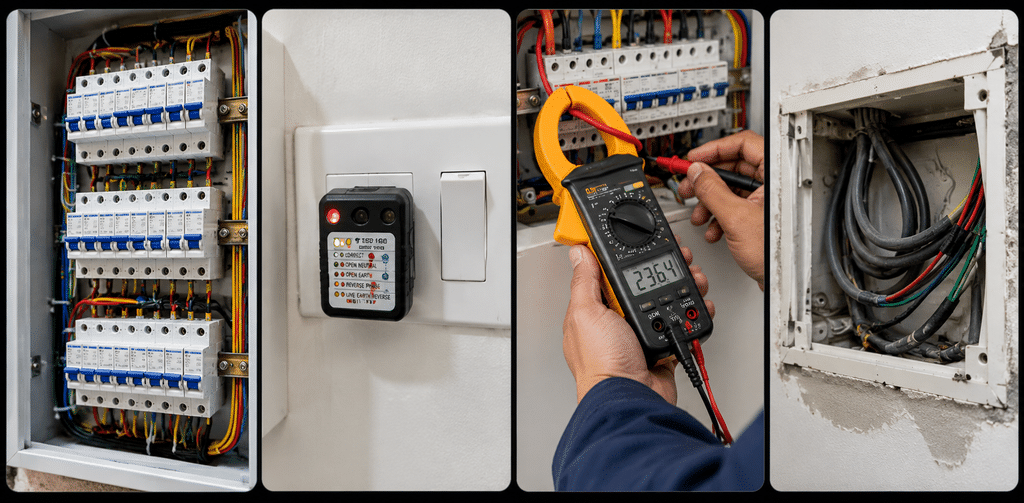
During a home electrical inspection, relevant checks may include accessible wiring, the electrical panel, socket and switch condition, earthing arrangements, circuit loading, and the operation of suitable protective devices such as MCBs and RCCBs. Additional electrical wire testing or electrical fault detection may be recommended if a concern requires further investigation.
How an Electrical Safety at Home Helps Homebuyers
An electrical inspection before purchasing a property can help you:
- Identify potential fire hazards: Find warning signs such as overheated components, damaged wiring, or loose electrical connections.
- Understand possible repair costs: Identify electrical defects that may require attention before you move in.
- Protect your family: Address potential shock risks and other electrical hazards at home.
- Check electrical installation concerns: Understand whether further testing by a qualified electrical professional is needed.
- Make a better-informed purchase decision: Review identified concerns before completing the property transaction.
For buyers planning a new flat electrical inspection before possession, checking electrical safety early can also help them raise concerns with the builder before moving into the property.
If you are purchasing a home in Gurgaon, Noida, Greater Noida, Faridabad, Delhi, or elsewhere in Delhi NCR, include electrical checks as part of your wider property inspection. HousePedia’s full property inspection also covers relevant civil and plumbing checks, helping buyers assess multiple aspects of a property before possession or purchase.
Remember, an Electrical Safety at Home helps identify and document potential concerns; it cannot guarantee that every hidden defect will be detected or that future electrical problems will never occur.
Common Electrical Problems Found in Indian Flats and Houses
Electrical wiring problems in a house can remain unnoticed until residents experience frequent power trips, flickering lights, overheating, or other warning signs. During a home electrical inspection, identifying these concerns can help homeowners understand the condition of their electrical system and determine whether further testing is required.
In Gurgaon and Delhi NCR, electrical safety checks are particularly relevant when buying an older property, inspecting a renovated apartment, or completing a new flat electrical inspection before possession.
1. Overloaded Electrical Circuits
Modern homes use several high-power appliances, including:
- Air conditioners (ACs)
- Microwaves and induction stoves
- Washing machines
- Water heaters and geysers
- Electric vehicle (EV) chargers
Older electrical installations may not have been designed for today’s appliance loads. An overloaded electrical circuit can cause repeated MCB tripping, excessive heating, and stress on wiring and electrical connections.
An electrical load assessment can help determine whether the circuit arrangement is suitable for the connected appliances. Electrical load testing may be recommended when further investigation is necessary.
2. Improper Earthing and Grounding
Earthing is an important part of Electrical Safety at Home. Potential problems include missing or damaged earthing connections, disconnected conductors, or an earthing system that does not perform as intended.
An electrical earthing test, also called an electrical grounding test in some contexts, can help assess the earthing system using suitable equipment and procedures. An earthing inspection may also identify visible installation concerns.
Without effective earthing and appropriate protective devices, certain electrical faults can increase the risk of electric shock. Testing should be carried out by a qualified electrical professional.
3. Loose Electrical Connections
Loose electrical connections may occur behind switches, sockets, distribution boards, or other electrical components. Poorly secured connections can cause intermittent power, sparking, overheating, and potential fire hazards.
An electrical wiring inspection can help identify accessible signs of loose electrical connections. Where required, a qualified professional may perform electrical connection testing or investigate suspected faults using suitable methods.
Warning signs such as burning smells, discoloured sockets, or unusual heat should never be ignored.
4. Low-Quality or Damaged Electrical Components
Damaged or unsuitable switches, cables, connectors, MCBs, and other components can affect the safety and reliability of an electrical installation.
An Electrical Safety at Home may include checking accessible components for damage, incorrect installation, overheating, or other visible concerns. Electrical wire testing and electrical cable testing may be appropriate where the condition of a cable requires further assessment.
Components should be selected and replaced by a qualified professional using suitable ratings and applicable safety requirements.
5. Electrical Panel, Neutral and Phase-Distribution Problems
Incorrect connections, loose neutral conductors, or unsuitable phase distribution in installations where applicable may contribute to voltage fluctuations, equipment malfunction, or repeated circuit trips.
An electrical panel inspection can help identify visible concerns within the distribution board and assess whether further electrical testing is needed. Depending on the installation, an electrical system inspection may also involve reviewing circuit protection, load distribution, and relevant connections.
Electrical fault detection should be performed using appropriate testing procedures rather than relying only on visual checks.
Along with electrical faults, properties may also have hidden dampness or water leakage concerns. A combined property inspection covering electrical, civil, and plumbing aspects can help buyers assess these different areas before finalising a purchase.
Make Smarter Property Decisions with Expert Home Inspection
From civil checks to electrical & plumbing audits — get a detailed inspection report within 24–48 hours. Protect your investment with India’s most trusted inspection service.
✅ Trusted by 20,000+ homeowners • Backed by 10+ years of expertise
Risks of Skipping Electrical Safety at Home
Skipping an electrical inspection can leave potential electrical hazards at home unidentified. Depending on the nature of the fault, the possible risks include:
- Fire hazards: Damaged wiring, loose connections, or overheating components may increase fire risk.
- Electric shocks: Earthing problems, damaged insulation, or other electrical faults can expose occupants to shock hazards.
- Appliance damage: Certain wiring faults or voltage-related problems may affect electrical appliances.
- Unexpected repair expenses: Undetected defects may require attention after the property has been purchased or occupied.
- Safety concerns for family members: Children, older adults, and pets may be exposed to risks from accessible damaged sockets or other electrical hazards.
For homebuyers, an electrical inspection before buying a house can provide useful information about the condition of accessible electrical components. A new flat electrical inspection before possession can also help identify concerns that may need to be raised with the builder.
If you are planning a property purchase in Gurgaon or elsewhere in Delhi NCR, consider including electrical safety checks as part of your wider property assessment. An inspection helps document identified concerns, although it cannot guarantee that every concealed defect will be found or prevent all future electrical problems.
Electrical Inspection vs Electrician Visit: What’s the Difference?
An electrician visit and a professional electrical inspection serve different purposes. An electrician is generally called to repair a fault, install a component, or resolve a specific electrical problem. An electrical inspection, on the other hand, assesses relevant parts of a property’s electrical system to identify potential safety risks and installation concerns.
For homeowners and property buyers, understanding this difference is an important part of Electrical Safety at Home.
| Electrician Visit | Electrical Inspection |
|---|---|
| Usually focuses on a reported fault or specific task | Assesses relevant parts of the electrical system |
| Repairs or replaces faulty components when required | Identifies visible concerns and potential electrical faults |
| Often addresses an immediate problem | Helps assess wider electrical safety concerns |
| Focuses on the requested repair or installation | May include wiring, earthing, electrical panel and load checks |
| Work documentation depends on the service provider | Can provide documented findings and recommendations, depending on the inspection scope |
An electrician is essential when repairs or electrical work are needed. However, before purchasing a flat or taking possession of a new property, a broader home electrical inspection can help identify concerns that may not be obvious from a single fault or routine visit.
If an inspection identifies a problem, a qualified electrician can investigate further and carry out the required corrective work.
What Does an Electrical Safety at Home Include?
A professional Electrical Safety at Home assesses accessible parts of a property’s electrical system to identify visible defects, potential safety risks, and concerns that may require further testing. For homeowners and property buyers in Gurgaon and Delhi NCR, these checks can help them better understand the electrical condition of a flat or house before purchase or possession.
The exact scope of an electrical inspection depends on the property, accessibility, and services included.
Step 1: Visual Inspection of the Electrical Installation
An electrical installation inspection may include checking accessible switches, sockets, wiring points, and electrical fittings for:
- Damaged switches and sockets
- Signs of burning, discolouration, or overheating
- Loose electrical connections and fittings
- Exposed or damaged electrical wires
These checks can help identify signs of faulty electrical wiring, electrical connection problems, and potential electrical hazards at home.
Step 2: Electrical Panel and Distribution Board Inspection
The distribution board (DB) distributes electricity to different circuits within a property. An electrical panel inspection may include checking:
- The presence, visible condition, and ratings of MCBs and other protective devices
- Circuit identification and labelling
- Visible signs of overheating or loose connections
- Circuit arrangement and load distribution
Where appropriate, MCB testing, RCCB testing, or ELCB testing may be required to assess the operation of protective devices. These electrical safety tests should be performed using suitable procedures by a qualified professional.
Step 3: Electrical Earthing and Grounding Inspection
Proper earthing is an important part of Electrical Safety at Home. An earthing inspection may include:
- Checking accessible earthing connections
- Assessing earthing continuity
- An electrical earthing test or electrical grounding test, where required
- Earthing resistance measurement, where appropriate
An electrical earthing test can help assess a specific aspect of the earthing system. The appropriate testing method depends on the installation and the concern being investigated.
Step 4: Electrical Load Assessment
Modern homes use several appliances, including air conditioners, geysers, induction stoves, washing machines, and other high-power equipment. An electrical load assessment may include:
- Reviewing the total connected electrical load
- Checking circuit-wise load distribution
- Identifying signs of an overloaded electrical circuit
- Assessing whether further electrical load testing is needed
An appropriate assessment can help identify potential concerns with circuit loading and electrical distribution.
Step 5: Electrical Safety Device Testing
Protective devices are designed to reduce certain electrical risks when correctly selected, installed, and functioning properly. Depending on the inspection scope, further testing may include:
- RCCB trip testing
- MCB function testing
- ELCB testing, where applicable
- Earth leakage testing using suitable procedures
These checks can help assess whether relevant protective devices operate as intended. They should be carried out by a qualified electrical professional using appropriate equipment.
Step 6: Thermal Scanning, Where Applicable
Thermal scanning uses an infrared camera to identify unusual temperature patterns around accessible electrical panels, connections, and components under suitable operating conditions.
Thermal imaging may help investigate potential electrical hotspots or overheating that may not be obvious during a visual check. However, unusual temperature patterns require interpretation and do not independently confirm the cause of a fault.
Thermal scanning is an additional check where applicable; it should not be assumed to be included in every electrical inspection.
Step 7: Electrical Safety at Home Report and Documentation
A documented electrical inspection may include:
- Findings and observations
- Identified potential safety concerns
- Recommendations for further investigation or corrective work
- Photographic evidence of accessible defects, where available
For buyers planning an Electrical Safety at Home before buying a house or a new flat electrical inspection before possession, these findings can help them understand which concerns may need attention before moving in.
If you are looking for an Electrical Safety at Home in Gurgaon or elsewhere in Delhi NCR, check the scope of service before booking. A professional inspection helps document observed concerns, but its findings depend on accessibility, testing methods, and the checks actually performed.
Signs Your Home Needs Electrical Safety at Home Urgently
Recognising the warning signs of electrical problems is an important part of Electrical Safety at Home. Damaged wiring, loose connections, and faulty electrical components can sometimes show visible symptoms before a serious problem develops.
If you notice any of the following signs in your home or apartment in Gurgaon or Delhi NCR, arrange an assessment by a qualified electrical professional.
- Burning smell: An unusual burning smell near a socket, switchboard, or electrical panel may indicate overheating.
- Warm switches or sockets: Excessive heat around switches or sockets can be a sign of loose connections or other electrical faults.
- Frequent power trips: Repeated MCB tripping may indicate an overloaded electrical circuit or another wiring-related problem.
- Electric shocks from appliances: Even mild shocks should not be ignored and require prompt professional attention.
- Flickering lights: Repeated flickering may be associated with loose connections, circuit issues, or other electrical problems.
- Buzzing from the distribution board: Unusual buzzing or crackling sounds from an electrical panel need professional investigation.
- Black marks around sockets: Scorch marks or discolouration can indicate overheating and possible electrical fire hazards.
These symptoms may point to faulty electrical wiring, loose electrical connections, electrical overload, or other electrical hazards at home. An electrical inspection can help identify visible concerns and determine whether additional electrical fault detection or testing is needed.
What Should You Do If You Notice These Signs?
Do not open a switchboard, touch exposed wires, or attempt electrical repairs yourself. If you notice smoke, sparking, a burning smell, or a hot electrical panel, keep people away from the affected area and seek qualified emergency assistance. If it is safe to do so, switch off the relevant power supply without touching damaged equipment.
For recurring electrical issues, a professional home electrical inspection can help assess the condition of accessible wiring, sockets, switches, and protective devices.
If you live in Gurgaon or Delhi NCR, addressing these warning signs promptly can help you make informed decisions about the safety of your electrical installation.
Electrical Safety at Home Cost in Gurgaon & Delhi NCR
The cost of an electrical inspection in Gurgaon and Delhi NCR depends on the property’s size, the electrical installation, and the scope of checks required. A basic visual inspection and a more detailed assessment involving additional electrical testing may have different costs.
The main factors that can affect electrical inspection cost include:
- Size of the property: A larger house or apartment may require more time to inspect.
- Number of electrical circuits: The number and arrangement of circuits can affect the scope of an electrical system inspection.
- Type of inspection: A visual electrical wiring inspection may differ from an assessment that includes additional testing.
- Electrical panel and earthing checks: Further testing of the distribution board, earthing system, or protective devices may affect the overall scope.
- Thermal scanning: Infrared thermal scanning, where available and applicable, may be an additional part of the inspection.
If you are looking for an electrical inspection service in Gurgaon, ask the provider what is included in the inspection and whether additional testing is charged separately.
HousePedia provides property inspection services in Gurgaon and Delhi NCR. Contact the team to discuss your property and confirm the applicable inspection scope and charges before booking.
How Electrical Safety at Home Protects Families, Children and Older Adults
Electrical Safety at Home matters for everyone, particularly in households with young children and older adults. Damaged sockets, exposed wiring, loose electrical connections, and other electrical hazards can increase the risk of electric shock or injury.
Electrical Safety for Children
Young children may touch sockets, put their fingers near switches, or handle electrical appliances without understanding the risks. Homeowners should consider:
- Keeping damaged sockets and exposed wires inaccessible.
- Using suitable socket safety measures where appropriate.
- Keeping electrical appliances and cords away from children.
- Arranging prompt repairs for loose switches, damaged fittings, or other electrical faults.
Electrical Safety for Older Adults
Older adults may face additional challenges if they have reduced mobility, vision difficulties, or slower reactions. Practical precautions include:
- Addressing damaged switches, sockets, and exposed wiring.
- Keeping electrical cables away from walking paths.
- Avoiding overloaded extension boards and unsafe connections.
- Arranging professional help when electrical problems are suspected.
How an Electrical Safety at Home Helps
A professional home electrical inspection can help identify accessible electrical safety concerns, including damaged wiring, loose connections, signs of overheating, and potential issues with protective devices.
An inspection may also recommend further electrical fault detection or testing when a concern requires investigation. This can help homeowners understand which issues need attention and make more informed decisions about Electrical Safety at Home.
An inspection cannot guarantee that every hidden fault will be detected, so identified problems should be addressed by a qualified electrical professional.
Electrical Installation Mistakes to Check in New Flats
• During a new flat electrical inspection, buyers may want to pay attention to visible installation concerns that could affect electrical safety. The actual condition varies from property to property, so these issues should be checked rather than assumed to be present.
Some areas that may require attention include:
- Shared neutral connections: Incorrect or unsuitable neutral arrangements may require investigation by a qualified electrical professional.
- Earthing concerns: Missing, damaged, or disconnected earthing connections may affect electrical safety.
- Underrated wires: Wiring that is unsuitable for the intended load may require professional assessment.
- RCCB-related concerns: The condition, suitability, and operation of relevant protective devices should be checked where included in the inspection scope.
- Distribution board placement: The electrical panel should be accessible for safe operation and inspection, in accordance with applicable requirements.
- Missing circuit labels: Unclear labelling can make it harder to identify individual circuits.
- Incorrect phase or load distribution: Where applicable, unsuitable distribution may require further assessment.
An electrical panel inspection, electrical wiring inspection, and appropriate earthing checks can help identify visible concerns and determine whether additional testing is needed.
If you are buying a new flat in Gurgaon, Noida, Greater Noida, Faridabad, or Delhi, consider including electrical checks in your pre-possession property inspection. Any confirmed defect should be documented and referred to the builder or a qualified electrical professional for appropriate corrective action.
How Electrical Inspection Helps During Resale and Rental
Electrical Safety at Home is important not only when buying a new flat but also when purchasing a resale property or renting an apartment. Previous renovations, changes in wiring, and the addition of new electrical appliances may affect the condition of a property’s electrical system.
A professional home electrical inspection can help identify accessible electrical concerns before a property is sold, purchased, or occupied.
For Property Sellers
An electrical inspection can help sellers:
- Build buyer confidence: Document observed electrical concerns before listing the property.
- Address potential defects: Identify issues that may need attention before a buyer’s inspection.
- Support transparent negotiations: Provide useful information about the condition of accessible electrical installations.
For Property Buyers
An electrical inspection before buying a house can help buyers:
- Identify potential hidden concerns: Check accessible wiring, switches, sockets, and electrical panels for visible defects.
- Understand possible repair requirements: Identify issues that may need further investigation or corrective work.
- Make informed decisions: Review documented findings before completing the purchase.
A resale flat inspection is particularly useful when previous owners have renovated rooms, added appliances, or changed electrical connections without clear documentation. An electrical wiring inspection may help identify accessible signs of faulty wiring or unsuitable connections.
For Tenants and Landlords
Electrical safety checks can also be useful before a rental property is occupied. They may help:
- Identify damaged sockets, switches, or exposed wiring.
- Highlight visible electrical hazards that need attention.
- Document relevant concerns before tenants move in.
- Support timely follow-up by the property owner or a qualified electrical professional.
Electrical Inspection for Resale Flats in Gurgaon and Delhi NCR
If you are buying a resale flat in Gurgaon, Noida, Greater Noida, Faridabad, or Delhi, consider including electrical checks in your wider property inspection.
HousePedia’s property inspection approach can help assess relevant aspects of a property, including electrical, civil, and plumbing concerns within the agreed inspection scope.
Whether you are buying, selling, or renting, an electrical inspection can help you understand identified concerns before making a property decision. It cannot guarantee that every concealed defect will be detected, so further testing may be recommended when necessary.
Our Field Experience: Why Electrical Safety at Home Matters
Over more than seven years of field experience, we have seen why Electrical Safety at Home should never be overlooked. A property may look well-finished from the outside while accessible electrical components show signs of damaged wiring, loose connections, or overheating.
For homebuyers in Gurgaon and Delhi NCR, these concerns highlight the importance of a professional Electrical Safety at Home before buying a house or taking possession of a new flat.
An electrical wiring inspection can help identify visible warning signs, while an electrical panel inspection and appropriate testing may help investigate other potential safety concerns. The exact findings depend on the inspection scope and the parts of the electrical system that can be accessed.
Electrical problems are not always obvious during a routine property visit. That is why electrical inspection is about awareness, informed decisions, and identifying concerns that may need professional attention—not creating unnecessary fear.
Electrical safety starts with knowing what to check before a problem becomes an emergency.
Frequently Asked Questions About Electrical Safety at Home
1. What is an electrical inspection, and why is it important?
An electrical inspection is an assessment of a property’s electrical system to identify visible defects and potential safety concerns. It may include checking accessible wiring, switches, sockets, the electrical panel, earthing, and protective devices. Regular attention to Electrical Safety at Home can help homeowners identify problems that need professional investigation.
2. When should I get an Electrical Safety at Home before buying a house?
It is advisable to arrange an electrical inspection before finalising a property purchase or taking possession of a new flat. A home electrical inspection can help identify visible wiring problems, damaged sockets, loose connections, and other concerns before you move in.
3. What does a Electrical Safety at Home include?
A home electrical inspection may include a visual electrical wiring inspection, electrical panel inspection, earthing checks, assessment of accessible switches and sockets, and a review of potential electrical overloads. Additional testing, such as MCB or RCCB testing, depends on the agreed inspection scope.
4. How much does an electrical inspection cost in Gurgaon?
The cost of an electrical inspection in Gurgaon depends on the property size, number of circuits, type of inspection, and any additional testing required. Contact HousePedia to discuss your property and confirm the applicable inspection scope and charges.
5. What are the warning signs of faulty electrical wiring at home?
Common warning signs include frequent MCB tripping, flickering lights, burning smells, unusually warm sockets, buzzing from the electrical panel, scorch marks, and electric shocks from appliances. These issues should not be ignored and may require prompt assessment by a qualified electrical professional.
6. Is electrical inspection necessary for a new flat before possession?
Yes, an electrical inspection before possession can help buyers identify visible electrical defects and installation concerns before moving into a new flat. It may include checking accessible wiring, sockets, switches, the distribution board, and other relevant electrical components.
7. What is the difference between an electrician visit and an electrical inspection?
An electrician visit usually focuses on a specific repair, installation, or electrical fault. An electrical inspection assesses relevant parts of the electrical system to identify potential safety concerns and document findings. If defects are identified, a qualified electrician may be needed to carry out repairs.
8. Does HousePedia provide Electrical Safety at Home services in Gurgaon and Delhi NCR?
HousePedia provides property inspection services in Gurgaon and Delhi NCR. Contact the team to confirm the available inspection scope, including the electrical checks relevant to your property, before booking.
9. Can thermal imaging detect hidden Electrical Safety at Home?
Thermal imaging can help identify unusual temperature patterns around accessible electrical panels and components under suitable conditions. It can support the investigation of possible overheating, but it does not independently confirm the cause of a fault or detect every electrical defect.
10. How can I improve Electrical Safety at Home?
Avoid overloading sockets, replace damaged electrical components through a qualified professional, keep exposed wiring inaccessible, and never ignore burning smells or repeated circuit trips. Arrange a professional electrical inspection if you notice warning signs or are purchasing a new or resale property.
Make Smarter Property Decisions with Expert Home Inspection
From civil checks to electrical & plumbing audits — get a detailed inspection report within 24–48 hours. Protect your investment with India’s most trusted inspection service.
✅ Trusted by 20,000+ homeowners • Backed by 10+ years of expertise