

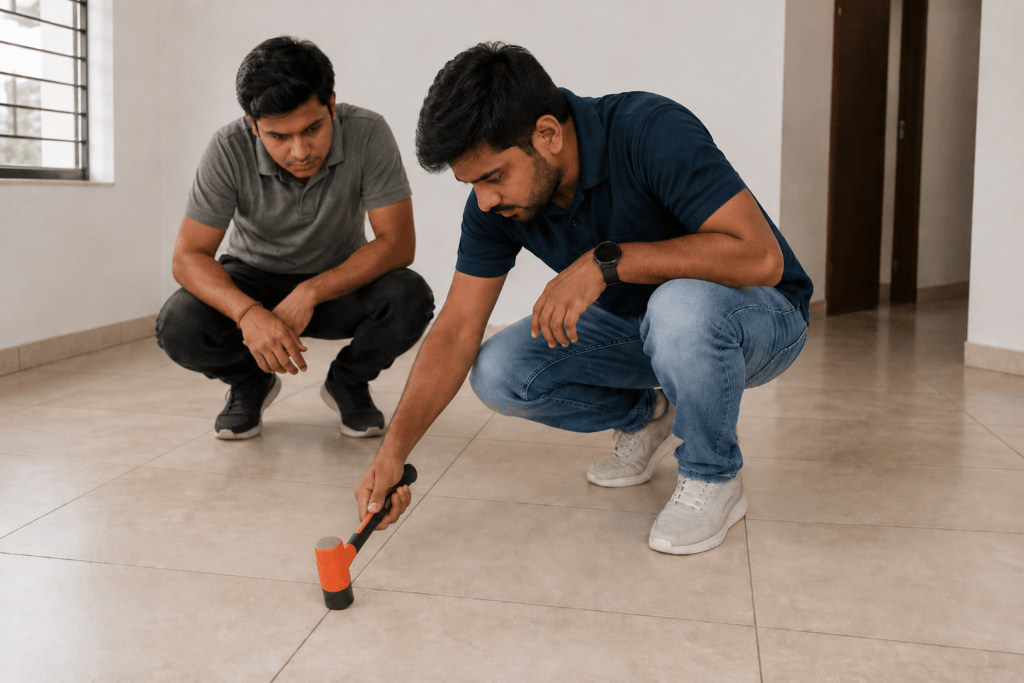
Hollow tiles and weak plaster are common issues found during property inspection. Professional inspectors use hammer sound testing and tile tapping methods to detect hidden surface defects before possession.
A professional Hollow Tile Inspection helps identify hidden flooring issues before they turn into expensive repair problems.
Make Smarter Property Decisions with Expert Home Inspection
From civil checks to electrical & plumbing audits — get a detailed inspection report within 24–48 hours. Protect your investment with India’s most trusted inspection service.
✅ Trusted by 20,000+ homeowners • Backed by 10+ years of expertise
Not every inspection requires advanced gadgets — sometimes, the simplest tools tell the most. A Hammer & Chisel Set is one such classic duo used by home inspectors to test the strength, hollowness, and condition of building surfaces. By tapping and chiseling lightly, inspectors can quickly detect defects that may not be visible.
How Inspectors Detect Hollow Tiles Using Sound Testing
- A Hammer provides the striking force.
- A Chisel is a sharp-edged tool used to chip away or test small areas of a surface.
In home inspection, these are not used for heavy demolition but for gentle surface checks, often called the “tapping sound test.”
Key Uses in Home Inspection
- Surface Sound Testing – Inspectors gently tap walls and flooring surfaces to identify hollow sounds that may indicate weak bonding, hidden gaps, or surface defects beneath the tiles or plaster.
- Tile & Stone Inspection – Helps identify loose tiles, unstable flooring, poorly bonded marble surfaces, and installation defects that may become serious over time.
- Plaster Condition Assessment – Detects weak plaster areas, hidden hollowness, and surface sections that may later develop cracks or peeling issues.
- Surface Condition Verification – Helps inspectors assess surface stability and identify hidden construction inconsistencies when required.
- Hidden Moisture Detection – Damp or hollow sounds during testing may indicate trapped moisture, seepage risks, or water damage beneath the surface.
Why Hollow Tile Inspection Should Never Be Ignored
- Hollow tiles can eventually crack or loosen over time.
- Poor bonding beneath flooring may lead to expensive future repairs.
- Hollow sounds often indicate installation quality issues.
- Moisture can get trapped beneath weak tile surfaces.
- Early inspection helps prevent hidden flooring failures after possession.
Real-Life Example
During a Housepedia inspection in Gurugram, a client complained of loose floor tiles in the living room. Using the Hammer & Chisel tapping test, our inspector identified multiple hollow-sounding tiles. This confirmed poor installation, and the builder had to replace them under warranty.
How Housepedia Detects Hidden Flooring Defects
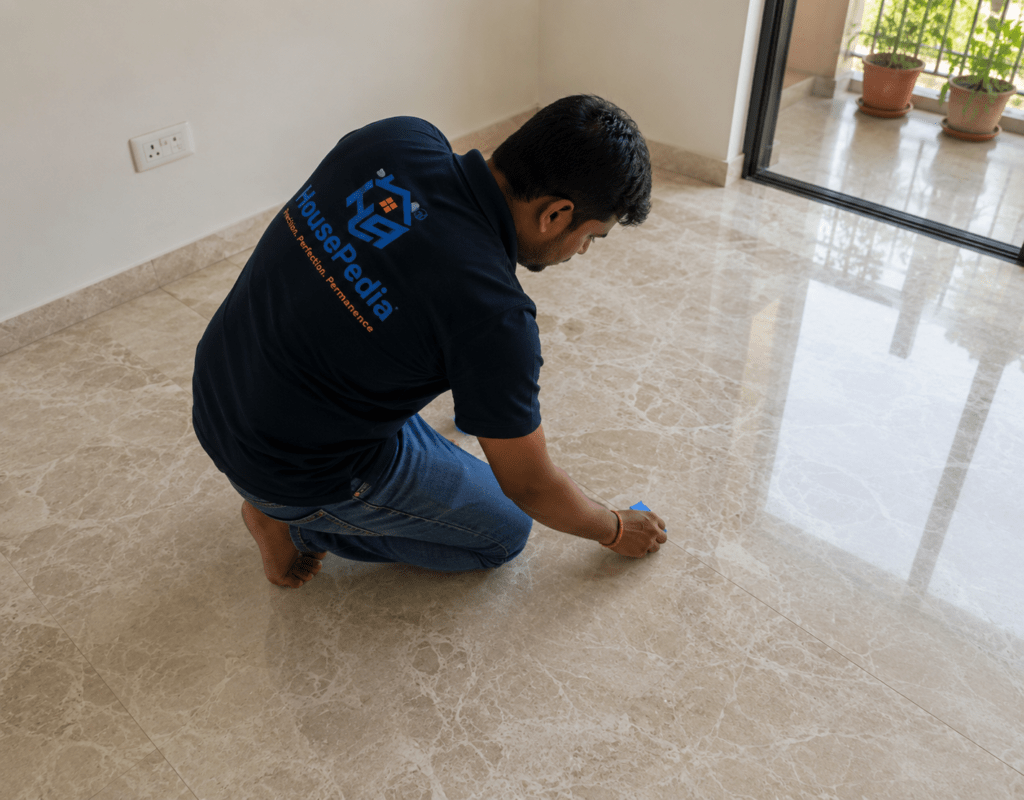
Housepedia uses professional inspection techniques and detailed surface sound testing to identify hidden flooring defects before possession. Our inspectors carefully examine tile bonding quality, plaster condition, seepage indications, and flooring stability as part of our complete property inspection process.
Why Homebuyers Trust Housepedia
- 20,000+ homeowners served
- 600+ inspection checkpoints
- Professional digital inspection reports
- Experienced inspection professionals
- Detailed civil, plumbing, and electrical checks
- Trusted property inspection services in Gurugram & Delhi NCR
What Happens If Hollow tile inspection Are Ignored?
- Tiles may eventually crack or lift.
- Weak bonding can lead to expensive repair work later.
- Hidden moisture may spread beneath flooring surfaces.
- Poor installation quality can reduce long-term durability.
- Small hidden defects often become major flooring issues after possession.
What Hidden Flooring Defects Can Cost You Later
- Expensive tile replacement work
- Hidden seepage repair costs
- Flooring removal and reinstallation
- Long-term moisture damage
- Repeated maintenance expenses
Don’t Let Hidden Flooring Defects Turn Into Expensive Repairs
Hollow tiles, weak plaster, and hidden flooring defects may not be visible during a normal site visit. Without professional inspection, these issues can later lead to tile lifting, seepage problems, costly repairs, and long-term structural concerns after possession.
Housepedia helps homebuyers identify hidden property defects before possession through detailed inspection techniques, professional reporting, and complete property evaluation services across Gurugram & Delhi NCR.
Book Your Professional Property Inspection Before Possession
Frequently Asked Questions About Hollow Tile Inspection
What is Hollow Tile Inspection?
Hollow tiles are flooring or wall tiles that produce an empty or echo-like sound during tapping. This usually indicates weak bonding, air gaps, or poor installation beneath the surface.
Why do floor tiles sound hollow?
Floor tiles may sound hollow because of improper adhesive application, trapped air gaps, uneven flooring bases, or rushed installation work during construction.
Are hollow tiles dangerous for homeowners?
If ignored for long periods, hollow tiles may eventually loosen, crack, lift, or allow moisture seepage beneath the flooring surface, leading to expensive repair work later.
How do professional inspectors detect hollow tiles?
Professional inspectors use hammer sound testing and surface tapping techniques to identify hollow sounds, weak bonding areas, and hidden flooring defects before possession.
Is hollow tile inspection important before possession?
Yes. A pre-possession inspection helps homebuyers identify hidden flooring defects, weak plaster areas, seepage risks, and poor installation quality before moving into the property.
Can hollow flooring lead to seepage issues?
In some cases, weak tile bonding and hidden gaps beneath flooring surfaces may allow moisture accumulation, increasing the risk of seepage and long-term flooring damage.
What causes hollow flooring defects?
Common causes include poor tile adhesive application, uneven surface preparation, low-quality workmanship, inadequate curing time, and improper installation methods.
Does Housepedia provide complete property inspection services?
Yes. Housepedia provides complete property inspection services including civil inspection, plumbing inspection, electrical inspection, seepage detection, and flooring quality assessment across Gurugram & Delhi NCR.
When should homeowners get hollow tile inspection?
Hollow tile inspection is recommended before possession, after renovation work, before resale, or whenever flooring issues, loose tiles, or seepage signs are noticed.
Can hidden flooring defects become expensive later?
Yes. Small hidden flooring defects may later lead to tile replacement costs, seepage repair work, flooring removal, and repeated maintenance expenses if not identified early.