

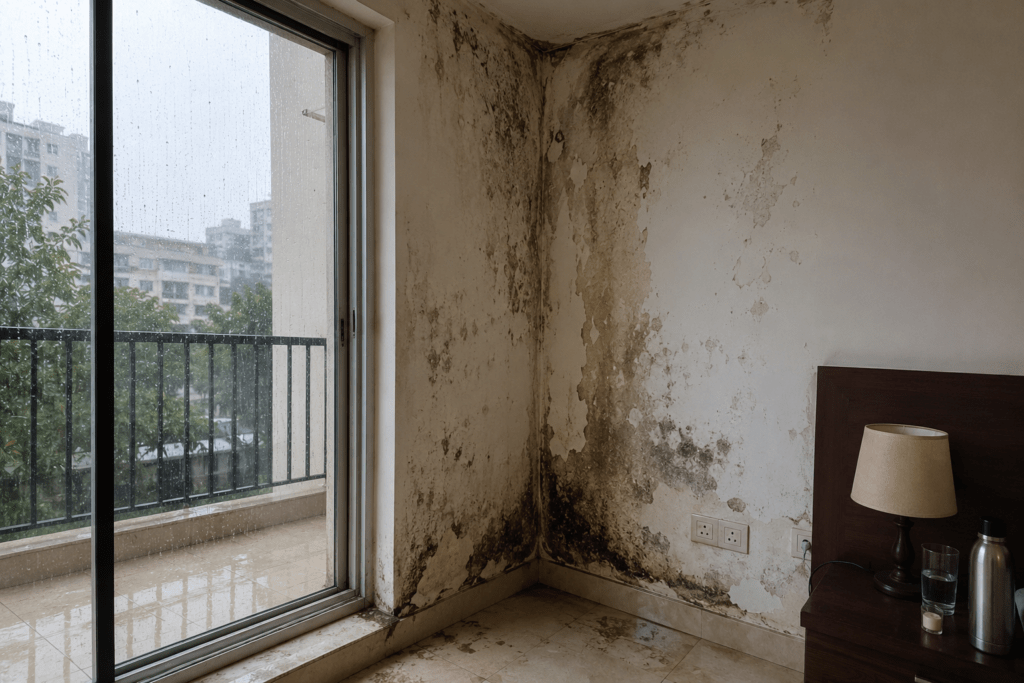
Every monsoon brings much-needed rain, but it can also expose hidden problems in your home. Water leakage in House during monsoon is a common concern for homeowners when rainwater enters through walls, roofs, balconies, windows, or poorly waterproofed areas. What starts as a small damp patch can develop into wall seepage, ceiling leakage, peeling paint, unpleasant odours, and mould growth if the underlying cause is not addressed.
One of the biggest challenges with Water leakage in House is that the source is not always easy to identify. Rainwater may enter through cracks in external walls, damaged roof surfaces, window joints, balcony edges, or gaps in waterproofing. Plumbing leaks can also cause dampness that looks similar to rainwater seepage. By the time visible stains appear, moisture may already have affected paint, plaster, wooden furniture, or other interior finishes.
Many homeowners mistake dampness in house or wall seepage for a cosmetic problem and cover it with fresh paint. However, recurring damp patches, ceiling stains, bubbling paint, and mould may indicate an unresolved moisture issue. Identifying the source of water leakage early can help homeowners plan suitable repairs and reduce the risk of further damage.
In this guide, you will learn about the common causes of Water leakage in House during monsoon, the warning signs of wall and ceiling seepage, how to identify possible roof leakage, and when professional water leakage detection may be needed. We will also explain why checking the source of moisture is important before choosing a waterproofing or repair solution.
If you notice recurring dampness, hidden water seepage, or unexplained ceiling stains, a professional inspection can help assess the affected areas and identify whether further testing is required. For homeowners planning a property inspection or looking for reliable house inspection services, early detection can help you make a more informed decision about the next steps.
Make Smarter Property Decisions with Expert Home Inspection Services
From civil checks to electrical & plumbing audits — get a detailed inspection report within 24–48 hours. Protect your investment with India’s most trusted inspection service.
✅ Trusted by 20,000+ homeowners • Backed by 10+ years of expertise
Why Monsoon Is a Major Cause of Water Leakage in Your Home
Heavy rainfall puts your home to the test, even when everything looks perfectly fine from the outside.Water leakage in House during monsoon often begins when rainwater finds its way through tiny wall cracks, damaged roof joints, balcony floors, window frames, or areas where waterproofing has weakened. Poor drainage and plumbing defects can also contribute to moisture problems inside a property.
When water enters walls and ceilings, trapped moisture can lead to wall seepage, dampness in house, ceiling leakage, peeling paint, and mould growth. If left unaddressed, persistent moisture may damage plaster, wooden furniture, interior finishes, and other building components. Damp areas near electrical fittings should also be treated cautiously and assessed by a qualified professional.
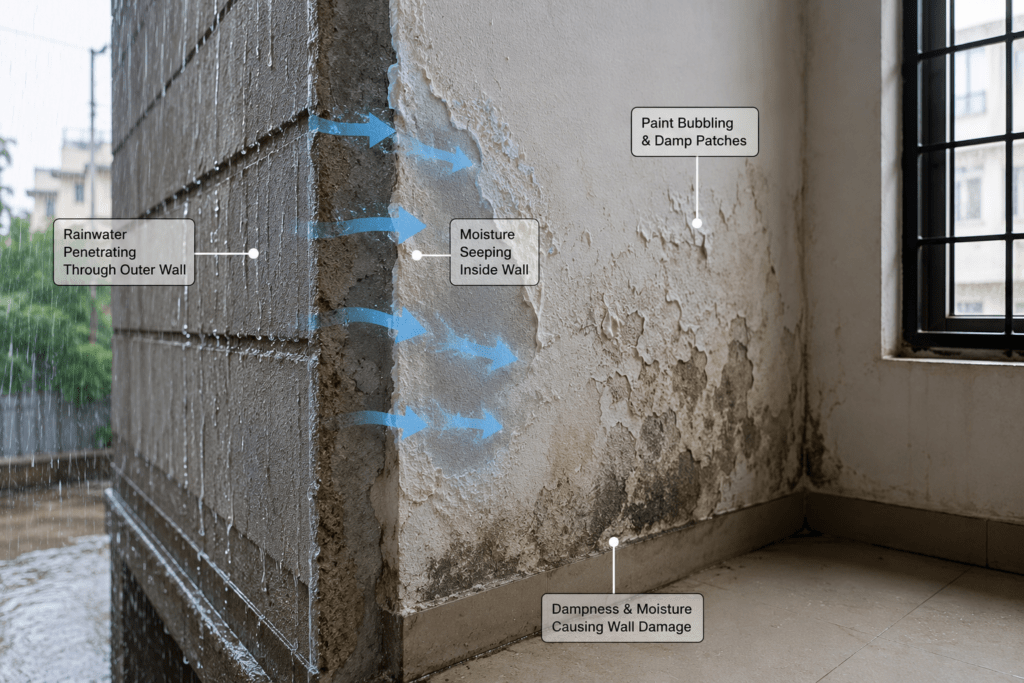
How Does Monsoon Rain Cause Hidden Water Leakage?
Water leakage is not always visible immediately. Rainwater may enter through small openings around windows, cracks in external walls, terrace joints, balconies, and poorly waterproofed bathrooms. Moisture can then spread behind paint or plaster before a damp patch or ceiling stain becomes noticeable.
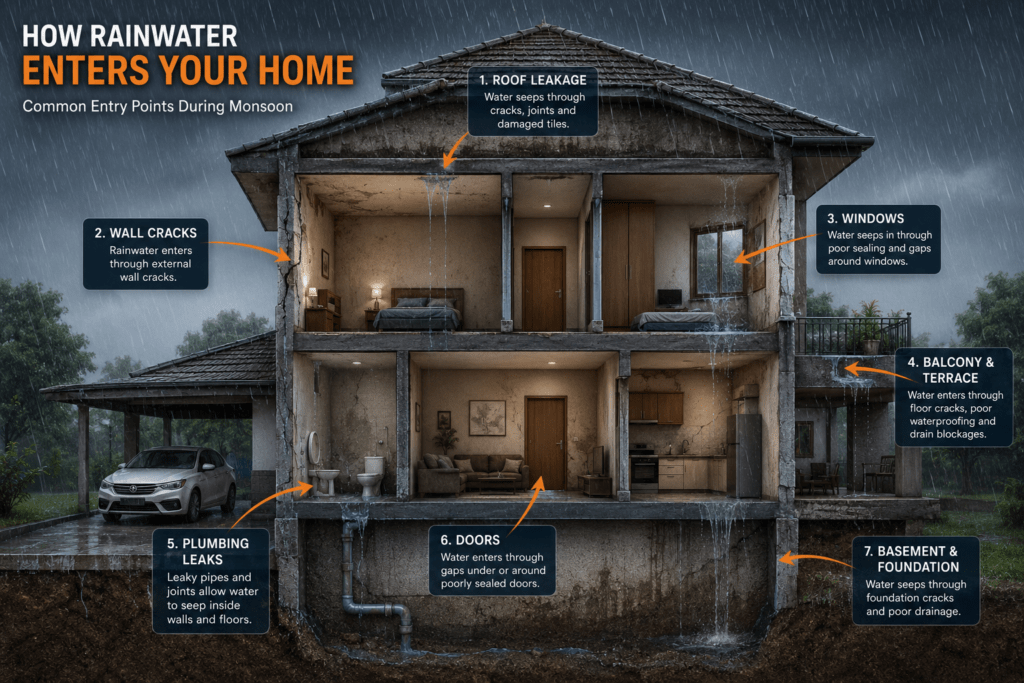
Common causes of water seepage in house during monsoon include:
- Cracks in external walls: Rainwater may enter through gaps or damaged exterior finishes.
- Roof and terrace leakage: Weak waterproofing, damaged joints, or drainage problems may allow water to penetrate ceilings.
- Balcony and window leakage: Poor sealing around window frames, balcony edges, and sliding doors can allow rainwater inside.
- Waterproofing failures: Damaged or inadequate waterproofing in bathrooms, terraces, and balconies may contribute to recurring dampness.
- Plumbing leakage: Leaking pipes or connections can create damp patches that may resemble rainwater seepage.
Why Should You Identify Water Leakage Early?
One common mistake homeowners make is ignoring a small damp patch or covering it with fresh paint without identifying the source. If the underlying problem continues, the stain may return and further damage may develop.
Early water leakage detection helps you understand where the moisture is appearing and whether further investigation is needed. Signs such as bubbling paint, musty smells, recurring ceiling stains, black patches, and damp walls should not be ignored.
If you notice recurring hidden water seepage or wall dampness after rain, consider a professional inspection to assess the affected areas and determine the next steps. The appropriate repair depends on the actual source of the leakage, so identifying the cause is important before choosing a waterproofing treatment.
For homeowners in Gurgaon and across Delhi NCR, timely property inspection and suitable water leakage detection services can help identify visible warning signs before the problem becomes more extensive. Addressing the cause early can help you plan repairs more effectively and protect your home from avoidable moisture damage.
7 Warning Signs of Hidden Water Leakage in Your House During Monsoon
Water leakage in House during monsoon often starts silently. These warning signs can help you identify hidden moisture before it causes further damage.
1. Damp Walls That Never Dry
Walls that remain damp days after rainfall may indicate wall seepage or hidden water leakage. Look for discolouration, peeling paint, and persistent moisture patches.
2. Peeling Paint or Bubbling Plaster
Bubbling paint, cracked plaster, and flaking wall finishes can indicate moisture trapped behind the surface.
3. Musty or Damp Smell Indoors
A persistent musty smell may indicate hidden dampness behind walls, ceilings, or flooring, even when visible stains are absent.
4. Ceiling Leakage or Brown Water Stains
Brown ceiling stains, wet patches, or dripping water may point to ceiling leakage, roof damage, or plumbing problems above.
5. Roof Leakage During Heavy Rain
Rainwater entering through roof cracks, damaged waterproofing, or blocked drainage outlets may cause roof leakage during monsoon.
6. Mould Growth on Walls or Ceilings
Dark patches and recurring mould may develop in damp areas. Address the moisture source and seek professional advice if mould is extensive or keeps returning.
7. Electrical Problems After Rain
Flickering lights, tripping circuit breakers, or dampness near electrical fittings can signal a serious safety concern. Avoid touching wet electrical equipment and contact a qualified electrician.
⚠️Quick Tip
If you notice one or more of these signs, don’t ignore them or simply cover them with fresh paint. Professional water leakage detection and property inspection can help assess the affected areas and identify whether further testing is needed before choosing a repair solution.
What Causes Water Leakage in House During Monsoon?
Many homeowners assume Water leakage in House during monsoon happens only because of heavy rainfall. However, damaged waterproofing, cracks in exterior walls, faulty plumbing, and poor sealing can allow rainwater to enter a home and cause hidden moisture problems.
During the monsoon, even small gaps can lead to wall seepage, dampness in house, roof leakage, and ceiling leakage. Common causes include:
1. Cracks in Exterior Walls
Hairline cracks and damaged exterior finishes can allow rainwater to enter walls, causing wall seepage, damp patches, and peeling paint.
2. Damaged Roof Waterproofing
Old or damaged roof waterproofing can allow rainwater to penetrate the roof slab, leading to roof leakage, ceiling stains, and moisture damage.
3. Faulty Plumbing Lines
Hidden leaks in bathroom, kitchen, or utility-area pipes can cause dampness inside walls. A plumbing inspection can help assess accessible connections and visible leakage signs.
4. Poor Balcony and Window Sealing
Damaged sealants or gaps around windows, sliding doors, and balcony edges can allow rainwater to enter during heavy showers.
5. Blocked Drainage Pipes
Blocked terrace drains and rainwater outlets can cause water to accumulate, increasing the risk of leakage and seepage around vulnerable areas.
6. Low-Quality Construction and Waterproofing Materials
Poor-quality plaster, grout, sealants, or incorrectly installed waterproofing materials may deteriorate over time, allowing moisture to penetrate walls and ceilings.
If you notice recurring damp patches orWater leakage in House, identify the likely source before choosing a repair solution. Professional water leakage detection and property inspection can help assess the affected areas and determine whether further testing is needed.
How Hidden Water Leakage in House During Monsoon Affects Your Home and Family
Hidden Water leakage in House during monsoon can cause more than wall stains. Persistent moisture may damage interior finishes, encourage mould growth, affect indoor comfort, and increase repair costs if the underlying cause remains unresolved.
🏚️1. Structural Damage to Walls and Ceilings
Continuous moisture can damage plaster, paint, and other building materials. Ignored wall seepage or roof leakage may lead to recurring damp patches, cracks in finishes, and costly repair work.
🍄 Mould Growth and Poor Indoor Air Quality
Dampness in house can encourage mould growth on walls, ceilings, and other moist surfaces. Mould may affect indoor air quality and can trigger allergic reactions or breathing symptoms in sensitive individuals.
❤️ 3. Health Concerns for Your Family
Living in a damp environment may worsen allergies, coughing, or asthma symptoms in some people. Address recurring moisture and mould promptly, especially in rooms used by children or people with respiratory sensitivities.
⚡4. Increased Electrical Safety Risks
Water reaching electrical wiring, sockets, or switchboards can create a risk of electric shock and short circuits. If electrical fittings become wet, avoid touching them and contact a qualified electrician.
🛋️ Damage to Furniture and Wooden Interiors
Excess moisture can affect wardrobes, kitchen cabinets, doors, window frames, and wooden furniture. Prolonged dampness may cause swelling, warping, and deterioration.
🏠6. Flooring Damage and Tile Problems
Water seepage beneath flooring can contribute to loose tiles, damaged grout, damp patches, and deterioration of floor finishes. The underlying moisture source should be assessed before repairs are undertaken.
💸7. Rising Repair Costs Over Time
A small Water leakage in House may seem harmless at first, but continued moisture can gradually damage walls, ceilings, flooring, furniture, and other interior finishes. Delaying repairs may increase the extent and cost of the work required later. Early water leakage detection helps homeowners identify the affected areas and plan suitable repairs before further damage occurs.
📉 8. Reduced Property Value
Visible water seepage, wall dampness, peeling paint, and mould growth can affect a property’s appearance and raise concerns among potential buyers or tenants. If you plan to sell or rent your home, unresolved moisture problems may influence how the property is assessed. A professional property inspection can help identify visible defects and determine whether further investigation or repairs are needed.
💡 Key Takeaway
Water leakage in House during monsoon is more than a cosmetic concern. If left unresolved, moisture can damage interior finishes, encourage mould growth, and increase repair expenses. Identifying the source of hidden water leakage, wall seepage, and dampness in house early can help you plan appropriate corrective work.
If you notice recurring damp patches, ceiling stains, or unexplained moisture, consider a professional house inspection service to assess the affected areas and identify the next steps before the problem becomes more extensive.
Make Smarter Property Decisions with Expert Home Inspection Services
From civil checks to electrical & plumbing audits — get a detailed inspection report within 24–48 hours. Protect your investment with India’s most trusted inspection service.
✅ Trusted by 20,000+ homeowners • Backed by 10+ years of expertise
How to Prevent Water Leakage in House During Monsoon
Preventing Water leakage in House during monsoon starts with timely inspections and identifying weak spots before heavy rainfall. Regular checks can help reduce the risk of wall seepage, roof leakage, ceiling dampness, and water damage.
1. Inspect Your Roof Before the Monsoon
Check for cracked roof tiles, damaged waterproofing, loose joints, and blocked rainwater outlets. Address visible defects early to reduce the risk of roof leakage and ceiling leakage during heavy rain.
2. Seal Exterior Wall Cracks
Even small cracks in exterior walls can allow rainwater to enter. Get cracks assessed and repaired appropriately to help prevent wall seepage, dampness in house, and paint damage.
3. Keep Drainage Systems Clean
Clear blocked terrace drains, balcony outlets, and rainwater pipes so water can drain properly. Water accumulation around vulnerable areas may increase the risk of leakage.
4. Check Windows and Balcony Joints
Inspect the sealant around window frames, sliding doors, and balcony edges. Damaged seals or gaps can allow rainwater to enter and cause water seepage in walls.
5. Monitor Damp Patches Early
Do not ignore recurring damp spots, peeling paint, ceiling stains, or musty smells. These may be early signs of hidden water leakage and should be assessed before further damage occurs.
6. Schedule a Professional Property Inspection
If your home repeatedly experiences leakage, seepage, or dampness, a professional property inspection can help assess the affected areas and determine whether specialised water leakage detection is needed.
Tip: Never repaint a damp wall without addressing the underlying moisture source. Fresh paint may temporarily hide the stain, but the problem can return if the cause remains unresolved.
How HousePedia Helps Detect Hidden Water Leakage in House During Monsoon
Finding the source of Water leakage in House during monsoon is not always straightforward. Damp walls and ceiling stains may be visible, but the actual source could be behind walls, beneath flooring, around windows, or within accessible plumbing systems. Repairing only the visible damage without assessing its cause may allow the problem to return.
HousePedia uses a systematic property inspection process to assess visible moisture signs, investigate suspected leakage areas, and document findings before homeowners decide on suitable repairs.
Our Water Leakage Inspection Process
🔍1. Complete Visual Property Inspection
We assess accessible areas such as exterior walls, roofs, balconies, bathrooms, ceilings, windows, and plumbing fittings to identify signs of wall seepage, roof leakage, ceiling leakage, and dampness in house.
📷 2. Thermal Imaging Inspection
Where appropriate, thermal imaging can help identify temperature patterns that may indicate hidden moisture. Further assessment may be needed to confirm the actual source of leakage.
💧 Moisture Meter Testing
Moisture meters help measure moisture levels in selected walls and other suitable surfaces. These readings can help assess damp areas and determine whether further investigation is required.
🚿 4. Plumbing and Leakage Assessment
We inspect accessible plumbing fittings and visible connections for signs of leakage that may contribute to recurring dampness or Water leakage in House.
📋 5. Detailed Digital Inspection Report
After the inspection, HousePedia provides a digital report documenting observed defects, supporting photographs, and practical recommendations within the inspection scope. This helps homeowners understand the findings and discuss suitable corrective work.
Why Early Water Leakage Inspection Matters
Repeatedly repainting damp walls or applying waterproofing without understanding the moisture source may only provide a temporary improvement. A professional property inspection can help assess recurring seepage, identify visible warning signs, and determine whether specialised testing is needed.
Why Homeowners Choose HousePedia
Practical recommendations based on inspection findings
600+ point property inspection checklist
Advanced inspection tools, where appropriate
Detailed digital inspection report with photographs
Experienced inspection professionals
Inspection services across Gurgaon and Delhi NCR
If your home experiences recurring water leakage during monsoon, wall seepage, or unexplained dampness, consider a professional inspection before choosing a repair solution. Early assessment can help you understand the problem and plan the next steps.
Book a HousePedia property inspection to assess suspected water leakage and moisture-related concerns in your home.
Frequently Asked Questions
1. What causes water leakage in a house during the monsoon?
Water leakage in House during the monsoon is commonly caused by cracked exterior walls, damaged roof waterproofing, blocked drainage systems, faulty plumbing, poor window sealing, and ageing construction materials. Heavy rainfall allows water to enter through these weak points, leading to seepage and hidden moisture damage.
2. How can I identify hidden water leakage in my home?
Some of the most common signs include damp walls, peeling paint, musty odours, ceiling stains, roof leakage, mold growth, and frequent electrical issues. If you notice any of these warning signs, it’s best to get a professional property inspection before the damage spreads further.
3. Is wall seepage different from water leakage?
Yes. Water leakage in House refers to water entering your home from roofs, pipes, or external sources, while wall seepage happens when moisture slowly penetrates through walls due to cracks, poor waterproofing, or prolonged exposure to rainwater. Both issues require proper inspection to identify the exact source.
4. Can water leakage damage my home’s structure?
Yes. Continuous moisture can weaken plaster, corrode steel reinforcement, damage concrete, and create cracks in walls and ceilings. If ignored for a long time, hidden water damage may lead to expensive structural repairs.
5. Is mold caused by water leakage dangerous for health?
Yes. Mold growth caused by dampness can reduce indoor air quality and may trigger allergies, asthma, coughing, sinus problems, and other respiratory issues. Children, elderly family members, and people with existing breathing conditions are especially vulnerable.
6. Will repainting a damp wall solve the problem?
No. Repainting only hides the visible damage temporarily. If the source of Water leakage in House isn’t fixed, the moisture will continue to spread and the paint is likely to peel or bubble again. The root cause should always be identified and repaired first.
7. How can I prevent water leakage during the monsoon?
Regular roof inspections, sealing wall cracks, cleaning terrace and balcony drains, checking window joints, maintaining plumbing systems, and scheduling a professional home inspection before or during the monsoon can significantly reduce the risk of water leakage.
8. How does Housepedia detect hidden water leakage?
Housepedia uses a systematic inspection process that includes visual property inspection, moisture meter testing, thermal imaging technology (where required), and a detailed inspection report to identify the root cause of hidden Water leakage in House, seepage, and dampness without unnecessary guesswork.
9. Should I get a home inspection after the monsoon?
Yes. A home inspection after the monsoon helps identify hidden moisture,Water leakage in House seepage, roof leakage, plumbing issues, and structural damage before they become major repair expenses. Early detection can save both time and money.
10. Does Housepedia provide water leakage and property inspection services in Delhi NCR?
Yes. Housepedia offers professional property inspection, home inspection, andWater leakage in House or water leakage detection services across Gurgaon, Delhi, Noida, Ghaziabad, Faridabad, and other parts of Delhi NCR. Our experts help homeowners identify hidden defects before they become costly repairs.
Make Smarter Property Decisions with Expert Home Inspection Services
From civil checks to electrical & plumbing audits — get a detailed inspection report within 24–48 hours. Protect your investment with India’s most trusted inspection service.
✅ Trusted by 20,000+ homeowners • Backed by 10+ years of expertise