

Introduction
After inspecting hundreds of homes across Gurgaon, Gurugram, Delhi, Noida, and other parts of NCR over the last 10+ years, one issue consistently shows up — moisture and dampness problems in Delhi NCR homes.
Whether it is a brand-new builder apartment in Gurgaon or a 10-year-old resale flat in Delhi, moisture is almost always present somewhere. Sometimes it is visible. Many times, it is completely hidden behind walls, tiles, or fresh paint.
In real on-site inspections, homeowners usually call us when paint starts peeling, walls feel damp, or a musty smell refuses to go away. But by that time, the moisture problem has already been active for months — sometimes even years. complete property inspection in Delhi NCR
This is why moisture and dampness are not just common defects in NCR homes; they are the most underestimated and most damaging problems when left unchecked.
This blog explains — from actual inspection experience — what moisture and dampness problems are, why they are extremely common in Delhi NCR homes, how to identify early signs, how professionals detect hidden moisture, and why a complete property inspection in Delhi NCR is critical before repairs or purchase.
In fact, moisture and dampness problems in Delhi NCR homes are among the most frequently identified defects during professional property inspections across Gurgaon, Delhi, and Noida.
What Is Moisture and Dampness in Homes?
Homeowners often use terms like moisture, dampness, seepage, and leakage interchangeably. In inspection terms, they mean different things.
To truly understand moisture and dampness problems in Delhi NCR homes, it is important to first understand how moisture behaves inside residential structures.
Moisture
Moisture refers to the presence of unwanted water content inside walls, floors, ceilings, or structural elements. It may not always be visible on the surface.
Dampness
Dampness is the visible or felt effect of moisture. Cold walls, peeling paint, or soft plaster are common signs.
Seepage
Seepage occurs when water slowly travels through porous materials like concrete, brick, or plaster — usually from bathrooms, balconies, or external walls.
Leakage
Leakage is an active escape of water from plumbing lines, joints, or fittings. Leakage often leads to long-term moisture and dampness issues.
In most Delhi NCR flats, moisture begins invisibly. Fresh paint, putty, and tiles hide it temporarily. Over time, the trapped moisture damages surfaces, finishes, and even electrical safety.
Why Moisture and Dampness Are So Common in Delhi NCR Homes
1. High Groundwater Levels in NCR
Many parts of Gurgaon, Noida, and Delhi NCR have high groundwater tables. This leads to moisture rising through foundations, basement walls, and ground-floor slabs.
These moisture and dampness problems in Delhi NCR homes are not random; they are strongly linked to local construction practices, climate, and soil conditions.
2. Monsoon-Heavy Climate
Extended monsoon seasons with high humidity prevent walls and slabs from drying properly, especially in poorly ventilated homes.
3. Fast-Track Construction by Builders
New builder apartments in Gurgaon are often completed under tight timelines. Proper curing, waterproofing layers, and drying time are frequently compromised. home inspection in Gurgaon
4. Poor Waterproofing Practices
Waterproofing is often treated as a checklist item rather than a system-based solution. Bathrooms, balconies, and terraces are common failure points.
5. Improper Slopes in Wet Areas
Incorrect slopes in bathrooms and balconies cause water stagnation, leading to seepage into slabs and adjacent walls.
6. Concealed Plumbing Inside Walls
Modern apartments hide plumbing lines inside walls and floors. Minor joint leaks remain unnoticed and slowly cause hidden moisture in walls.
7. Trapped Moisture in New Homes
In new flats, moisture is often locked behind fresh paint and tiles. Problems usually appear 6–12 months after possession.
This combination makes moisture problem in Gurgaon homes and dampness issues in Delhi NCR flats extremely widespread.
Early Warning Signs of Moisture & Dampness (Do Not Ignore)
Most homeowners notice moisture problems only when damage becomes visible. Early signs are subtle but important.
Common warning signs include:
- Paint bubbling, blistering, or peeling
- Walls feeling cold or damp to touch
- Musty or mold-like smell, especially in closed rooms
- Yellow or brown patches on ceilings
- Skirting swelling or coming loose
- Mold growth behind furniture or curtains
- Tile grout discoloration in bathrooms
Ignoring these signs allows moisture to spread deeper into the structure, increasing repair complexity and cost.
Most homeowners facing moisture and dampness problems in Delhi NCR homes ignore these early signs until visible damage appears. home inspection for leakage and dampness
Why Moisture Problems Should Never Be Fixed Blindly
One of the biggest mistakes homeowners make is surface-level repair.
Common wrong approaches include:
- Repainting damp walls without drying
- Applying putty over moisture-affected areas
- Replacing tiles without fixing leakage source
- Using chemical waterproof coatings without diagnosis
These methods temporarily hide symptoms but never address the root cause. Within months, dampness returns — often worse than before.
Blind repairs often worsen moisture and dampness problems in Delhi NCR homes instead of solving them permanently.
Professional inspection focuses on why moisture exists, not just where it appears.
How Moisture and Dampness Are Professionally Checked
Moisture detection is not guesswork. It requires inspection tools and experience. During a home inspection for leakage and dampness, multiple methods are used together.
Moisture Meter Testing
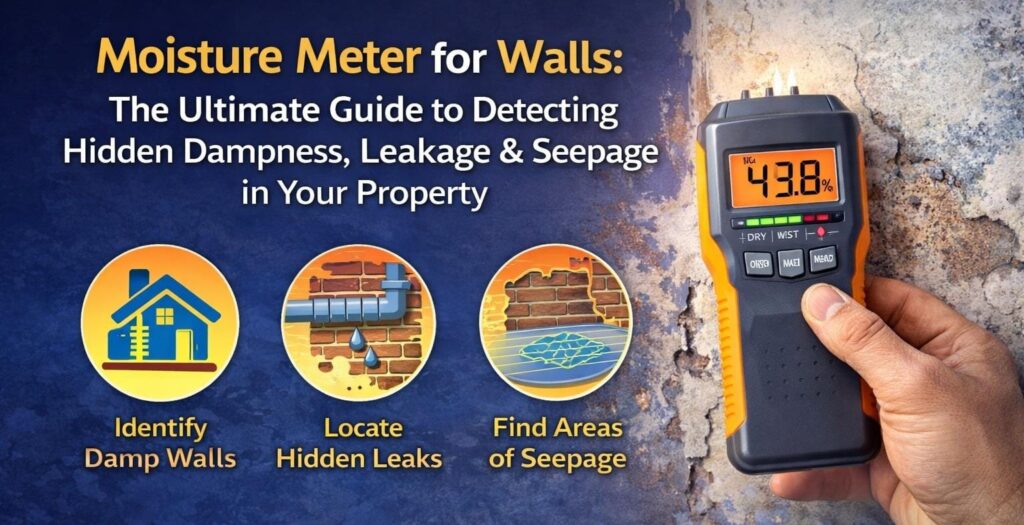
Moisture meters measure water content inside walls, ceilings, and floors. This helps identify damp zones even when surfaces look dry.
Thermal Imaging Inspection
Thermal imaging cameras detect temperature differences caused by moisture evaporation. They are extremely effective in identifying hidden seepage paths and plumbing leaks.
Pressure Testing for Plumbing Lines
Plumbing lines are pressure-tested to confirm whether concealed pipes are leaking inside walls or slabs.
Bathroom, Balcony & Wet Area Assessment
Slopes, waterproofing integrity, tile joints, drain points, and water retention behavior are carefully checked.
Visual & Surface Sound Testing
Experienced inspectors identify hollow sounds, weak plaster, and delaminated surfaces caused by prolonged moisture exposure.
These tools and methods are part of a complete property inspection, not DIY checks.
Common Areas Where Moisture Problems Originate
Based on on-ground inspections across NCR, moisture typically starts from specific locations:
Bathrooms & Toilets
- Faulty waterproofing
- Poor tile joint sealing
- Leaking concealed pipes
Balconies
- Incorrect slopes
- Blocked drain outlets
- Inadequate waterproofing layers
External Walls
- Rainwater seepage
- Cracks in plaster
- Poor exterior finishes
Terrace & Roof Slabs
- Failed membrane waterproofing
- Improper slope towards rainwater outlets
Plumbing Shafts
- Joint leakages
- Poor access for repairs
Kitchen Sink & Concealed Pipelines
- Loose fittings
- Slow leakage behind cabinets
Understanding the source is essential for long-term repair success.
How Moisture and Dampness Problems Are Fixed (Correct Way)
Correct repair always follows diagnosis.
1. Source Identification
The exact origin of moisture must be confirmed through inspection tools.
2. Plumbing Correction
Leaking pipes, joints, or fittings must be repaired or replaced.
3. Waterproofing Where Required
Waterproofing is applied only where necessary — bathrooms, balconies, terraces — using system-based methods.
4. Drying Trapped Moisture
Walls and slabs must be allowed to dry fully before surface restoration.
5. Surface Restoration
Only after moisture levels normalize should plastering, putty, and painting be done.
6. Post-Repair Verification
Moisture readings are rechecked to confirm the problem is resolved.
This root-cause-based approach prevents repeat failures.
Why a Complete Property Inspection Is Critical in Delhi NCR
Moisture rarely exists alone. complete home inspection before buying a flat
In many inspections, moisture problems are linked with:
- Electrical safety risks due to damp wiring
- Civil defects like cracks and poor workmanship
- Improper ventilation causing condensation
A complete property inspection in Delhi NCR evaluates civil, plumbing, and electrical systems together. This holistic approach prevents partial fixes and long-term damage.
A complete inspection helps identify moisture and dampness problems in Delhi NCR homes along with related electrical and civil risks.
How Housepedia Helps Detect Moisture Problems Accurately
Housepedia follows an inspection-first approach.
Key strengths include:
- Complete property inspection, not isolated checks
- 600+ inspection checks across civil, plumbing, and electrical areas
- Use of advanced moisture detection tools
- Strong on-ground experience in Gurgaon & Delhi NCR
- Clear, unbiased inspection reporting
Housepedia helps homeowners and buyers understand the true condition of their property before repairs or purchase decisions — without guesswork.
Frequently Asked Questions (FAQ)
What causes moisture problems in Delhi NCR homes?
High groundwater levels, monsoon climate, fast construction, poor waterproofing, and concealed plumbing are major reasons. Moisture and dampness problems in Delhi NCR homes usually occur due to seepage, leakage, poor waterproofing, and concealed plumbing defects.
Is dampness common in new flats in Gurgaon?
Yes. Many new flats show moisture issues within the first year due to trapped construction moisture.
How can hidden moisture be detected inside walls?
Through moisture meters, thermal imaging, and pressure testing — not visual checks alone.
Can dampness affect electrical safety?
Yes. Moisture can damage wiring insulation and increase shock and short-circuit risks.
Is painting enough to fix moisture problems?
No. Painting without fixing the moisture source only hides the issue temporarily.
When should I get a professional home inspection?
Before buying a flat, before major repairs, or when dampness signs first appear.
How long does moisture detection inspection take?
A detailed moisture inspection usually takes a few hours, depending on property size.
Can moisture problems reduce property value?
Yes. Persistent dampness affects structural health, aesthetics, and resale value.
Make Smarter Property Decisions with Expert Home Inspection
From civil checks to electrical & plumbing audits — get a detailed inspection report within 24–48 hours. Protect your investment with India’s most trusted inspection service.
✅ Trusted by 20,000+ homeowners • Backed by 10+ years of expertise
Conclusion
Moisture and dampness problems in Delhi NCR homes are not rare defects — they are the most common and most ignored issues affecting property health.
Early detection, professional inspection, and root-cause-based repairs are the only reliable way to protect your home and investment.
Understanding the problem is the first step. Inspecting it correctly is the most important one.