

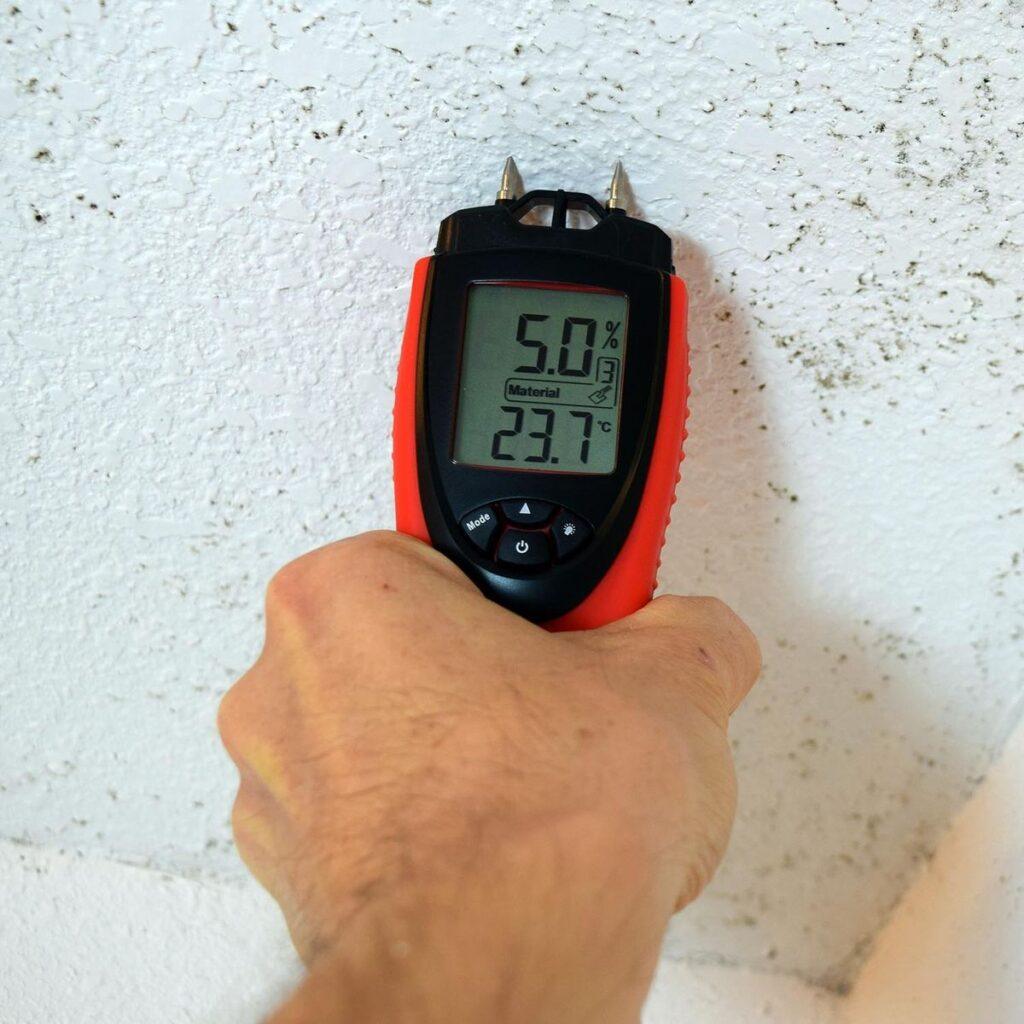
A wall may look completely dry while moisture remains trapped beneath paint, plaster, or tiles. Over time, hidden moisture can cause damp patches, peeling paint, wall stains, and musty odours.
A moisture meter for walls helps detect areas with elevated moisture levels without damaging the surface. It can be useful when checking damp walls, suspected wall seepage, plumbing leaks, or possible waterproofing issues. Depending on the material and device, a pin-type or pinless moisture meter can help assess moisture in plaster, brick, and concrete walls.
However, a moisture meter reading alone cannot confirm the exact source of water leakage. The readings should be considered alongside visible signs, plumbing routes, ventilation, and other inspection findings.
For homeowners looking for wall dampness inspection in Gurgaon or Delhi NCR, moisture testing can help identify areas that need further investigation before painting, renovation, or taking possession of a property. HousePedia also offers a Water Leakage Detection Service to investigate suspected hidden leaks using appropriate inspection methods.
In this guide, you’ll learn:
- What a moisture meter for walls is and how it works
- How moisture meters detect hidden dampness
- Different types of moisture meters and their uses
- How to understand moisture meter readings
- Common causes of moisture inside walls, including seepage and plumbing leaks
- How to check walls for dampness and water leakage
- Why moisture levels vary across different parts of a wall
- When professional moisture inspection may be necessary
- Why dampness is common in some Delhi NCR properties
- When to consider wall dampness inspection in Gurgaon
How Does a Pin-Type Moisture Meter for Walls Work?
A pin-type moisture meter for walls is a handheld inspection device used to check moisture levels in materials such as plaster, drywall, wood, and concrete. It uses two small metal pins that make contact with, or slightly penetrate, the surface being tested.
When the pins touch the material, the meter measures its electrical resistance or conductivity and converts it into a moisture reading. The result depends on the material being tested and the type of moisture meter used.
One key benefit of a pin-type meter is that it can help identify hidden moisture inside a wall, even when the surface looks dry. It is useful when checking damp patches, suspected wall seepage, plumbing leaks, and moisture around bathrooms, kitchens, windows, and balconies.
During an inspection, readings from a suspected damp area can be compared with those from a nearby dry reference area. This helps identify unusual moisture levels that may need further investigation.
However, a high moisture reading does not automatically confirm the source of water leakage. The cause may require visual inspection, plumbing checks, thermal imaging, or other suitable inspection methods. Professional inspectors consider the readings alongside wall conditions, building materials, weather, and surrounding areas before drawing conclusions.
Common Uses of a Moisture Meter for Walls
A moisture meter for walls helps identify areas where moisture may be present even when visible signs are limited. It can be useful during wall dampness inspection, seepage checks, plumbing leakage investigation, and property inspections.
1. Wall Seepage Detection
A moisture meter can help identify damp areas where water may have entered or become trapped behind paint, plaster, or other wall finishes. Comparing readings across different parts of a wall can help locate areas that need further seepage inspection.
2. Bathroom and Balcony Inspection
Bathrooms, balconies, and other wet areas are frequently exposed to water. Moisture testing around these areas can help identify possible moisture penetration, especially when waterproofing or drainage problems are suspected.
3. Plumbing Leakage Investigation
Hidden plumbing leaks may cause dampness before visible water stains appear. A moisture meter can help identify unusual moisture levels near bathroom walls, kitchens, wash areas, and plumbing lines. Further inspection is needed to confirm the actual source of leakage.
4. Dampness Check Before Painting or Waterproofing
Painting over a damp wall may hide visible signs without addressing the underlying problem. Checking moisture levels before repainting, plastering, or waterproofing can help identify areas that need attention before finishing work begins.
5. Identifying Moisture-Prone Areas
Moisture meters can help check corners, walls near windows, external-facing walls, lower wall sections, and areas with a history of seepage. Early detection can help homeowners investigate dampness before visible damage becomes more extensive.
6. Checking Floors and Ceilings
Moisture detection is not limited to walls. Suitable moisture meters can also help inspect ceilings, floors, and wooden surfaces where hidden water damage is suspected.
7. Pre-Purchase and Pre-Possession Inspection
A moisture check can be useful before buying a property or taking possession of a new flat. Even freshly painted walls may have elevated moisture readings. Checking for possible dampness and seepage can help homebuyers identify areas that need further investigation before making a property decision.
Important: A moisture meter measures moisture at the tested location; it does not automatically identify the source of water. Readings should be interpreted alongside the property’s visible condition and other inspection findings.
Floor and Ceiling Inspection: Suitable inspection methods can help detect signs of hidden water damage in ceilings, flooring, and wooden surfaces.
Signs Your Walls May Have Hidden Moisture
Hidden moisture inside walls may not always be visible at first. However, damp patches, peeling paint, discolouration, and musty smells can indicate a possible wall dampness or seepage problem. Recognising these signs early can help homeowners decide when further moisture inspection is needed.
1. Peeling or Bubbling Paint
Paint that repeatedly peels, bubbles, or lifts away from the wall may indicate moisture beneath the surface. If the same damage returns after repainting, investigate the underlying cause instead of applying another coat of paint.
2. Damp Patches or Discolouration
Dark patches, yellowish marks, and uneven wall colour may indicate moisture-related problems. Check walls and ceilings near bathrooms, kitchens, balconies, windows, and plumbing lines for possible seepage.
3. Musty or Damp Smell
A persistent musty smell can be a warning sign of excess moisture, especially when there is no obvious visible leak. Odour alone cannot confirm the source, so consider other signs and inspection findings.
4. Mould or Fungal Growth
Mould or fungal growth may develop where moisture and poor ventilation persist. Corners, areas behind furniture, and damp wall sections may need closer inspection if growth keeps returning.
5. Swollen or Damaged Wall Finishes
Soft, swollen, cracked, or powdery plaster may indicate prolonged exposure to moisture. Damaged wallpaper, wall coverings, wooden panels, and skirting boards can also suggest a possible dampness problem.
6. Swollen Wooden Panels or Flooring
Moisture can affect wooden flooring, door frames, skirting boards, and panels near damp walls. These changes may indicate moisture entering from a nearby source and may require further investigation.
7. Repeated Seepage After Repainting
If damp patches or stains return shortly after repainting, the paint may not be the actual problem. Recurring seepage can be associated with plumbing leaks, waterproofing issues, rainwater entry, or moisture coming through adjacent areas.
8. Cold or Damp Wall Surfaces
A wall that feels noticeably colder or damp compared with nearby surfaces may deserve further inspection. However, temperature differences alone do not confirm hidden moisture.
When Should You Investigate Further?
One sign alone does not always confirm a hidden water leak. However, repeated dampness, recurring stains, peeling paint, musty odours, or visible deterioration should not simply be covered with fresh paint.
A moisture meter for walls can help identify areas with elevated moisture levels and compare suspected damp areas with nearby reference areas. If unusual readings are found, further inspection may be necessary to determine whether the cause is seepage, plumbing leakage, condensation, or another moisture-related issue.
For homeowners considering wall dampness inspection in Gurgaon or Delhi NCR, professional property inspection can help assess visible signs and determine whether additional investigation is needed.
Common Mistakes Homeowners Make After Spotting Damp Walls
Spotting a damp patch does not always mean the visible area is the actual source of the problem. Treating wall dampness without investigating its cause can allow moisture, seepage, or water leakage problems to return.
1. Repainting Without Finding the Moisture Source
Fresh paint may temporarily hide stains, peeling, or discolouration, but it does not remove the underlying moisture. If dampness returns after repainting, investigate the cause before applying another coat.
2. Ignoring Small Damp Patches
Small damp patches may seem harmless, but recurring or expanding marks can indicate wall seepage, plumbing leakage, or waterproofing issues. Early inspection can help identify areas that need attention.
3. Waterproofing Without Understanding the Cause
Waterproofing is not a universal solution for every damp wall. First determine whether the moisture may be related to plumbing leaks, rainwater entry, seepage from an adjacent property, or condensation.
4. Delaying Moisture Investigation
Waiting until visible damage becomes severe can make the problem harder to assess. Checking suspicious areas early can help homeowners decide whether further dampness inspection is required.
5. Covering Damp Areas With Furniture or Panels
Furniture, decorative panels, or wall coverings can hide visible dampness without addressing the underlying issue. Restricted airflow can also make it harder to notice changes in the wall surface.
6. Assuming a Dry Surface Means There Is No Moisture
A wall may feel dry while moisture remains beneath the surface. A moisture meter for walls can help identify areas with elevated moisture levels that may not be obvious during a visual inspection.
7. Treating a Moisture Reading as Proof of a Leak
A high moisture reading does not automatically confirm a plumbing leak. Moisture can have several causes, so readings should be considered alongside wall conditions, plumbing routes, weather exposure, and other inspection findings. Further investigation may be needed to identify the actual source.
How a Moisture Meter Helps Detect Hidden Moisture
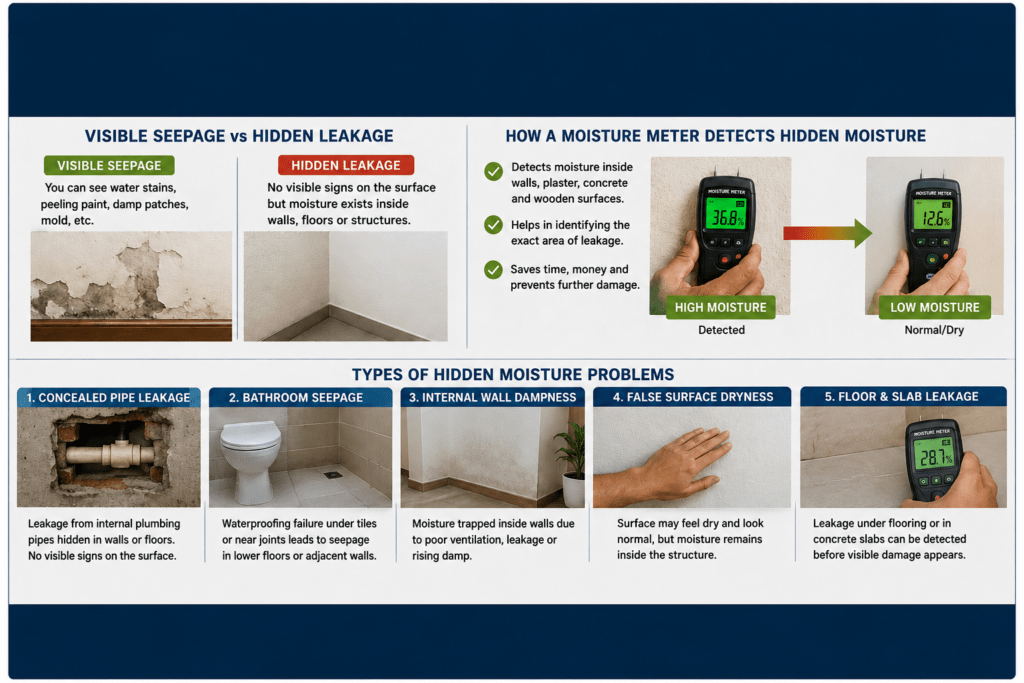
A moisture meter for walls can help identify hidden moisture inside walls and other building materials, even when there are no obvious stains, peeling paint, or visible water marks. It is useful when investigating suspected dampness, wall seepage, or water-related damage.
During an inspection, readings can be taken in suspected damp areas and compared with nearby areas that appear dry. Unusually high readings may indicate that further investigation is needed.
Where Can Moisture Readings Be Useful?
During an inspection, an inspector can take readings at suspected damp areas and compare them with nearby areas that appear dry. An unusually high reading can indicate that the location deserves further investigation.
Moisture testing can help assess areas such as:
- Bathroom and kitchen walls
- Areas near plumbing lines
- Walls adjoining wet areas
- Balconies and external-facing walls
- Ceilings below bathrooms or terraces
- Locations with recurring damp patches
- Walls where paint repeatedly peels or bubbles
Can a Moisture Meter Find a Concealed Pipe Leak?
A moisture meter may help identify an area affected by moisture from a concealed leak, but it cannot confirm the exact pipe or leakage source. High readings may also be associated with seepage, condensation, rainwater penetration, or other moisture-related problems.
If abnormal moisture is detected, further investigation may include visual inspection, plumbing checks, thermal imaging, or other appropriate water leakage detection methods.
Why Testing Hidden Moisture Matters
A wall can appear dry while elevated moisture remains beneath the surface. Early identification can help homeowners investigate the underlying cause before visible deterioration becomes more extensive.
A moisture meter is best understood as a moisture detection and assessment tool, not a standalone leak-detection device. For suspected concealed water leakage, HousePedia’s Water Leakage Detection Service may be relevant, depending on the inspection requirements.
When Should You Use a Moisture Meter for Walls?
A moisture meter for walls can help identify hidden dampness when moisture is not clearly visible on the surface. It can be useful before repainting, after noticing recurring seepage, during home inspections, or before buying or taking possession of a property. Moisture testing may also be helpful when a persistent musty smell or suspected water damage needs further investigation.
Can Damp Walls Damage Your Property?
Yes, prolonged dampness can affect paint, plaster, flooring, ceilings, woodwork, and other interior finishes. The extent of damage depends on the moisture level, duration, building materials, and underlying cause.
Common Effects of Prolonged Dampness
Possible electrical safety concerns: Suspected moisture around electrical outlets, switches, or wiring should be assessed by a qualified professional.
Peeling or bubbling paint: Moisture can cause paint to blister, peel, or lose adhesion.
Damaged plaster and wall finishes: Prolonged moisture exposure can lead to soft plaster, discolouration, and surface deterioration.
Recurring stains and seepage marks: Yellow, brown, or dark patches that return after repainting may need further investigation.
Swelling of wood and interior materials: Wooden skirting, door frames, flooring, and cabinets may swell or warp.
Damage to ceilings and adjacent areas: Water from bathrooms, terraces, or plumbing lines can affect ceilings and nearby finishes.
Conditions that support mould growth: Persistent moisture and suitable environmental conditions may encourage mould growth.
Why Early Moisture Detection Matters
A wall may appear dry while moisture remains beneath the paint or plaster. A moisture meter for walls can help identify areas with elevated moisture levels and indicate where further inspection may be useful.
However, a moisture reading alone cannot confirm whether the cause is plumbing leakage, wall seepage, waterproofing failure, rainwater entry, or condensation. Further investigation may be necessary to identify the actual source.
If you are planning to repaint, renovate, buy, or take possession of a property and notice recurring dampness, investigating the cause before covering the affected area can help avoid repeated repair work.
Make Smarter Property Decisions with Expert Home Inspection Services
From civil checks to electrical & plumbing audits — get a detailed inspection report within 24–48 hours. Protect your investment with India’s most trusted inspection service.
✅ Trusted by 20,000+ homeowners • Backed by 10+ years of expertise
Final Thoughts: Why Moisture Detection Matters
A wall may look normal on the surface while moisture remains hidden beneath paint, plaster, or other finishes. This is why moisture detection is important when investigating wall dampness, seepage, and suspected water leakage.
A moisture meter for walls can help identify areas with elevated moisture levels that may not be obvious during a visual inspection. It can be useful before repainting, when checking recurring damp patches, or during a property inspection before purchase or possession.
However, a moisture reading does not automatically identify the source of water. Further investigation may be needed to determine whether the cause is plumbing leakage, wall seepage, waterproofing failure, rainwater entry, or condensation.
If you’re dealing with recurring damp patches, peeling or bubbling paint, suspected concealed leakage, or dampness that returns after repainting, investigate the underlying cause rather than simply covering the affected area with fresh paint.
HousePedia provides professional property inspection services across Delhi NCR to help assess moisture-related concerns and other hidden property issues. If you suspect a concealed water leak, explore our Water Leakage Detection Service for further information.
Remember: A moisture reading is the starting point, not the final diagnosis. Understanding the source of moisture helps you decide what needs further inspection.
Frequently Asked Questions (FAQs)
1. What Is a Moisture Meter for Walls?
A moisture meter for walls is a device used to measure moisture levels in building materials such as plaster, brick, wood, and concrete. It helps identify areas with elevated moisture that may not be visible on the surface.
2. Can a Moisture Meter Detect Hidden Dampness Inside Walls?
Yes, a moisture meter can help identify areas with elevated moisture beneath paint or plaster. However, further inspection may be needed to determine the actual cause of the dampness.
3. How Does a Pin-Type Moisture Meter for Walls Work?
A pin-type moisture meter uses two metal pins that contact or slightly penetrate the material. It measures electrical resistance or conductivity and converts the result into a moisture reading.
4. Can a Moisture Meter Detect Water Leakage in Walls?
A moisture meter can help locate areas affected by moisture from a possible water leak. However, it cannot independently confirm the exact source of leakage. Plumbing checks or other inspection methods may be required.
5. What Causes Dampness and Seepage in Walls?
Wall dampness can result from plumbing leaks, failed waterproofing, rainwater penetration, seepage from adjacent areas, or condensation. Identifying the underlying cause is important before deciding on repairs.
6. Should I Check Wall Moisture Before Painting?
Yes, checking moisture levels before repainting can help identify areas that may need further investigation. Painting over damp walls without addressing the underlying cause may lead to recurring stains or peeling paint.
7. When Should I Get a Professional Wall Dampness Inspection in Gurgaon?
Consider professional inspection if you notice recurring damp patches, peeling paint, musty odours, suspected hidden leakage, or seepage that returns after repainting. An inspection can help assess the affected areas and determine whether further investigation is needed.
8. Can a Moisture Meter Confirm the Source of Wall Seepage?
No, a moisture meter measures moisture at the tested location but does not confirm whether the source is a plumbing leak, seepage, condensation, or waterproofing failure. Additional inspection may be necessary to identify the cause.