


A damp wall, bubbling paint, a wet ceiling patch or a musty smell may indicate a moisture problem. These signs can be linked to hidden water leakage, wall seepage, concealed plumbing leaks or water entering from external areas.
The challenge is finding where the water is actually coming from. At HousePedia, our water leakage detection andseepage inspection in Gurgaon focuses on identifying the likely source and spread of moisture before unnecessary breaking, drilling or repair work begins.
Our inspection combines visual assessment, moisture measurement and thermal scanning, where appropriate, to help assess whether the concern may be related to plumbing leakage, bathroom seepage, slab moisture, external water entry, condensation or concealed pipe leakage.
Whether you are dealing with damp walls, ceiling leakage, bathroom seepage or recurring moisture patches, our leakage and seepage inspection in Gurgaon helps you understand the visible signs and identify areas that may need further investigation.
HousePedia provides property-focused inspection services across Gurgaon and Delhi NCR, helping homeowners and property buyers understand the condition of inspected areas through clear findings.
What Is Water Leakage Detection & Seepage Inspection?
Water leakage detection and seepage inspection in Gurgaon is the process of assessing signs of water leakage, moisture and dampness in a property. It helps investigate possible sources such as plumbing leaks, bathroom seepage, ceiling leakage, external water entry and moisture around walls or floors. Depending on the suspected issue, visual inspection, moisture measurement and thermal scanning may help guide further assessment.
Common possible sources include:
- A bathroom on the other side of the wall
- Concealed plumbing or a leaking pipe connection
- Bathroom floor or tile-bed seepage
- Water leakage from a slab or ceiling
- Water entering through an external wall
- AC drain leakage or condensation
- Moisture spreading from an adjoining area
Simply repainting a damp wall may hide the visible stain temporarily without addressing the underlying cause. A seepage inspection in Gurgaon can help assess the affected area and identify possible sources that may need further investigation.
7 Warning Signs of Hidden Water Leakage and Dampness
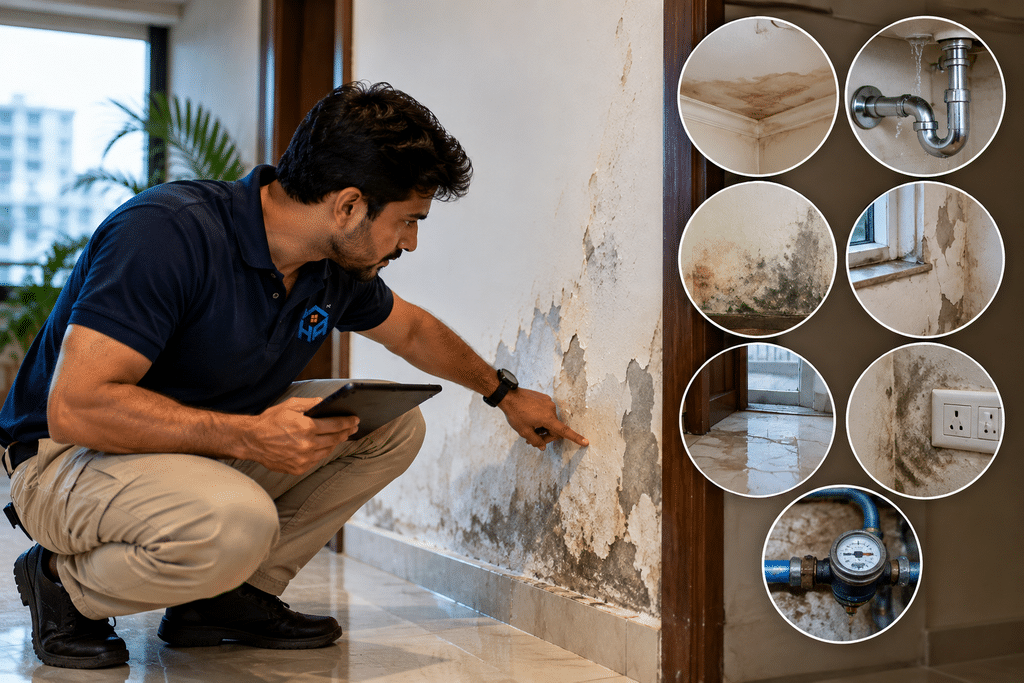
Some water leaks are easy to notice, while others may remain hidden behind walls, ceilings or floors. Watch for these common signs of possible moisture or leakage:
1. Damp or Discoloured Walls
Brown, yellow, grey or dark patches on walls may indicate moisture accumulation. If the same area becomes damp again after painting, the underlying source may need further investigation.
2. Bubbling or Peeling Paint
Paint that bubbles, blisters or peels may indicate moisture beneath the surface. Repeated peeling can be a reason to investigate possible wall seepage or hidden water leakage.
3. Wet or Stained Ceiling
Water stains on a ceiling, especially below a bathroom, terrace or another water-using area, may indicate moisture moving through the slab or a possible leak from above.
4. Persistent Musty Smell
A persistent damp or musty smell may indicate excess moisture, even when visible signs are limited. Check nearby walls, corners and enclosed areas for dampness.
5. Dampness Around Bathrooms
Bathrooms are common areas for seepage concerns because of water supply lines, drainage connections, floor joints and waterproofing-related issues. Damp patches on adjoining walls may need closer inspection.
6. Damp Patches After Rainfall
If the same wall or ceiling becomes damp during or after rainfall, possible causes may include water entering through an external wall, terrace seepage or other rainwater-related issues.
7. Unexpected Moisture Near Plumbing
Moisture around sinks, toilets, utility areas or visible plumbing connections may indicate a plumbing leak that requires further checking.
Why the Visible Damp Patch May Not Reveal the Actual Leak Source
One of the common mistakes homeowners make is assuming that the visible wet patch is exactly where the water is entering the property. In reality, moisture can travel through walls, slabs and other building materials before becoming visible.
For example, water from a bathroom or concealed pipe may travel through a wall or slab before appearing as a damp patch in an adjoining room.
Possible moisture movement:
Bathroom or pipe leakage → concealed area → wall or slab → moisture movement → visible damp patch
This means the visible stain may be some distance away from the original leakage source. Painting over the patch without investigating the cause may not prevent the dampness from returning.
A professional wall seepage inspection in Gurgaon involves assessing the affected area and its surroundings to investigate possible sources of moisture. Depending on the situation, moisture measurement and thermal scanning, where available, may help guide further checks.
How HousePedia Inspects Water Leakage and Seepage
Effective water leakage detection involves more than looking at a damp patch. The affected area and its surroundings need to be assessed to understand the pattern of moisture and investigate possible sources.
At HousePedia, our water leakage detection and seepage inspection in Gurgaon focuses on visual assessment and relevant checks to understand the nature of the problem.
Step 1: Visual Inspection of the Affected Area
We begin by inspecting the affected area and nearby surfaces for visible signs of moisture, seepage or possible leakage.
This assessment may include checking:
- Wall and ceiling stains
- Bubbling, blistering or peeling paint
- Cracks and visible surface changes
- Bathroom and kitchen areas
- Accessible plumbing points and connections
- Flooring, skirting and adjoining walls
- External surfaces, where relevant
The objective is to assess the pattern and spread of visible dampness before deciding which areas may require further investigation.
Step 2: Moisture Measurement for Dampness Detection
A moisture meter can help assess moisture levels in walls and other accessible surfaces. During a seepage inspection in Gurgaon, moisture readings can provide useful information about the extent and pattern of dampness.
However, a single moisture reading does not confirm the exact source of a water leak. Readings need to be interpreted alongside the visible condition of the surface, the location of the damp patch and other inspection findings.
This helps determine which areas may require further investigation for wall seepage, concealed water leakage or moisture-related concerns.
Step 3: Thermal Scanning for Hidden Water Leakage
Thermal scanning can help identify temperature variations across surfaces that may require further investigation. When used as part of a water leakage detection service in Gurgaon, a thermal imaging camera can provide additional clues about possible moisture-related concerns.
Depending on the property and inspection conditions, thermal scanning may help assess:
- Walls and ceilings
- Areas surrounding bathrooms
- Utility areas and accessible plumbing locations
- False ceilings
- Floor and slab surfaces
- Areas near concealed plumbing routes
Thermal imaging does not directly confirm a water leak, and temperature variations can have several causes. Findings should be interpreted alongside visual observations and other relevant checks before identifying the next steps.
Step 4: Checking Environmental Conditions
Temperature, humidity and ventilation can influence moisture conditions inside a property. Bathrooms and poorly ventilated spaces, for example, may experience higher humidity or condensation.
During a dampness inspection, these environmental factors should be considered alongside visible moisture and other inspection findings. This helps distinguish possible condensation-related concerns from signs that may require further investigation for plumbing leakage or seepage.
The objective is to assess the surrounding conditions before drawing conclusions about the likely source of dampness.
Common Areas to Check During Water Leakage Inspection
Water leakage and seepage can affect different parts of a property. The inspection focuses on the affected area and relevant surrounding surfaces to investigate possible sources.
Bathroom Leakage and Seepage
Bathrooms require careful assessment because water supply connections, drainage points, floor joints and waterproofing-related issues can contribute to moisture concerns.
Areas that may require checking include:
- Accessible plumbing connections
- Drainage points and floor joints
- Shower and wet areas
- Tile-bed seepage concerns
- Signs of moisture on adjoining walls
- Accessible areas around concealed pipes
If dampness appears on a wall adjoining a bathroom, the source should be investigated before deciding whether tiles or wall finishes need to be removed.
Wall Seepage and Hidden Moisture Assessment
Wall dampness may be associated with concealed plumbing, bathroom seepage, external water entry or condensation. In some cases, moisture may spread through building materials before becoming visible on the wall surface.
A wall seepage inspection in Gurgaon assesses the location, pattern and surrounding conditions of the affected area to investigate possible sources.
The assessment may consider accessible plumbing points, adjoining wet areas, external wall conditions and other relevant observations. The findings help identify areas that may need further checking rather than assuming that the visible stain marks the exact source of the leak.
Slab and Ceiling Water Leakage Inspection
A slab or ceiling water leak can be difficult to trace because moisture may travel through building materials before appearing as a stain on the ceiling below.
During a ceiling leakage and seepage inspection in Gurgaon, relevant areas may include:
- Bathrooms located above the affected ceiling
- Kitchens and utility areas
- Terrace or roof areas, where accessible
- Nearby plumbing routes
- Areas around concealed pipes
A ceiling stain should not automatically be treated as an isolated ceiling problem. Assessing the area above and the surrounding conditions can help investigate possible sources of moisture.
Plumbing Leakage and Concealed Pipe Assessment
Plumbing leakage can occur in accessible connections as well as concealed sections of a property’s water supply or drainage system.
During a plumbing leakage inspection, signs that may require further investigation include:
- Persistent dampness near plumbing points
- Unexpected water marks
- Moisture around sinks or bathroom fixtures
- Damp patches on adjoining bathroom walls
- Ceiling stains below plumbing areas
- Recurring moisture noticed after water use
The location and pattern of these signs can help assess whether the concern may be related to plumbing leakage. Further checks depend on the accessible areas, the suspected source and the inspection findings.
Hidden Pipe Leakage Detection Before Breaking Walls
Homeowners often worry that investigating a concealed pipe leak will immediately require breaking walls, removing tiles or damaging finished surfaces.
The purpose of hidden water leakage detection is to gather relevant information before invasive work is considered.
Depending on the suspected issue, the inspection may involve:
- Assessing the affected area and surrounding surfaces.
- Checking accessible plumbing connections.
- Examining the pattern and spread of moisture.
- Taking moisture measurements, where appropriate.
- Using thermal scanning, where available and suitable.
- Comparing observations with the property’s layout and nearby plumbing points.
- Identifying areas that may require further investigation.
Non-invasive checks can help narrow down a suspected leakage area, but they cannot guarantee that every concealed pipe leak will be located without further testing or opening the affected area. The next steps should depend on the inspection findings.
How to Investigate the Source of Hidden Water Leakage
When investigating hidden water leakage, the visible damp patch is only one part of the picture. The surrounding area, moisture pattern and timing can provide useful clues about the possible source.
A systematic water leakage and seepage inspection considers the following factors:
1. Possible Source
Where could the water be entering from? Possible sources may include plumbing connections, bathrooms, terraces or external walls, depending on the location of the affected area.
2. Moisture Path
How might moisture be travelling from its source to the visible area? Water can move through building materials before appearing on a wall or ceiling.
3. Dampness Pattern
Does the moisture follow a particular wall, ceiling, floor area or plumbing route? The location and spread of dampness can help guide further investigation.
4. Timing of the Problem
When does the dampness appear or become more noticeable? Check whether it occurs after:
- Bathroom use
- Rainfall
- Plumbing use
- AC operation
- Extended periods of high humidity
These patterns can help identify which possible sources need closer assessment.
5. Surrounding Areas
Is there moisture on the other side of the wall, above the affected ceiling or near accessible plumbing connections? Checking nearby areas can provide additional clues about the source.
These observations help guide a seepage inspection in Gurgaon and determine which areas may require further investigation before repair work is considered.
Water Leakage Detection Services Near You: What Should You Check?
When looking for water leakage detection services near you, do not choose a service only because it promises to find a leak. Understand what the inspection includes and how the findings will be explained.
Before booking a water leakage detection service in Gurgaon, consider asking these questions:
- Which areas of the property will be inspected?
- What inspection tools will be used, if required?
- Will moisture levels be assessed where appropriate?
- Is thermal scanning available for suitable cases?
- Will surrounding walls, ceilings and accessible plumbing areas be checked?
- Will the inspection findings be documented?
- Will the suspected source and affected areas be explained?
A thorough inspection should focus on observations, relevant measurements and the evidence available. The aim is to investigate possible sources of leakage and dampness rather than simply identify a visible stain.
HousePedia provides property inspection services in Gurgaon and Delhi NCR to help homeowners and property buyers understand visible leakage and seepage concerns.
Why Repainting a Damp Wall May Not Address the Root Cause
Repainting can improve the appearance of a damp wall, but it may not resolve the underlying moisture problem.
If the source of dampness remains, you may notice:
- Bubbling or blistering paint returning
- Paint peeling from the wall
- Discoloured patches appearing again
- Plaster deterioration
- Recurring damp spots
- A persistent musty smell
Repeatedly covering these signs without investigating the cause may lead to further cosmetic work without addressing the moisture source.
A dampness and seepage inspection in Gurgaon can help assess the affected area and investigate possible sources before repainting or other surface treatment is considered.
Identifying the likely cause first helps homeowners make a more informed decision about the next steps.
When Should You Book a Water Leakage and Seepage Inspection in Gurgaon?
Consider a professional water leakage detection and seepage inspection in Gurgaon if you notice any of the following signs:
- Dampness that keeps returning after repainting
- Unexplained water stains on ceilings
- Walls that remain damp for an extended period
- Bathroom seepage affecting an adjoining room
- Moisture appearing after rainfall
- Suspected leakage from concealed plumbing
- Unexplained dampness around flooring or skirting
- Uncertainty about whether the issue is leakage, seepage or condensation
- Moisture concerns before starting major repair work
Investigating these signs early can help you understand the possible source of moisture and decide whether further inspection or repair work is needed.
Why Evidence-Based Leakage Inspection Matters
A plumber, painter or contractor may identify or repair a visible issue, but investigating the underlying source of moisture may require a more focused inspection.
A property-focused leakage and seepage inspection considers the available evidence through a systematic process:
Observation → Measurement → Further Investigation → Verification → Reporting
Rather than immediately breaking a wall or removing tiles, the objective is to assess the affected area and surrounding conditions first.
This approach can help homeowners understand the suspected leakage source, identify areas that may need additional checks and make a more informed decision about the next steps.
No inspection method can guarantee that every concealed leak will be identified without further testing or invasive verification.
HousePedia’s Approach to Leakage and Seepage Inspection
At HousePedia, our leakage and seepage inspection in Gurgaon focuses on assessing visible moisture, investigating possible sources and understanding the spread of dampness within the inspected areas.
Depending on the property and the nature of the concern, the assessment may include:
- Visual Inspection: Checking affected walls, ceilings and surrounding surfaces.
- Moisture Measurement: Assessing moisture levels where appropriate.
- Thermal Imaging: Examining temperature variations where suitable.
- Humidity Assessment: Considering environmental conditions that may influence moisture.
- Surrounding Area Checks: Examining relevant adjoining surfaces and accessible areas.
- Bathroom and Plumbing Assessment: Checking relevant wet areas and accessible plumbing points.
- Wall and Ceiling Assessment: Reviewing visible dampness patterns and water stains.
- Inspection Findings: Documenting relevant observations and areas that may need further investigation.
The exact inspection method depends on the symptoms, accessibility and property conditions.
Our objective: Assess the evidence first, then help you understand the next steps.
Why a Moisture Meter Alone is Not Enough | Leakage & Seepage Inspection in Gurgaon
A standard moisture meter can only tell the surface condition, not the origin of leakage.
| Moisture Meter Limitation | Why It’s Not Enough |
|---|---|
| Only checks moisture content on the surface | Doesn’t reveal spread or hidden movement |
| Cannot detect early-stage seepage | Needs moisture to already reach the top layer |
| Gives false readings in humid weather | No validation of ambient conditions |
| Cannot differentiate AC condensation vs seepage | Same reading for both |
This is why low-cost contractors and untrained inspectors misdiagnose the problem — they rely on only one tool, which leads to guesswork, not analysis.
Housepedia follows a scientific process, not assumptions.
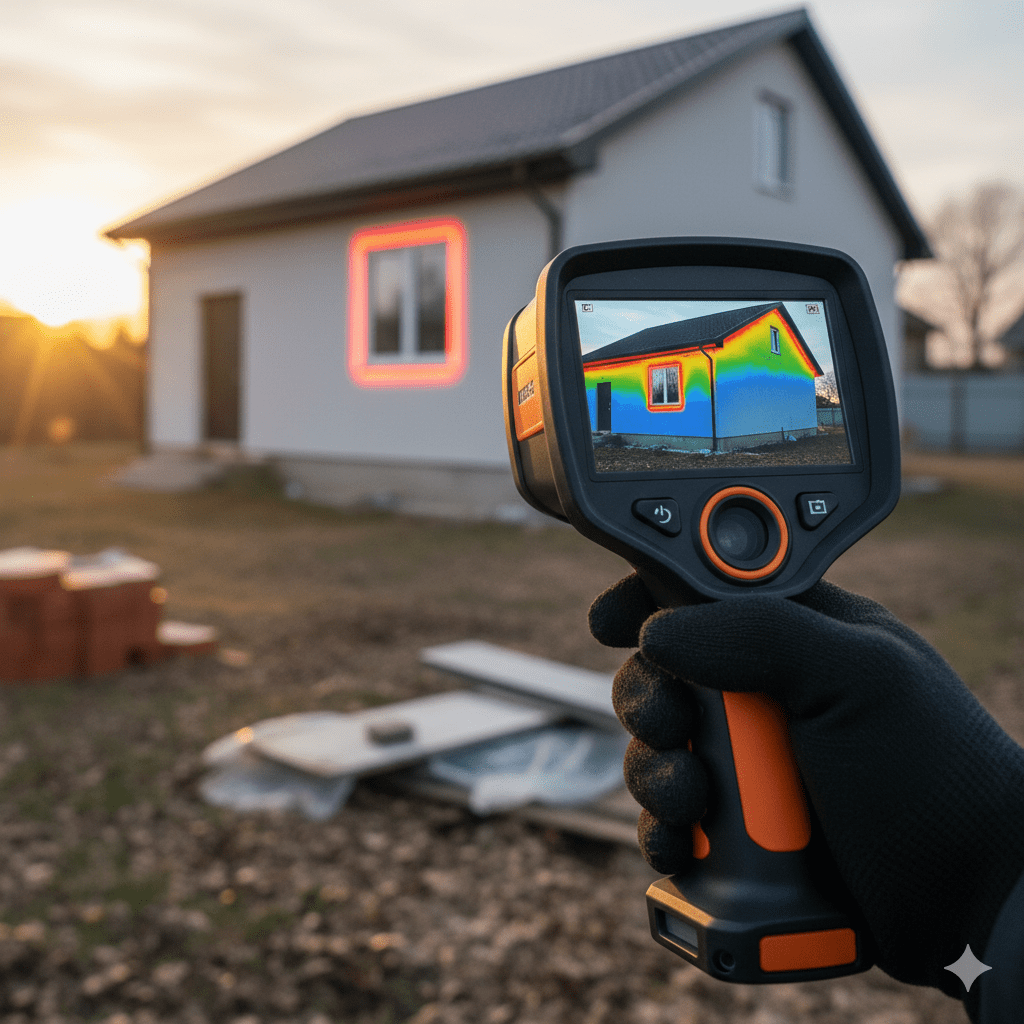
✅ The Real Secret: Thermal Imaging Camera (Infrared)
A thermal imaging camera works on temperature differential detection.
Water behaves differently than dry building material.
It retains cooler temperature— even if the surface looks normal from the outside.
When we scan a wall with infrared, moisture shows up as a cold patch, which instantly reveals:
✔ The exact source point of seepage
✔ Hidden spread inside the plaster
✔ Pipeline sweat/condensation
✔ Bathroom floor leakage migration
✔ AC drain backflow
✔ False ceiling concealed moisture
✔ Seepage behind tiles without removing tiles
This is why clients often say:
“How did you identify the leakage area so accurately without opening the wall?”
Because for us, the real inspection starts even before the moisture meter.
Leakage & Seepage Inspection in Gurgaon
ue to seepage OR environment, preventing wrong diagnosis.
This is how Housepedia ensures:
No guesswork. Only verified results.
✅ The Three-Step Verification That Makes Housepedia Different
| Step | Tool | What it detects |
|---|---|---|
| 1 | Thermal Imaging Camera | Hidden moisture inside the wall |
| 2 | Moisture Meter | Exact saturation level on surface |
| 3 | Hygrometer | Whether moisture is genuine or humidity-induced |
This layered approach is what sets Housepedia apart from local plumbers, painters or contractors who “look” at a wall and assume.
We scientifically detect, not speculate.
✅ Real Case Example (Delhi–NCR)
Location: M3M, Sector 67 Gurugram
Problem reported: Damp patch in bedroom corner
Visible symptoms: None — paint was still intact
Homeowner assumption: Might be AC issue or rain seepage
But infrared scanning showed a cold trail leading from bathroom, traveling internally through the wall — indicating tile bed-level seepage.
A normal moisture meter alone would have never detected the pathway.
Impact: Client saved ₹40,000–₹70,000 in unnecessary trial-and-error waterproofing because source was traced exactly.

✅ Why Premium Societies Prefer Scientific Detection
Residents of DLF, M3M, Emaar, Emaar Palm Drive, Godrej, Tata, ATS, Vipul, Ambience, Bestech and TARC projects expect precision and zero-damage inspection.
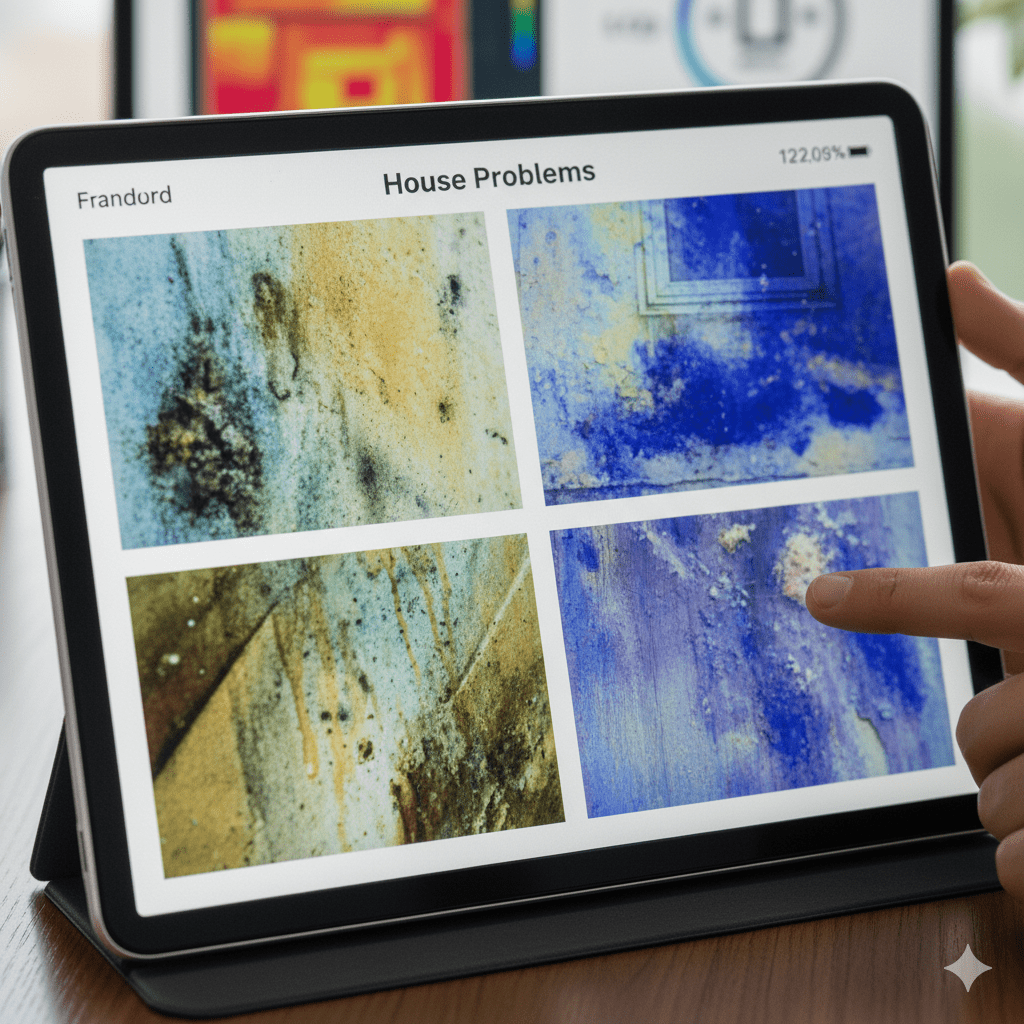
They don’t want:
❌ Breaking tiles to guess leakage
❌ Chiseling walls blindly
❌ Contractor assumptions
❌ Hit-and-trial waterproofing
They want:
✅ Technology-based detection
✅ Evidence-backed reporting
✅ Source tracing, not surface checking
✅ Long-term solution planning
This is exactly why Housepedia has become the preferred inspection partner in premium NCR properties.
✅ What Kind of Problems This Method Can Detect
| Issue Type | Detection Support |
|---|---|
| Bathroom seepage | Traced via thermal scan before surface damage |
| Ceiling dampness | Identifies if from upper floor or pipe condensation |
| Wall dampness | Tracks direction of water travel |
| AC leakage | Finds condensation vs pipeline fault |
| Plumbing leakage | Detects cold patch at internal pipe route |
| Hidden cracks | Uneven temperature signal exposure |
| Waterproofing failure | Early-stage detection |
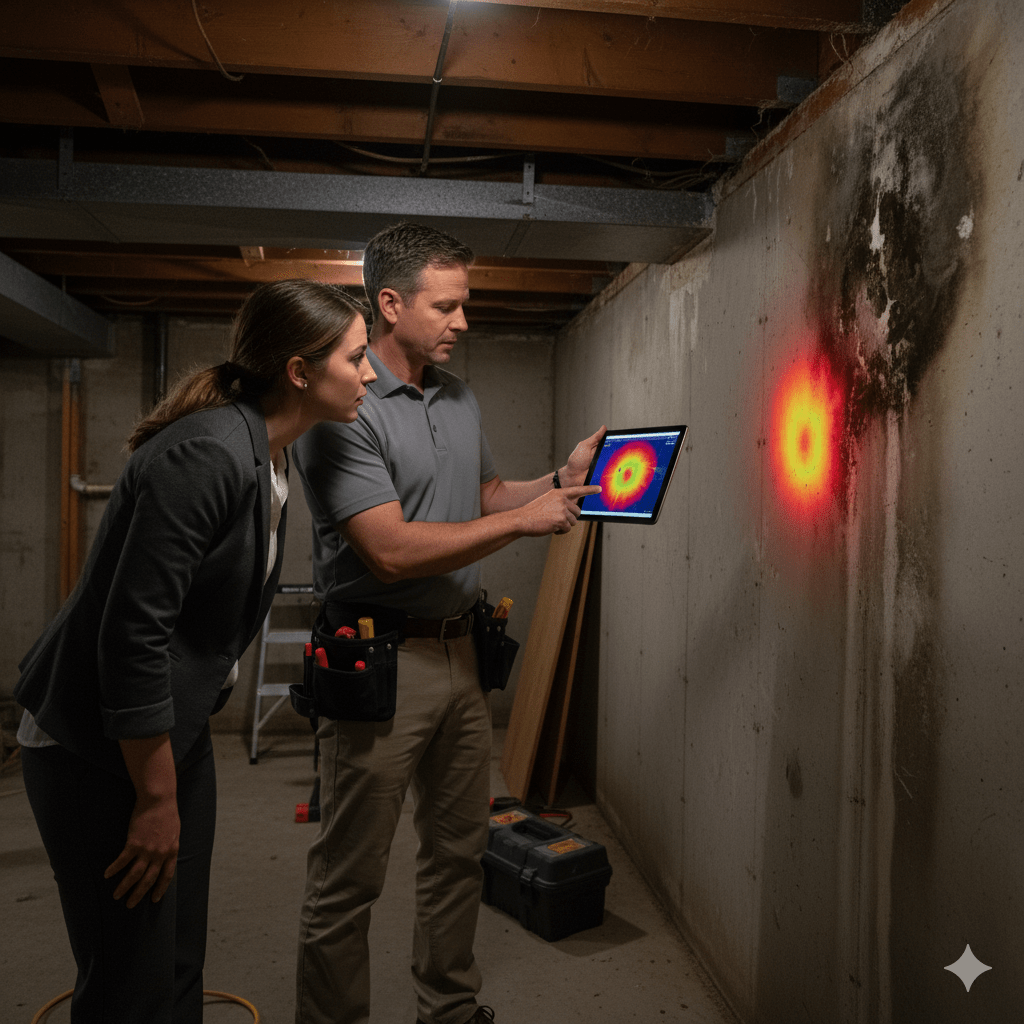
✅ Why Early Detection is Critical
Most homeowners notice seepage only when: Leakage & Seepage Inspection in Gurgaon
- Paint starts bubbling
- Wall starts smelling
- Fungus appears
- Tiles discolor
- Wooden wardrobe swells
By that time, 50–60% internal damage has already happened.
With thermal imaging, we can detect leakage weeks or even months before it becomes visible, preventing major repairs.
✅ Leakage & Seepage Inspection in Gurgaon
If you live in Delhi, Gurugram, Noida, Faridabad or Ghaziabad and are facing dampness, bathroom leakage, ceiling moisture, or hidden seepage from neighbours or upper floors — this technology-based inspection helps you identify the exact root cause before starting repair.
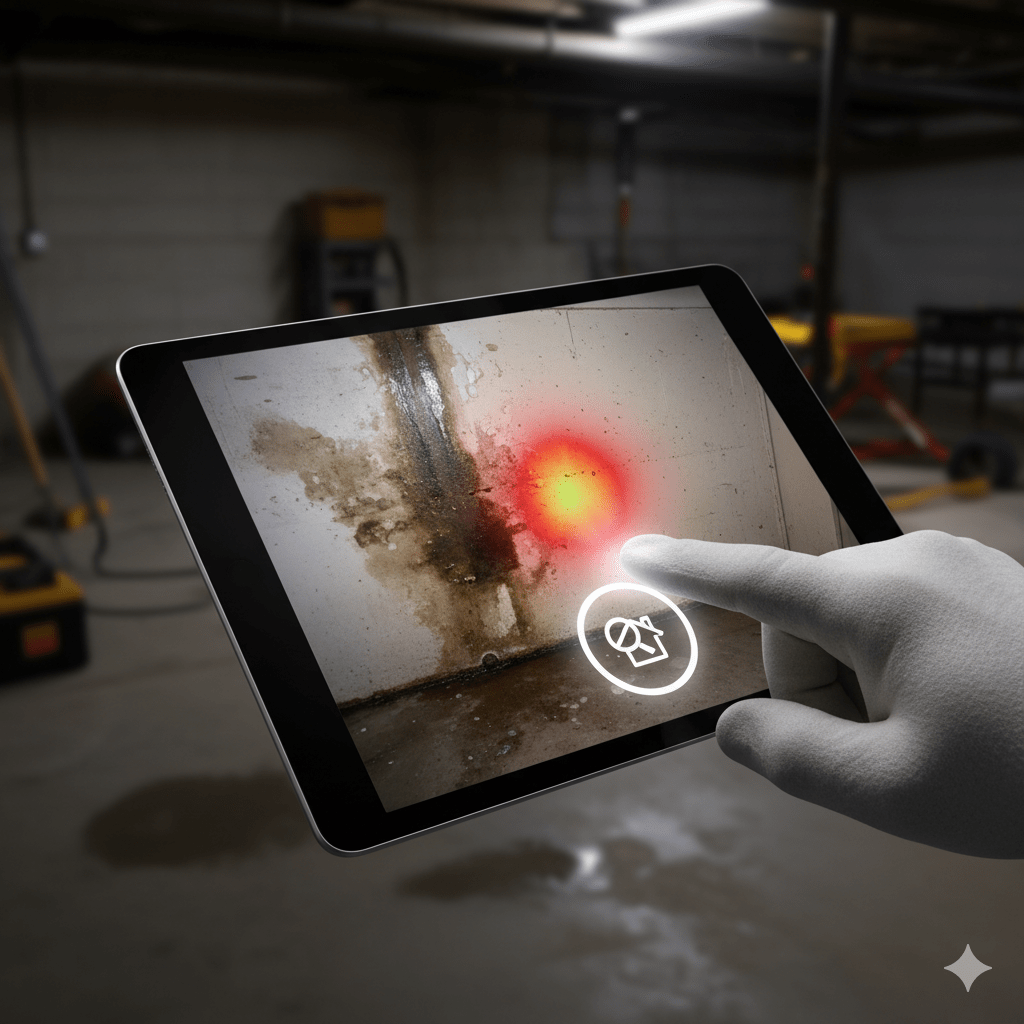
At Housepedia, we don’t just measure moisture —
we scientifically trace where it’s coming from.
If you want a no-breakage diagnosis using professional infrared + hygrometer verification…
Leakage & Seepage Inspection in Gurgaon
📍 Serving: Delhi, Gurugram, Noida, Faridabad, Ghaziabad
☎️ Contact: +91 85128 34123
🌐 www.housepedia.in
✅ 10 Key Points: Moisture Meter for Leakage & Seepage Inspection in Gurugram
Professional & Reliable Results – Housepedia experts use calibrated moisture meters to deliver reliable Leakage & Seepage Inspection in Gurugram with detailed reporting.
Detects Hidden Dampness – A moisture meter helps identify moisture trapped behind walls, tiles and flooring during Leakage & Seepage Inspection in Gurugram.
Finds Exact Source of Seepage – It pinpoints the origin of water intrusion without breaking walls, making inspection fast and damage-free.
Accurate Moisture Readings – Advanced sensors provide digital readings to differentiate between surface dampness and deep seepage.
Identifies Plumbing Leakage – Helps detect concealed pipe leaks behind bathroom tiles, kitchen sinks and utility areas.
Prevents Mould & Fungus – Early moisture detection stops mould growth and protects your home’s indoor air quality.
Assesses Wall & Paint Damage – Moisture meters reveal early signs of bubbling paint, efflorescence and damp patches before they become severe.
Essential for New Flats in Gurugram – High-rise apartments often face seepage issues; moisture meters help buyers verify construction quality before and after possession.
Supports Complete Property Inspection – It enhances civil, electrical and plumbing checks by validating areas prone to dampness.
Helps in Repair Planning – Accurate moisture readings allow technicians to create effective repair plans for seepage control
Frequently Asked Questions
1. What Is the Difference Between Water Leakage and Seepage?
Water leakage usually refers to water escaping from a pipe, plumbing connection or another source. Seepage occurs when moisture passes through walls, floors, ceilings or other building materials. Both can cause damp patches, water stains and peeling paint, so identifying the possible source is important.
2. When Should I Book a Seepage Inspection in Gurgaon?
Consider booking a seepage inspection if damp patches keep returning after repainting, ceilings develop unexplained stains, bathroom moisture spreads to adjoining walls or dampness appears after rainfall. An inspection can help assess the affected area and identify possible sources that may need further investigation.
3. Can Hidden Water Leakage Be Detected Without Breaking Walls?
Non-invasive inspection methods, such as visual assessment, moisture measurement and thermal imaging where available, may help narrow down the suspected leakage area. However, these methods cannot guarantee that every concealed leak will be located without further testing or opening the affected area.
4. What Does a Water Leakage and Seepage Inspection Include?
Depending on the property and the issue, an inspection may include checking affected walls, ceilings, accessible plumbing points, bathroom areas and surrounding surfaces. Moisture measurements or thermal imaging may also be used where appropriate and available.
5. Can a Damp Wall Be Caused by a Leak in Another Room?
Yes. Water can travel through building materials before appearing as a damp patch. For example, a bathroom leak may cause moisture on a bedroom wall next to it. The visible patch may not indicate the exact source, so nearby areas should also be assessed.
6. Can Rainwater Cause Wall Seepage or Ceiling Dampness?
Yes. Rainwater entering through external walls, terraces or roof-related areas may contribute to dampness. If the same patch appears or becomes worse after rainfall, the surrounding surfaces and possible water entry points may need further investigation.
7. Does Repainting a Damp Wall Solve the Seepage Problem?
Repainting can improve the wall’s appearance, but it may not address the underlying moisture source. If leakage, seepage or condensation continues, stains and peeling paint may return. Investigating the cause before repainting can help you decide the appropriate next step.
8. Does HousePedia Provide Leakage and Seepage Inspection in Gurgaon?
HousePedia provides property inspection services in Gurgaon and Delhi NCR. The inspection approach depends on the visible symptoms, accessibility and property conditions. Contact HousePedia to confirm service availability for your location and understand which inspection checks are suitable for your concern.
Make Smarter Property Decisions with Expert Home Inspection
From civil checks to electrical & plumbing audits — get a detailed inspection report within 24–48 hours. Protect your investment with India’s most trusted inspection service.
✅ Trusted by 20,000+ homeowners • Backed by 10+ years of expertise